



After Melissa: How the capital market can power Jamaica’s road to recovery
When Hurricane Melissa made landfall on Jamaica’s southern coast on October 28, 2025 as a Category 5 storm packing winds exceeding 185 mph, it shattered the economic trajectory of a nation that had spent a decade earning its place among the Caribbean’s most fiscally disciplined economies. Today, Jamaica stands at a crossroads: pursue reconstruction the way developing nations always have — slowly and dependently — or pioneer a new model built on the private capital market. The case for the latter has never been more urgent.
The Scale of Destruction
The Planning Institute of Jamaica (PIOJ) has confirmed total damage, losses, and costs from Hurricane Melissa at US$12.232 billion — 56.7 per cent of Jamaica’s 2024 gross domestic product (GDP), more than four times Hurricane Gilbert’s toll. Physical damage alone stands at US$8.8 billion. The full-year GDP contraction for FY2025/26 is -1.4 per cent. Minister of Finance Fayval Williams confirmed in her March 10, 2026 budget speech that the fiscal deficit stands at $134.6 billion for FY2025/26, widening to a projected $190.7 billion in FY2026/27, against a total budget of $1.441 trillion.
The Government has already deployed $67 billion in emergency hurricane spending — including a $24.1-billion loan to Jamaica Public Service (JPS) to restore electricity, $10 billion in Restoration of Owner or Occupant Family Shelter (ROOFS) housing grants, and $3 billion to the Development Bank of Jamaica Limited’s M5 Business Recovery Programme. The human toll: 450 schools damaged, 279,000 people displaced, US$180 million in agricultural losses, and inflation not expected to return to target before 2027.
The Multilateral Foundation: Necessary but Insufficient
The international response has been swift: a US$6.7-billion package over three years from Development Bank of Latin America and the Caribbean (CAF), the Caribbean Development Bank, Inter-American Development Bank (IDB), International Monetary Fund (IMF), and World Bank. This includes US$1 billion each from the IDB and World Bank, US$415 million from the IMF’s Rapid Financing Instrument, and early-liquidity instruments including the Caribbean Catastrophe Risk Financing Facility (CCRIF) payout of US$91 million and the World Bank Catastrophe Bond disbursement of US$150 million. Jamaica’s post-Melissa credit ratings — Moody’s Ba3, S&P BB, Fitch BB — (all stable, all confirmed after the hurricane) — reflect the credibility that accelerated this access. But the arithmetic is uncomfortable: US$12.2 billion in losses against a package spread over three years, blended across grants and concessional loans, cannot alone reach the farmers, small business owners, hoteliers, and homeowners who need capital now. The Atlantic Council estimates Jamaica needs US$5.8 billion for resilient road infrastructure alone.
Five Capital Market Pillars for Recovery
1. Blended Finance
International Financial Institutions (IFIs) guarantees and first-loss tranches can crowd in private capital for tourism, small and medium-sized enterprises, and housing reconstruction at scale. First-loss tranches refer to a category of investors that receive the largest share of financial returns and are also first in line to absorb losses if they occur. Investment solutions structured with first-loss provisions provide collateral coverage for risk-averse investors. This is a very effective way to crowd in or attract risk-averse capital into ventures that would otherwise be too risky for private capital. IDB Invest and the International Finance Corporation (IFC) are natural anchor partners to provide first-loss capital.
2. Catastrophe Bonds & Parametric Instruments
Jamaica’s existing World Bank Catastrophe Bond disbursed US$150 million after Melissa. Grenada became the first country to invoke a disaster clause on its sovereign bonds after Hurricane Beryl, unlocking US$12 million overnight. Jamaica must now issue its own disaster-clause bonds — marketed to ESG-oriented institutional investors — and dramatically expand its CCRIF coverage. Minister Williams confirmed the CCRIF-SPC policy will be renewed in May 2026.
3. Impact Investment in Resilient Infrastructure
Melissa’s devastation is a painful opening: Rebuilding means upgrading rather than merely replacing. Renewable energy, climate-resilient roads, and hurricane-resistant housing can attract patient private capital via PPP structures — provided local equity participation is incentivised and governance is transparent.
4. Direct SME and Agricultural Lending
CDFIs, microfinance networks, and regional impact lenders can deploy capital to the thousands of farmers, fisherfolk, and small businesses faster than any multilateral disbursement cycle allows. The DBJ’s $3 billion M5 Business Recovery Programme is a start; it can be restructured as a permanent blended finance vehicle with first-loss government guarantees.
5. The Sleeping Giant: Pension Funds and the Sale-Leaseback Opportunity
On March 10, 2026, Minister Williams announced a landmark regulatory reform: the limit on pension fund investment in private company equity will rise from 5 per cent to 7.5 per cent of total assets in FY2026/27 (Phase 1), then to 10 per cent by April 2027 (Phase 2). With $847 billion in pension assets at September 2025, Phase 1 immediately frees $21.2 billion; Phase 2 unlocks a further $28.2 billion assuming 8 per cent asset growth. Nearly $50 billion in patient domestic capital is being mobilised. A companion reform simplifies Regulation 47 for life insurers, opening corporate debt markets to a second major pool of long-term institutional savings.
But the private equity limit reform, significant as it is, is not the ceiling — it is the floor. What it makes possible is a structured programme of sale-and-leaseback transactions on public social infrastructure: the Government of Jamaica sells the freehold interest in rebuilt hospitals, schools, and health centres to a consortium of pension funds, and immediately leases them back on 25-to-35-year operating leases. The school remains a public school. The hospital remains a public hospital. What changes is that the Government’s balance sheet — strained by a $190.7 billion projected deficit — converts or recycles frozen illiquid assets into immediate reconstruction capital.
Why Pension Funds Should Say Yes
The counterparty on a hospital leaseback is the sovereign, but unlike a government bond, the income stream is tied to a specific tangible asset that cannot be defaulted on without closing the facility. The UK’s M&G Investments’ long-lease social infrastructure fund, with 90 pension fund investors, has demonstrated these deals outperform government bonds with lower volatility. South Africa’s GEPF has achieved 8-12 per cent returns investing in hospitals. Jamaica’s pension sector, with approximately 20 per cent in government securities, can do the same — with longer duration, inflation-linkage, and genuine asset backing.
Guardrails That Make It Work
Four conditions are non-negotiable: independent valuations by internationally recognised appraisers; lease payments ring-fenced as statutory obligations with debt-service standing; a consortium ownership model across multiple funds to distribute risk; and asset reversion provisions giving the Government right of repurchase at fair market value on lease expiry. The Financial Services Commission (FSC) has been given its mandate in the budget speech. The architecture should follow within this fiscal year.
In part two, we will advocate for the policy next steps needed so that Jamaica can turn the crisis into an opportunity for faster economic growth by leveraging a range of financial solutions in the capital market.
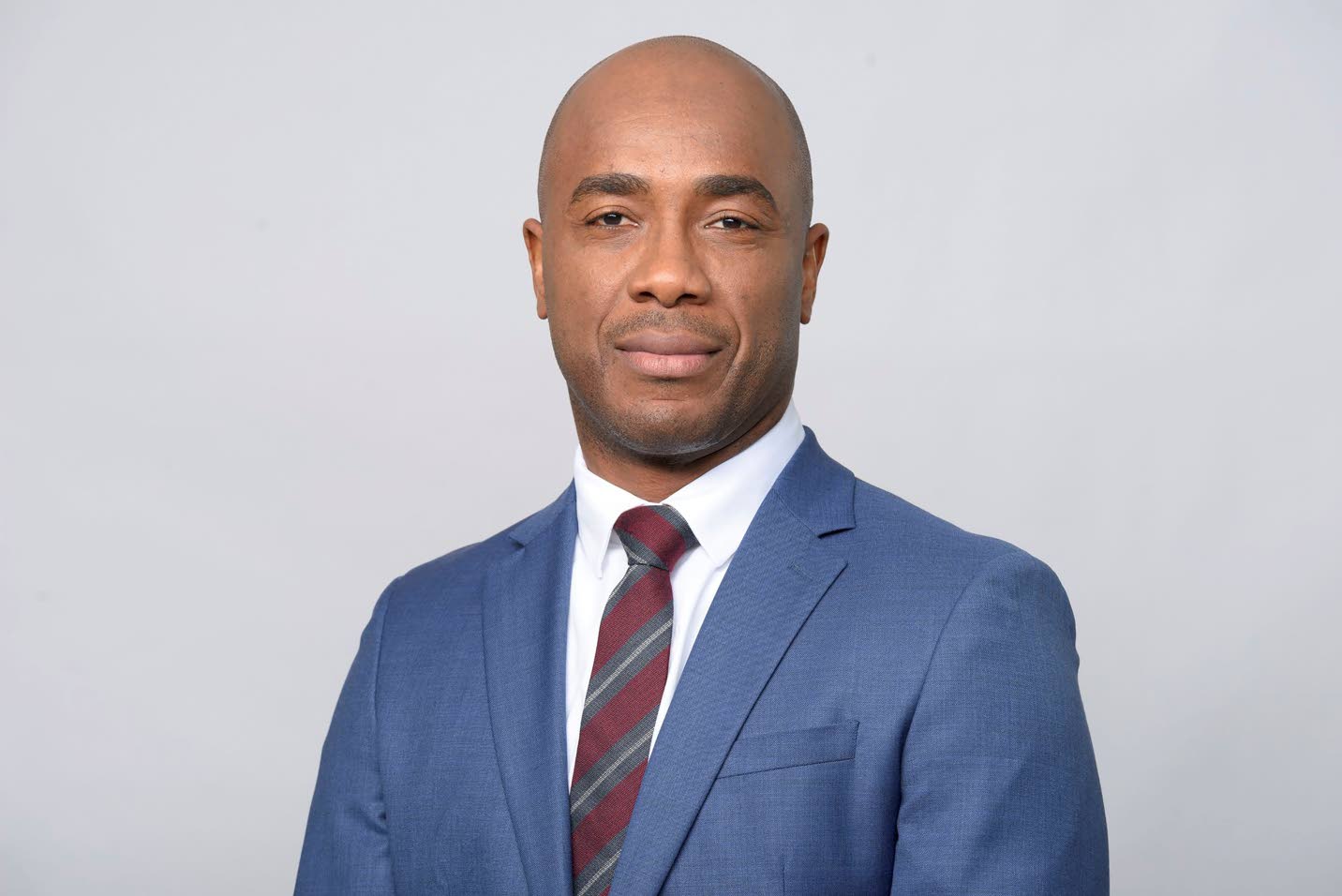
Dr Adrian Stokes is CEO and co-founder of Quantas Financial Group, which designs and offers private capital solutions to investors and businesses.
Sources: Fayval Williams, Budget Speech March 10 2026 (MoFPS); PIOJ; FSC Pensions Industry Statistics; World Bank/IDB GRADE Assessment; IMF; OCHA; Atlantic Council; USDA FAS; CCRIF SPC; M&G Investments Real Assets; South Africa GEPF.
Adrian StokesAdrian Stokes (Photo: Adrian Creary)


