



Appeal lifeline
Killers of ‘Good Samaritans’ granted Privy Council hearing
THE United Kingdom Privy Council has greenlighted the application by Jamaican murder convicts Passmore Millings and Andre Ennis to challenge their sentences and convictions before law lords there.
The two men are serving time here for the 2007 murders of the couple famously dubbed the “Good Samaritans”.
Millings and Ennis are serving life sentences at hard labour. They took their fight for freedom to the Privy Council in September last year after the Jamaican Court of Appeal in 2021 tossed their appeal, stating that “The evidence presented by the prosecution amounted to a strong case against the applicants”, and the “conviction cannot be faulted”. It however reduced the 50-year pre-parole period which had been imposed to 40 years, saying “Despite the heinous nature of the killings, those pre-parole periods should be reduced…”
On March 10 this year, Privy Council’s Lord David Lloyd-Jones, Lady Vivien Rose, and Lord David Anthony Stewart Richards, granted the two permission for their appeals to be heard there.
Passmore and Ennis intend to, through their attorneys, argue that their convictions and sentences for the murders are “unsafe in circumstances of an alleged plea deal on the part of an accomplice whose evidence was uncorroborated”.
Jamaica’s prosecuting authorities have been notified of the development.
Ennis, of Havendale, St Andrew, and Millings, also called Shane Brown, of Gregory Park, St Catherine, both labourers, were in 2012 found guilty by a jury in the Home Circuit Court in downtown Kingston for slashing the throats of Taiwo McKenzie and his girlfriend Janelle Whyte and dumping their bodies in bushes in Mount Salus, St Andrew. McKenzie and Whyte were reported missing on November 8, 2007 after relatives could not contact them. On November 9, 2007, the couple’s bodies were found in bushes at Mount Salus. Through what the Appeal Court called “good police work, the use of technology and the assistance of an accomplice”, the two were convicted on June 20, 2012.
The main witness for the prosecution was the accomplice George Cooper, who testified that on November 6, 2007, at about 6:00 pm, he was the pillion passenger on a motorcycle that Ennis was driving when it collided with a car that McKenzie was driving. Cooper’s ankle was injured and the motorcycle was damaged in the crash. McKenzie said at the time that he would pay the medical expenses and the repair bill. They waited at the spot until someone, identified as Millings, came to secure the motorcycle. McKenzie then transported Cooper, Ennis, and Whyte, who was one of McKenzie’s two passengers, to University Hospital of the West Indies, where Cooper was treated and released.
According to court records, the police spoke to the parties while they were at the hospital. During that discussion and the examination of documents for the vehicles, it was discovered that the motorcycle was not registered for use on the public road, at which point McKenzie said he would not pay for the cost of its repair. He maintained, however, that he would pay for Cooper’s medication. Ennis was unhappy with McKenzie’s position.
Prosecutors said Ennis contacted Cooper the next day and got him to arrange a meeting with McKenzie at a particular location to deliver the required medication. It was, however, a ruse.
Cooper claimed that Millings forced him at gunpoint to play his part in luring McKenzie to the spot. Whyte unfortunately accompanied McKenzie to the location. Upon their arrival, Cooper said Ennis and Millings commandeered McKenzie’s vehicle. Ennis then drove to a “hilly part of Havendale” and gave McKenzie a phone to make calls to secure money to pay for the repairs to the motorcycle. When those calls bore no fruit, the men took Whyte’s bank card, demanded her password, and wrote it down.
Mullings reportedly then said,“Dis nah go no weh and it gone too far, a better we finish them and done.” Cooper said Ennis and Millings took McKenzie down a track with an item resembling a knife and returned moments later without him, but with what appeared to be blood on the knife which was held by Ennis. They repeated the same action with Whyte and then left the area. Cooper claimed he, under duress, withdrew money using Whyte’s card on two occasions. A few days later, in the company of a relative, he reported the incident. Video footage showed Cooper and another man, said to be Ennis, at the banking machine.
Cooper subsequently pleaded guilty to the offences of conspiracy to kidnap and conspiracy to rob. On February 25, 2011, he was sentenced to eight years behind bars for those offences. He provided a statement to the police afterwards. That statement was the basis of his testimony in the case against Mullings and Ennis. Both men have maintained their innocence.

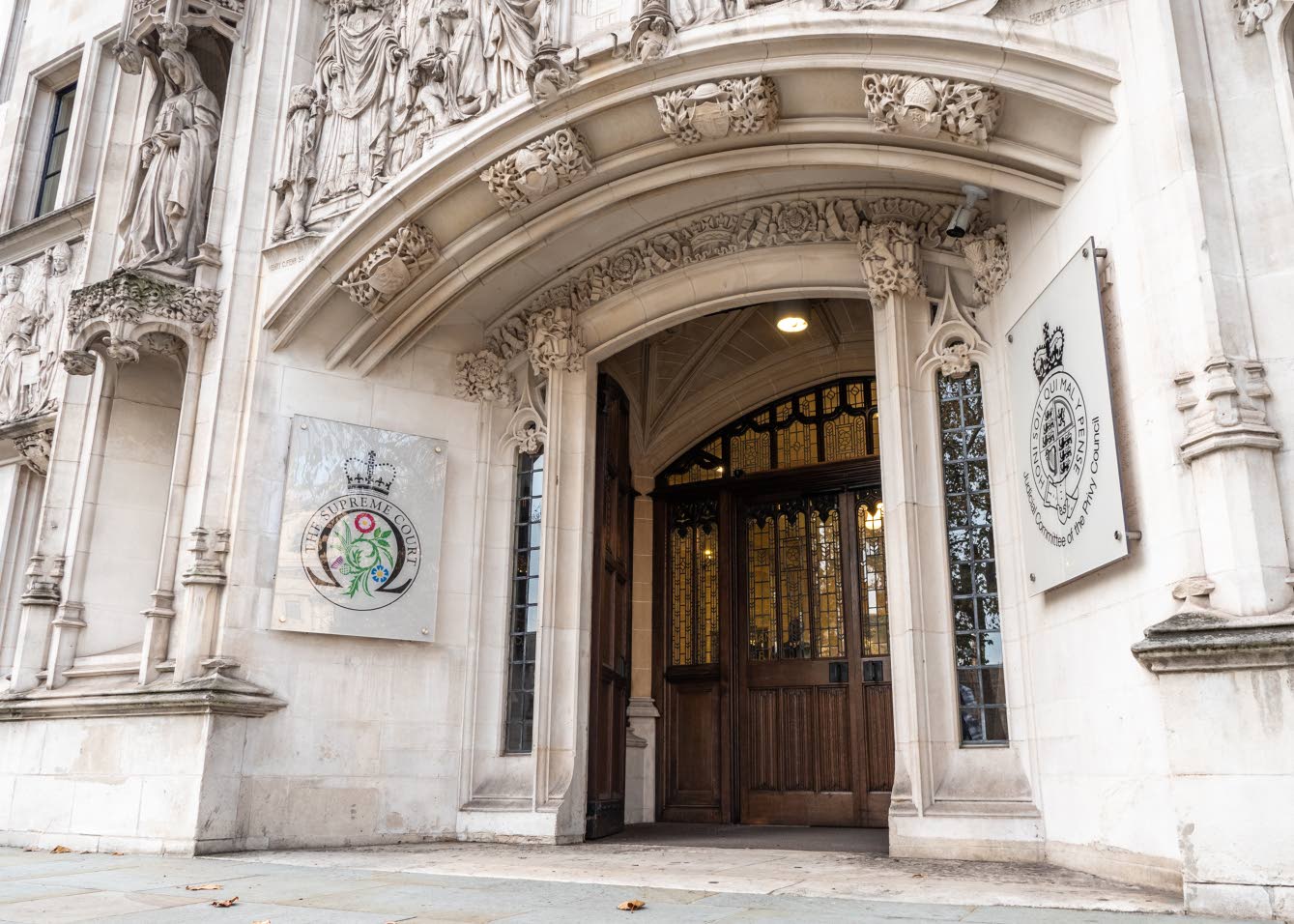
The entrance to the Supreme Court, Parliament Square, London, home to the Judicial Committee of the Privy Council.


