



School shock
Mother alleges beatings, extortion by teachers
A Canadian mother who recently relocated to Jamaica with her two sons and registered them in school on the island’s eastern end is alleging that the boys have been subjected to corporal punishment and extortion by teachers.
According to the parent, who requested anonymity, her first child, who is in grade six, was struck with an object by a teacher and also witnessed similar punishment being administered to other students.
She also said her younger child, who was in grade one at the time, observed incidents of corporal punishment at the same school, including pinching and slapping of students by another teacher, and was reportedly, along with other students, required to pay fines for classroom disruptions.
The parent stated that the younger child’s experience left him so distressed that he was subsequently transferred to another school, where he experienced a similar fate and was again transferred to a third institution in less than a year.
The Jamaica Observer contacted the Ministry of Education for a response to the allegations. However, a spokesman said the ministry needs to check the veracity of the complaints before commenting.
At the same time, the Child Protection and Family Services Agency (CPFSA) confirmed that it has launched an investigation into the allegations.
However, the parent is adamant that the argument of cultural differences given by the school cannot excuse harm to children.
“It needs to change. It needs to be better. There’s so many of these kids [who] already have it bad enough at home in their personal lives. There should be a safe place for these kids to go to feel safe or to turn to if, God forbid, something bad is happening to them. A school is supposed to be a safe place,” she argued in an interview with the Sunday Observer.
“…The day before school starts, the principals bring you in, [along with] all the teachers, and there’s a big meeting. They tell you at the meeting that if you’re caught beating your children on school property the police will be called, and then we send our kids to school and the teachers beat them. It doesn’t make any sense,” she stressed, her voice sharp with icy frustration.
The parent shared that she made several reports to the school’s administration about incidents of corporal punishment involving her children and other students, but each report received less attention than the previous ones. She stated that while the object used to inflict harm was removed from the school, the teachers allegedly continued to hit children with their hands.
She said the school claimed fines charged to students were reportedly a “joke” to keep them in line, but her younger child was adamant they had to pay the fines.
“[The teacher] was pinching kids’ cheeks. She was pinching their chins until they would cry, and then making them put their heads down on the desk until they stopped crying. It was a lot of just weird things. She would make kids put their heads on the desk while she ate so that nobody was looking at her,” the mother said in relation to her younger child.
“My son was getting some serious anxiety at home about needing this money to pay this teacher, and then I am not giving the money because I think that’s insane,” the mother said.
She told the Sunday Observer that after her son reported the matter to her, he was in class and had put his hand up to request a restroom break, but the teacher ignored him because she was seemingly not pleased that he had told his mother about what was happening in the classroom.
“He ended up pooping his pants at school because he was too scared to just go to the bathroom. I knew when that incident had happened that [that] was it. I pulled him out of that school right away,” she said.
According to the parent, she transferred her younger son to another school, only for him to witness similar acts of corporal punishment.
“His teacher there was hitting kids on a regular basis. She was beating them in the back with the ruler; she was hitting their arms, and she was getting them all to line up so she can hit them in a line. I had brought that to the principal’s attention and she addressed it immediately. It had stopped, [but] that was just for a few weeks, and then it was back again,” she said, frustrated.
The parent said while things have been good so far at the younger son’s third school, she remains on edge.
The older son, who has not been transferred, shared that he was told that schools in Jamaica were stricter than in Canada, but he never imagined that they would be so different. He told the Sunday Observer that in North America his teachers were nice, but the students were not as kind, and he was excited to move. However, he quickly noticed that while the students are kinder in Jamaica, the teachers are not.
He got a bit quiet when asked about the teachers in Jamaica, before stating that, while he liked one teacher, he did not like another. Pressed on why, the child said: “Because she hits the children.”
He shared that this was not something he was accustomed to, because in Canada teachers always taught him not to hit others and extend kindness.
“I’m sad and angry that they are being hit because, although it’s not me any more, I feel bad that they are feeling pain or feeling scared [of] coming to school. In Canada, the teachers teach us to never hit at all. That was just how it was, so here it was a surprise,” said the boy, whose identity will not be disclosed.
“Try talking to us or giving punishments like lines, or keeping us inside from lunch or break, or make us do some extra work. Maybe tell us or tell our parents what we did wrong, but don’t hit us,” he said.
The parent’s complaint shines light on two of the provisions under the United Nations Convention on the Rights of the Child, to which Jamaica is a signatory, which considers all corporal punishment as inherently degrading, violating a child’s right to dignity, physical integrity, and protection from all forms of violence, as guaranteed under Article 19.
The Child Care and Protection Act (CCPA) of 2004 in Jamaica forbids cruelty but does not completely outlaw all forms of corporal punishment, particularly in the home. While corporal punishment — the intentional infliction of physical pain on students by staff to discipline or change behaviour, including hitting, paddling, or shaking — is legally restricted in Jamaica’s early childhood institutions and strongly discouraged in public schools, a complete, legally binding ban in all educational settings is still in progress through proposed legislative changes.
The Government has instructed schools to abolish the practice, advising teachers to adopt non-violent discipline alternatives.
In 2017, Prime Minister Andrew Holness, in his contribution to the Budget Debate, announced that the Government would amend the Education Act to explicitly prohibit corporal punishment in schools.
He further stated in 2024 that a total ban on corporal punishment is among the recommendations of the National Violence Prevention Commission that is mandated to conduct a comprehensive review of all existing public and private violence-prevention programmes as well as the Government’s strategies. However, to date, corporal punishment is not completely banned in Jamaica. The Government has instead been working with various organisations to promote less harmful disciplinary actions and positive parenting practices.
While the National Children’s Registry (NCR) does not disaggregate physical abuse reports to reflect corporal punishment, data show that 698 incidents of physical abuse were reported for the first two months of the year. A look at previous years reveals that physical abuse cases briefly dropped from 3,949 incidents in 2022 to 3,405 in 2023. However, the figures began to climb in 2024, when 3,686 incidents of physical abuse against children were reported. A total of 3,792 incidents were recorded in 2025.
The CPFSA, in an e-mailed response to the Sunday Observer, said it continues to call for an end to all forms of abuse against children and has been conducting numerous public education campaigns regarding child abuse, including physical abuse and corporal punishment.
“Corporal punishment is a form of physical abuse, and the CPFSA stands firmly against all forms of abuse against children,” said the agency.
UNICEF Jamaica also actively advocates a full legal ban on corporal punishment, highlighting that four out of five children aged one to 14 in Jamaica experience violent discipline. UNICEF said it supports “positive parenting” and initiatives to replace physical punishment with non-violent discipline, working with the Government to protect children from violence at home and in schools.
At a recent conversation hosted by the Office of the Children’s Advocate with relevant stakeholders in civil society, looking at ‘Discipline that Teaches: Corporal Punishment vs Alternative Discipline’, UNICEF representative Olga Isaza underscored that corporal punishment violates a child’s inherent right to dignity and protection from violence, and encouraged participants to embrace evidence-based, nurturing approaches.
“If we want a Jamaica that is less violent we must begin in homes, classrooms, and communities,” Isaza said, and underscored UNICEF’s commitment to strengthening positive parenting programmes, supporting evidence-based policy reforms, to ensure that every child’s right to safety, dignity, and protection is upheld.
President of the National Parent-Teacher Association of Jamaica Stewart Jacobs also condemned corporal punishment in schools. He told the Sunday Observer that teachers “should never be given the right to lay their hands on a child”.
He declared it is time to bring an end to the decades-long debate with a full ban on corporal punishment.
“It shouldn’t be on the books just going around, and nobody wants to bell the cat. It is a cat that has to be belled. We’re talking about our children… If at no other time in our history as humans, as a country, we need to embrace our children, it is now because they have been virtually embraced by persons on the other side who have no interest in them. Why should we now abuse our children so that they go elsewhere to be embraced? I do hope that the next life cycle of the court year, and the Parliament, that it will be put front and centre,” said Jacobs.
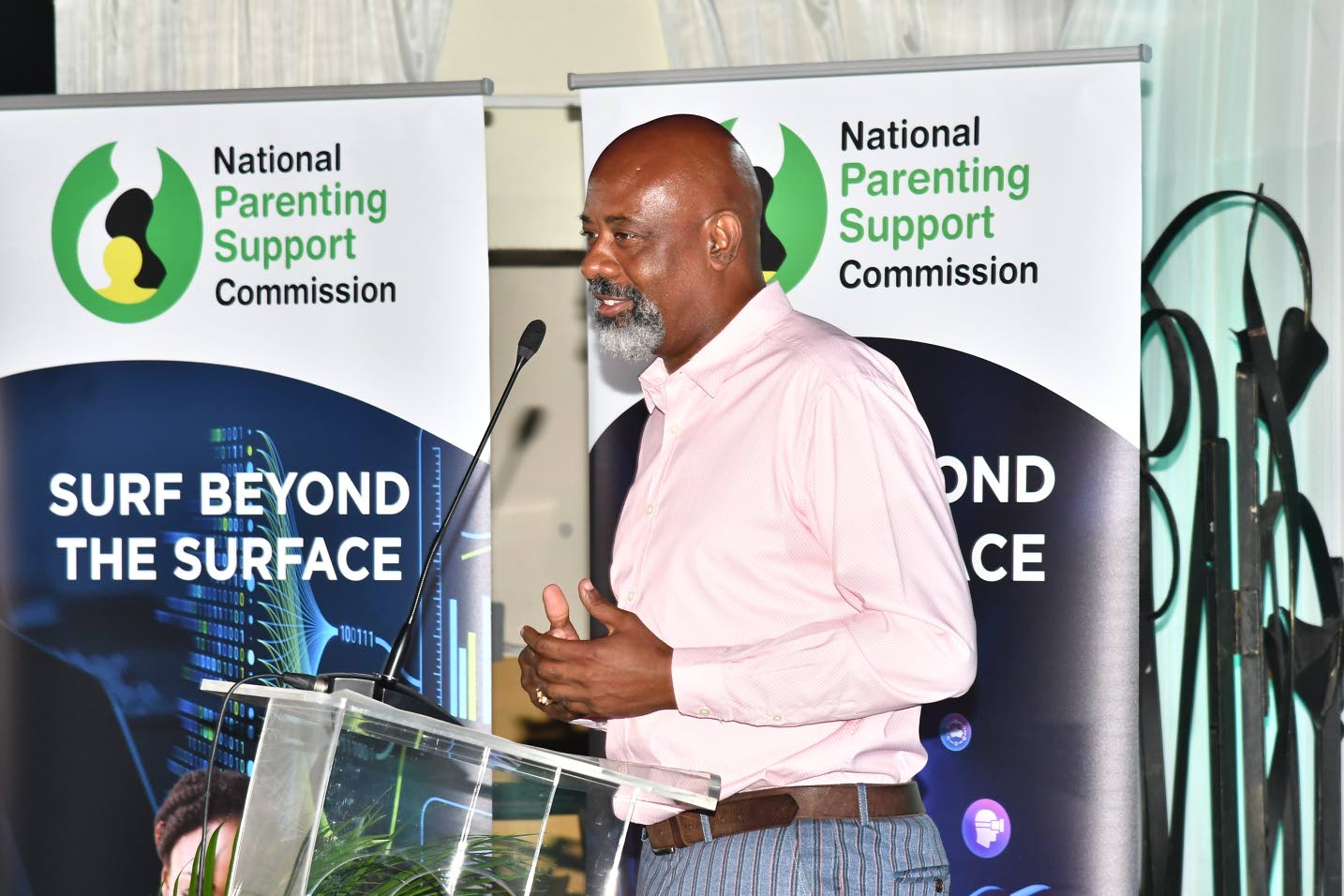
JACOBS… it shouldn’t be on the books just going around, and nobody wants to bell the cat
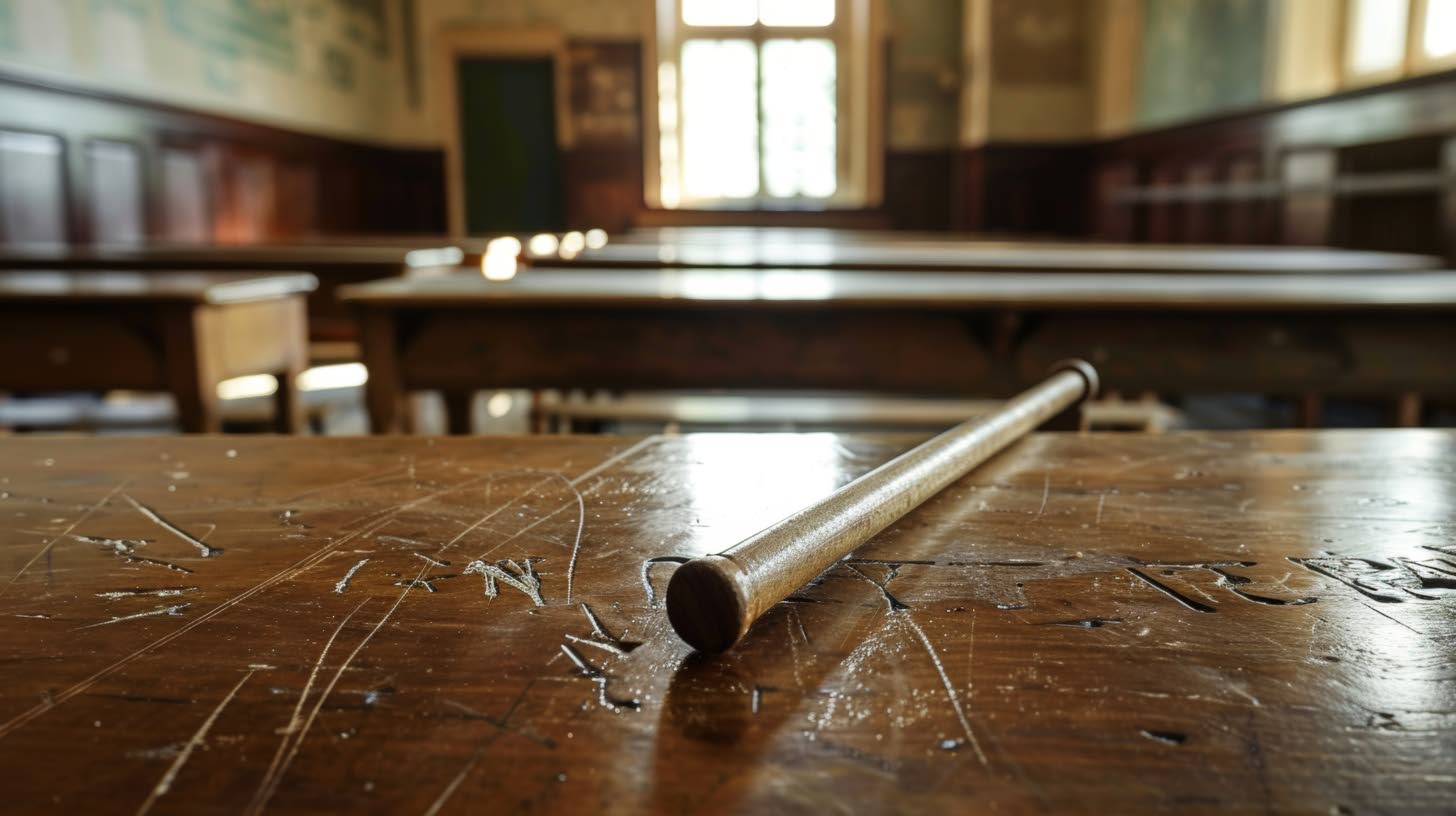
UNICEF Jamaica actively advocates a full legal ban on corporal punishment, highlighting that four out of five children aged one to 14 in Jamaica experience violent discipline.
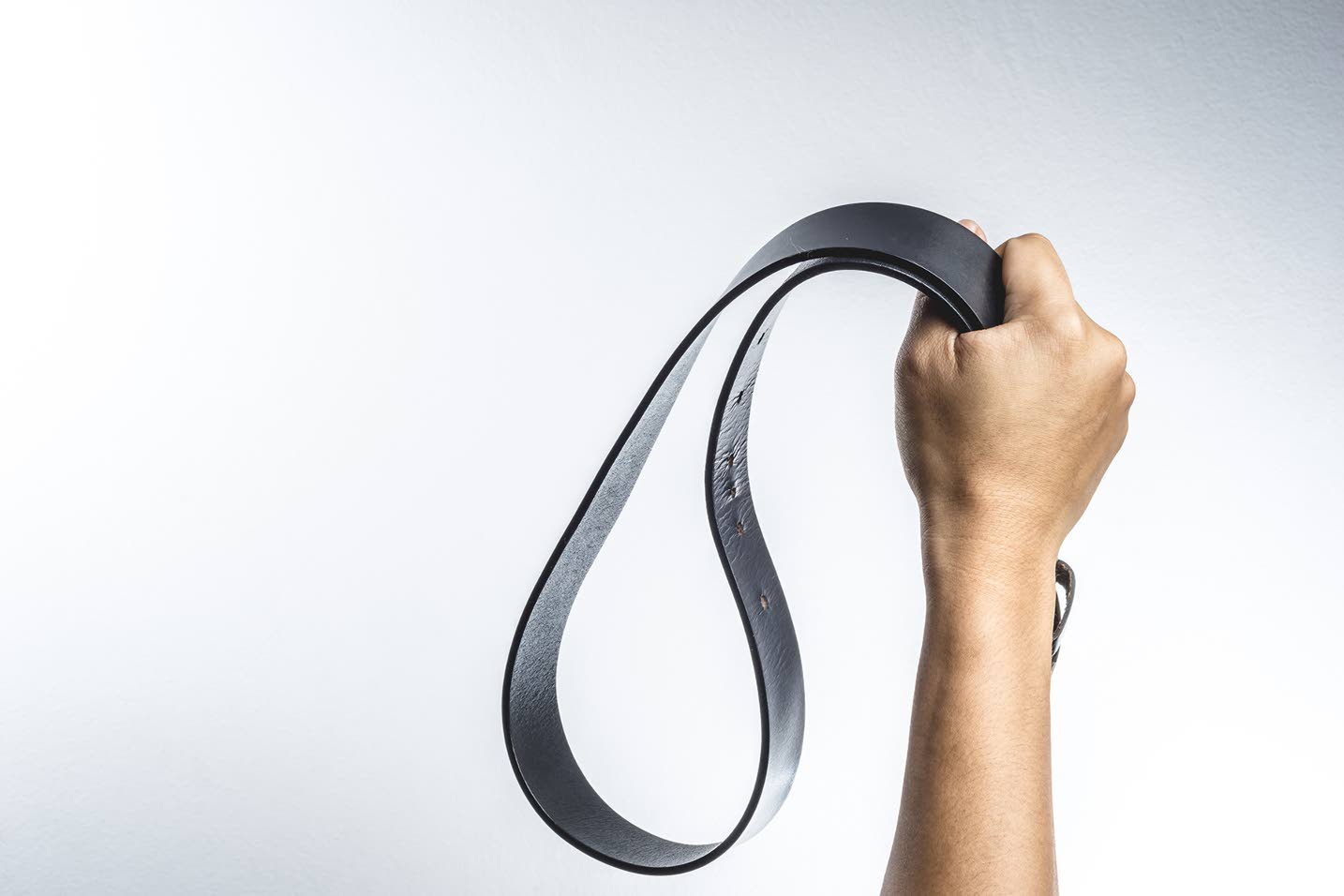
The Child Care and Protection Act of 2004 in Jamaica forbids cruelty but does not completely outlaw all forms of corporal punishment, particularly in the home.


