



Advocate flags communication gap for deaf Jamaicans
...warns lack of sign language in media cutting them off
JAMAICA Council for Persons with Disabilities Executive Director Dr Christine Hendricks says thousands of deaf Jamaicans are being left without critical information and are forced to rely on second-hand accounts, as she called for sign language interpretation to become standard in newscasts and public communication.
Her warning comes amid growing concern that communication barriers remain one of the most persistent obstacles to inclusion in Jamaica, even as the country accelerates its shift towards digital public services and modern governance systems.
Speaking during an All-Inclusive Service Webinar last Friday — hosted in partnership with the Ministry of Labour and Social Security, the Management Institute for National Development (MIND), and the Jamaica Council for Persons with Disabilities (JCPD) — Hendricks argued that access to information must be treated as a fundamental right rather than an optional add-on.
She pointed to the daily reality faced by deaf Jamaicans, many of whom are unable to independently access news and public announcements, leaving them vulnerable when timely information is critical.
“Communication access is a part of inclusion that many persons struggle with. [And] sign language interpretation in Jamaica is a necessity because we have 75,000 and more persons who are deaf or hard of hearing who may know sign language and would need to access information and so sign language interpretation at public hearings is important. So when we’re putting out a video, when we’re doing an advertisement — any ad — it should have sign language interpretation. When we’re doing the newscast, sign language interpretation should be there,” Hendricks said.
She underscored that the issue goes beyond convenience, highlighting the risks posed when deaf individuals are cut off from real time updates during emergencies or major national developments.
“Recently, at the launch of the ICT [Information and Communication Technology] Accessible Standards, we had a panel discussion, and one of our deaf participants, he shared the difficulty getting information from news. The newscast every evening is something that we [those who can hear] either choose to watch or we choose not to watch, but people who are deaf don’t have that choice. They have to await people to listen first and then tell them — and you and I know that sometimes when we get the information second-hand and third-hand, a lot of the information is missing,” she expressed.
She illustrated the real-world dangers of that gap, pointing to situations in which delayed or missing information could put lives at risk.
“And so what if there’s a disaster? What if there’s a curfew? What if they need to know, ‘Do not drive on Marcus Garvey Drive today because there’s a shoot-out or there’s an accident’ ? But, because they didn’t hear it on the news they end up on Marcus Garvey Drive and could end up in a crossfire or end up wasting time sitting in traffic,” she added.
Hendricks framed communication access as part of a wider set of systemic gaps that continue to limit the participation of persons with disabilities in Jamaican society, noting that inclusion must extend beyond physical infrastructure such as ramps and designated parking.
She stressed that Jamaica’s long-term development goals are directly tied to how well the country integrates persons with disabilities into all aspects of national life.
Vision 2030 Jamaica — the country’s national development plan — includes a disability sub-sector strategy aimed at promoting full participation in economic and social life. However, Hendricks argued that meaningful progress will depend on whether barriers — particularly in communication and access to information — are actively dismantled.
“If it is that people with disabilities are not included in our society, Vision 2030 would have failed. And even if we move Vision 2030 to Vision 2050 or 2060 and people with disabilities are left out, we would have failed as a country,” she said.
She also raised concerns about the rapid expansion of digital services, warning that without deliberate efforts to make online platforms accessible, the shift to e-government could deepen existing inequalities.
The advocate, therefore, called for a broader rethink of how information is presented, pushing for simpler language and visual aids to ensure that content is accessible to the widest-possible audience.
At the same time, Hendricks highlighted the scale of the issue, noting that Jamaica’s disability population remains significantly undercounted, even as estimates suggest hundreds of thousands of citizens are affected.
She argued that improving data collection is essential for shaping effective policies and tracking progress on inclusion.
For his part, Minister of Labour and Social Security Pearnel Charles Jr said the Government recognises that inclusion must be embedded into the design of public services and national systems, rather than treated as an afterthought.
He described the webinar series as part of a broader push to build a more inclusive and responsive public sector, noting that real progress will require a shift in mindset across institutions.
“Inclusion is not merely about the concrete, or the walls, or the equipment. It is about our attitude, it’s about the systems, it’s about accountability. It’s about how you approach these matters in your daily life and in your service,” Charles Jr said.
The minister said the Government is working to ensure that policies and programmes are not only legally compliant but also responsive to the lived experiences of persons with disabilities, including improvements in digital access and service delivery.
“As we expand, digital services include and must be built into their design and into all the designs across the various ministries and agencies so no Jamaican should have the threat of being left behind in an increasingly digital society,” he added.
Charles Jr also emphasised that removing barriers is not simply a matter of social support but a key driver of national development, arguing that greater inclusion would unlock untapped economic potential.
“There are a lot of persons with disabilities who can and who want to significantly contribute in many different ways to many different sectors… but it is because we have not created the environment where they can thrive,” he said.
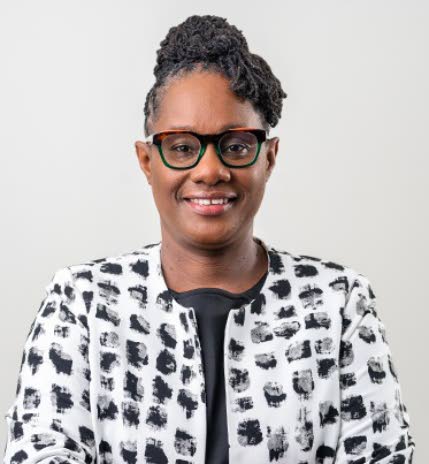
HENDRICKS…if it is that people with disabilities are not included in our society, Vision 2030 would have failed


