



Jamaica’s middle class: Priced out of the future
Rebuilding the contract
Jamaica’s middle class is not collapsing loudly. It is thinning quietly. Housing absorbs disproportionate income, transport extracts time and productivity, and skilled citizens exit without protest. Fertility declines not because of cultural rejection of family life but because of rational hesitation. Beneath macroeconomic stability lies microeconomic fragility.
Jamaica’s broader economic narrative over the past decade has emphasised discipline and recovery. Public debt has fallen significantly as a share of gross domestic product (GDP). Inflation, after external shocks, is moving towards the target range established by the Bank of Jamaica (BOJ). The Planning Institute of Jamaica (PIOJ) has reported historically low poverty levels, with the national poverty rate estimated at approximately 7.8 per cent in 2024 — the lowest level recorded since modern measurement began in 1989. The Statistical Institute of Jamaica (Statin) has reported steady labour force participation and improving employment indicators.
These achievements are real; they matter, but they do not tell the full story.
According to Statin, average monthly earnings in the formal sector were approximately $197,000 in 2024. Combined household earnings for middle-income families often fall between $300,000 and $500,000 per month. On paper, those figures once implied stability; in practice, after mortgage or rent, utilities, transportation, food, education expenses, insurance and loan repayments, the margin remaining for savings or investment is narrow.
This compression is structural. Nominal wages have risen, but housing prices, imported food costs, energy exposure, and interest rate adjustments have absorbed much of that increase. The result is not visible poverty; it is visible fragility.
Demography reinforces the warning. International demographic data place Jamaica’s fertility rate at approximately 1.4 births per woman in 2024, well below the replacement level of 2.1 required to maintain stable population growth without migration. The PIOJ has also noted a net population decline driven by fewer births and continued outward migration. These are not isolated trends, they are economic signals. When households delay or avoid childbearing, they are responding to perceived instability.
Part four of this series, which presented original survey findings from middle-income earners in Montego Bay, St James, confirmed what national data suggest. Respondents reported persistent financial strain despite steady employment. Many indicated that they could not accumulate meaningful savings. A significant share reported considering migration within the next five years. Several described housing costs and commuting burdens as the most exhausting elements of their economic lives. The erosion is measurable, and it is lived.
If the crisis is structural, the response must be structural.
HOUSING REFORM AND ASSET ACCESS
Housing is the central bottleneck to middle-class security. In major urban centres such as Kingston and Montego Bay, properties that sold for $15,000,000 to $20,000,000 in the early 2010s now list for $40,000,000 to $60,000,000 more. Deposit requirements of 20 to 30 per cent remain standard across financial institutions. Even dual-income households earning near the formal sector average struggle to assemble the necessary equity without prolonged saving or external assistance.
Renting provides limited relief. In many urban communities, rental payments consume 40 to 50 per cent of gross household income, exceeding internationally accepted affordability thresholds. When housing absorbs that share of income, wealth accumulation becomes nearly impossible.
Current housing policy frameworks, including those administered by the National Housing Trust (NHT), primarily address low-income access and broad market activity. There is no dedicated structural instrument focused specifically on middle-income supply expansion at scale. A viable intervention would be the establishment of a Middle-Income Housing Supply Bond issued by the Government of Jamaica. Bond proceeds would finance mid-rise residential developments in proximity to employment centres. Funds would be directed towards infrastructure and site preparation, lowering development costs and, therefore, end prices without distorting private markets through blanket subsidies.
Complementing this should be a Mortgage Payment Stability Facility administered in collaboration with licensed financial institutions and overseen by the BOJ. This facility would temporarily smooth mortgage payment increases during periods of significant interest rate tightening. It would function as a countercyclical buffer rather than a permanent subsidy, protecting households from sudden destabilisation, while preserving credit discipline. Neither instrument currently exists in Jamaica.
TRANSPORT AND TIME AS ECONOMIC VARIABLES
Survey responses from part four repeatedly identified commuting as a major source of fatigue and lost opportunity. In Kingston and surrounding areas, daily commute times frequently range from 90 minutes to 2 hours. Over a five-day work week, this represents 10 hours or more of unpaid time loss. Over a year, that loss compounds into hundreds of hours removed from family life, professional development, or secondary income generation.
Transport inefficiency is not simply a convenience issue; it is an economic leakage. A structured Employer Transport Incentive Scheme should be introduced through the tax code. Firms that provide certified employee transportation systems, satellite office options within residential clusters or staggered work schedules that reduce peak congestion would receive measurable tax incentives. This would directly reduce commuting burdens while improving productivity.
In addition, designated Transit Oriented Development Zones should be legislated within municipal planning frameworks. These zones would integrate housing, commercial spaces, and amenities near employment hubs. Approval processes within such zones would be streamlined, with enforceable timelines. At present, no such nationally coordinated transit-oriented housing strategy exists.
INCENTIVE REPAIR AND PROFESSIONAL RETENTION
Brain drain remains one of Jamaica’s most persistent challenges. According to migration data and labour market assessments referenced by the PIOJ, skilled emigration continues to affect sectors such as health care, education, and engineering. Migration is often framed as a cultural issue, but in reality, it is an economic calculation.
A Professional Retention Tax Credit should be legislated for individuals in critical sectors who commit to continuous domestic service for defined periods. The credit would increase with tenure, providing a tangible financial reward for remaining in Jamaica. This would not be a blanket exemption, but a structured incentive aligned with national human capital needs.
Additionally, a Diaspora Investment Co-participation Fund could be established to transform remittance flows into equity investments within domestic enterprises. Rather than remittances supporting consumption alone, it would be leveraged into productive capital through regulated vehicles overseen by the Financial Services Commission of Jamaica (FSC). No such co-participation fund currently operates at scale in Jamaica.
DEMOGRAPHIC STABILITY AND FAMILY FORMATION
Jamaica’s ageing population trend, documented by the PIOJ, signals future fiscal pressure as the ratio of working-age citizens to dependents narrows. Encouraging family formation is not a social slogan; it is an economic necessity. A Childcare Cost Offset should be introduced within the income tax framework for families with children under five years old. This offset would apply to registered childcare expenses and would be phased as children age. The objective is to reduce early-stage cost burdens that discourage fertility decisions. Jamaica currently offers no targeted middle-income childcare tax offset of this nature.
CAPITAL PARTICIPATION AND WEALTH BUILDING
Middle-income earners contribute significantly to GDP but have limited structured access to capital growth. Without equity participation, wage earners remain dependent on salary progression alone.
A regulated Middle-Income Equity Access Platform should be created within the domestic capital market architecture. This platform would allow lower entry thresholds for participation in approved domestic enterprises and real estate investment structures. Oversight would be provided by the FSC to ensure transparency and risk protection. Such a targeted middle-income equity access framework does not currently exist.
REGULATORY CERTAINTY AND ADMINISTRATIVE REFORM
Administrative delays in development approvals, business registration, and professional licensing introduce uncertainty and cost. These inefficiencies function as hidden taxes on productivity. A Regulatory Certainty Charter should be enacted through legislative amendment, establishing enforceable processing timelines for defined categories of approvals. Institutions that exceed statutory timelines without justified cause would face accountability measures. Jamaica does not currently operate under a binding cross agency regulatory certainty framework.
Macroeconomic stability has been achieved, but stability at the national level has not translated into predictable security at the household level. The data from Statin, PIOJ, and BOJ confirm structural shifts in wages, demography, and cost burdens. The findings from part four confirm lived strain.
This bonus part does not call for temporary relief; it calls for contract redesign. If effort continues to yield exhaustion rather than accumulation, middle-class attrition will accelerate. If incentives are recalibrated, supply expanded, and capital access widened, the trajectory can change.
The middle class is not asking for rescue, it is asking for a system in which productivity and security once again move together.
That recalibration remains within Jamaica’s reach.
Janiel McEwan is an economic consultant. Send comments to the Jamaica Observer and janielmcewan17@gmail.com.

Janiel McEwan
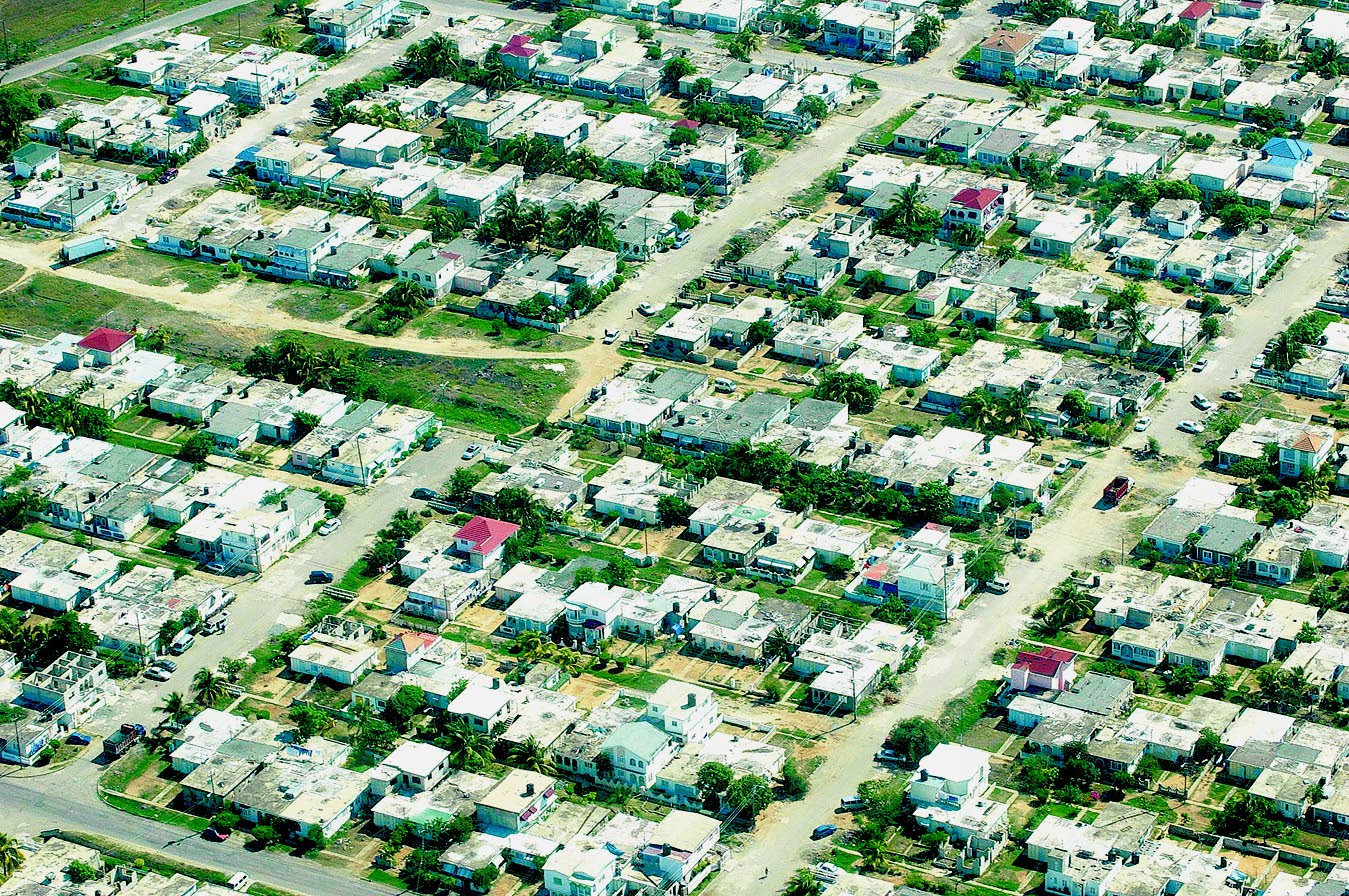
Lack of affordable housing continues to plague the middle class. Observer File

According to Statistical Institute of Jamaica, average monthly earnings in the formal sector were approximately $197,000 in 2024.

Transport inefficiency is not simply a convenience issue; it is an economic leakage.


