



Banana farmers step up mitigation efforts against TR4 threat
BANANA farmers across Latin America and the Caribbean (LAC) are intensifying efforts to contain and mitigate the spread of Fusarium Tropical Race 4 (TR4), a destructive soil-borne fungus that continues to threaten livelihoods and food security in key producing regions.
The urgency of these actions has been underscored by developments in countries such as Venezuela, where authorities already confirmed the presence of the disease in 2023.
In key farming communities across the South American country, mitigation efforts have already begun to reshape agricultural practices. Following the destruction of infected fields, farmers are now transitioning to alternative crops as part of a broader soil restoration and recovery strategy supported by the Food and Agriculture Organization of the United Nations (FAO).
“Crop diversification has emerged as a central pillar of the response, with producers shifting into corn, cassava, beans, chilli peppers and pumpkin,” Venezuela’s National Institute of Integral Agricultural Health (INSAI) has said, while noting the importance of the strategy as critical to restoring productivity and in reducing the risk of further contamination.
Through a targeted pilot programme farmers have also been equipped with seeds, tools and biosecurity inputs, alongside technical training designed to strengthen resilience and rebuild output.
“Planting corn gave us a harvest that benefited everyone. We have been improving the soil,” said Venezuelan farmer Lesbia Margarita García, who noted that crop rotation, soil monitoring, and the use of natural fertilisers are now key components of farm management.
The latest measures — which are being reinforced by strict biosecurity protocols — the farming health institute said are also aimed at preventing further spread of the fungus. Key actions include controlled access to farms, sanitation of equipment, and ongoing surveillance.
At a higher institutional level, mitigation efforts are further strengthened through continuous monitoring, national awareness campaigns, and closer coordination among stakeholders. INSAI, with support from FAO, has expanded farmer training programmes focused on early detection, containment, and long-term agricultural resilience.
Utilising technology to play an increasingly important role in mitigating effects of the deadly crop disease, the FAO, with the introduction of multispectral drones and enhanced laboratory capacity, have also been playing an active role in helping farmers improve phytosanitary surveillance.
“The use of technology will help with enabling faster identification of outbreaks and more targeted responses,” the FAO said.
As countries across the LAC move to safeguard their agricultural sectors, many are taking proactive steps to prevent the disease from entering their borders. TR4, which attacks the vascular system of banana and plantain crops, is widely regarded as one of the most devastating agricultural diseases. It has the ability to persist in soil for decades, making containment and prevention the only viable management strategies.
Locally, the Ministry of Agriculture, Fisheries and Mining has stressed the importance of keeping the TR4 strain out, particularly given the historical impact of earlier strains such as TR1 and TR2 on Jamaica’s banana varieties.
With collaboration remaining a key component of the mitigation strategy globally, an initiative such as the World Banana Forum, spearheaded by the FAO, is seen as an important facilitator of knowledge sharing and capacity building. The forum, through its efforts, has been helping countries to strengthen technical readiness, even as it pushes to align responses across borders.
As TR4 continues to spread across parts of Asia, Africa, the Middle East and Australia, the coordinated mitigation measures now being implemented across the region are seen as critical to safeguarding the future of the industry.
“Bananas and plantains remain critical to both income generation and nutrition across the developing world,” FAO noted, underscoring the importance of sustained support for farmers as they adapt to the ongoing threat.
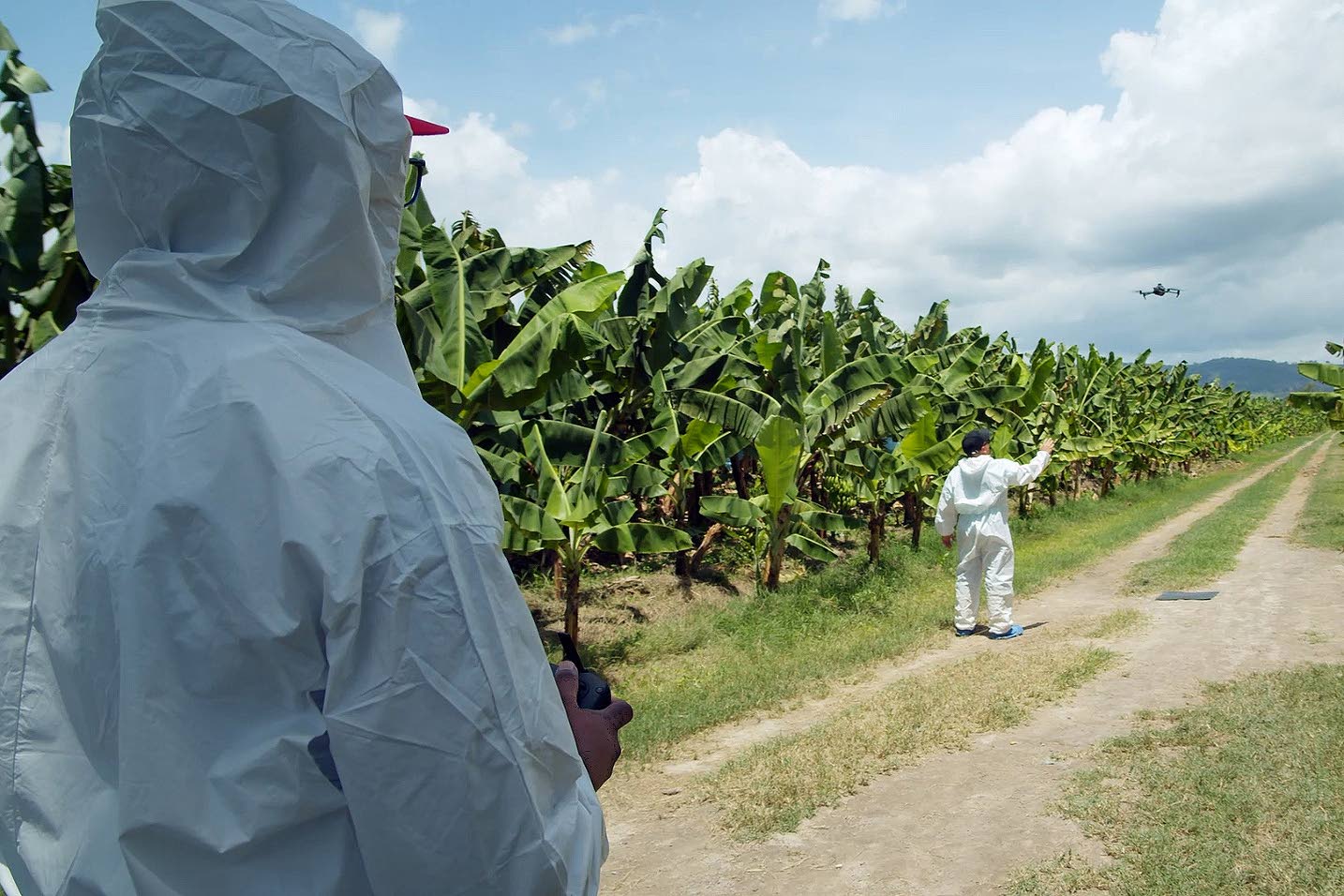
The FAO has provided laboratory equipment and a multispectral drone to INSAI to help farmers with phytosanitary surveillance.


