



Kintyre goes after bottled water market
…looks to up stake in alcoholic beverages with roll-out of canned rum cream product
KINTYRE Holdings (JA) Limited is ramping up a major push into manufacturing as it enters Jamaica’s competitive bottled water market.
Chairman and CEO Tyrone Wilson said the company is investing close to $1 billion to build out its manufacturing and distribution divisions, positioning Kintyre across several product lines even as it enters a market long dominated by established water brands.
The local bottled water industry, led by players such as WATA, Catherine’s Peak and Lifespan, has become increasingly competitive in recent years, with companies expanding into premium, alkaline, and environmentally conscious offerings. Valued at over US$50 million last year, the market is projected to grow by roughly seven per cent annually, surpassing US$67 million by 2029. Globally, the sector is estimated to have exceeded US$300 billion in 2025 and could reach as much as US$539 billion by 2034.
“Consumers are becoming more informed, and people want water that has gone through a system they can trust. There is also an increased awareness about health, water quality, and climate-related disruptions that are now driving demand for purified and processed drinking water — and we want to be among the top choices,” Wilson told the Jamaica Observer following the company’s annual general meeting held last Thursday.
At the centre of Kintyre’s entry is its Pure 5X spring water brand, acquired through a strategic joint venture with Miracle Corporation Limited and which gives the company an opportunity to own and expand a portfolio of branded consumer goods.
The product, sourced from a spring in Clarendon, is expected to serve as the company’s initial foothold in the market, with further expansion planned through additional water sources on lands under lease in Portland and St Mary.
To support that growth the company has invested more than $200 million in machinery and infrastructure, including a fully automated bottling system designed to handle the production process from purification to packaging.
“This machine can produce about $70 million worth of 500 ml bottled water (in cases of 24) per month. It handles full end-to-end operations — bottling, filling and packaging — while reducing the level of manual labour required,” Wilson said.
While the company has not disclosed specific market share targets Wilson indicated that Kintyre intends to rank among the top five players in each segment it enters.
“Our focus right now is getting more products on shelves, building brand recognition, and expanding distribution,” he said, noting early traction among clients in the hospitality and tourism sectors where demand for reliable, high-quality bottled water remains strong.
Beyond bottled water, Kintyre is preparing to roll out additional product lines as it expands its manufacturing footprint. Plans are in place to introduce a filtered water brand in the coming months, while the company is also moving ahead with entry into the ice-making business under its Kool Choice label.
The expansion extends further into beverage manufacturing, with the company developing canned rum cream products and rum-infused icicles to be produced using its Kulcha hemp-infused rum.
“For the rum cream products, we are looking at a number of new flavours such as strawberry, which the machine has the potential to do. We’re currently working on branding and design, and while a name hasn’t been finalised it will align with our Kulcha rum identity,” Wilson said.
Wilson said that while the scale of investment may appear significant, the company is optimistic about the long-term returns as it builds out its manufacturing base alongside its existing operations.
In addition to manufacturing, Kintyre operates in real estate as well as media and advertising, with the company now focused on strengthening its product portfolio, logistics and access to capital.
“We’re almost done with structuring the company. However, the focus now is on building out our product portfolio, strengthening logistics, and securing additional capital to scale each division effectively,” he said.
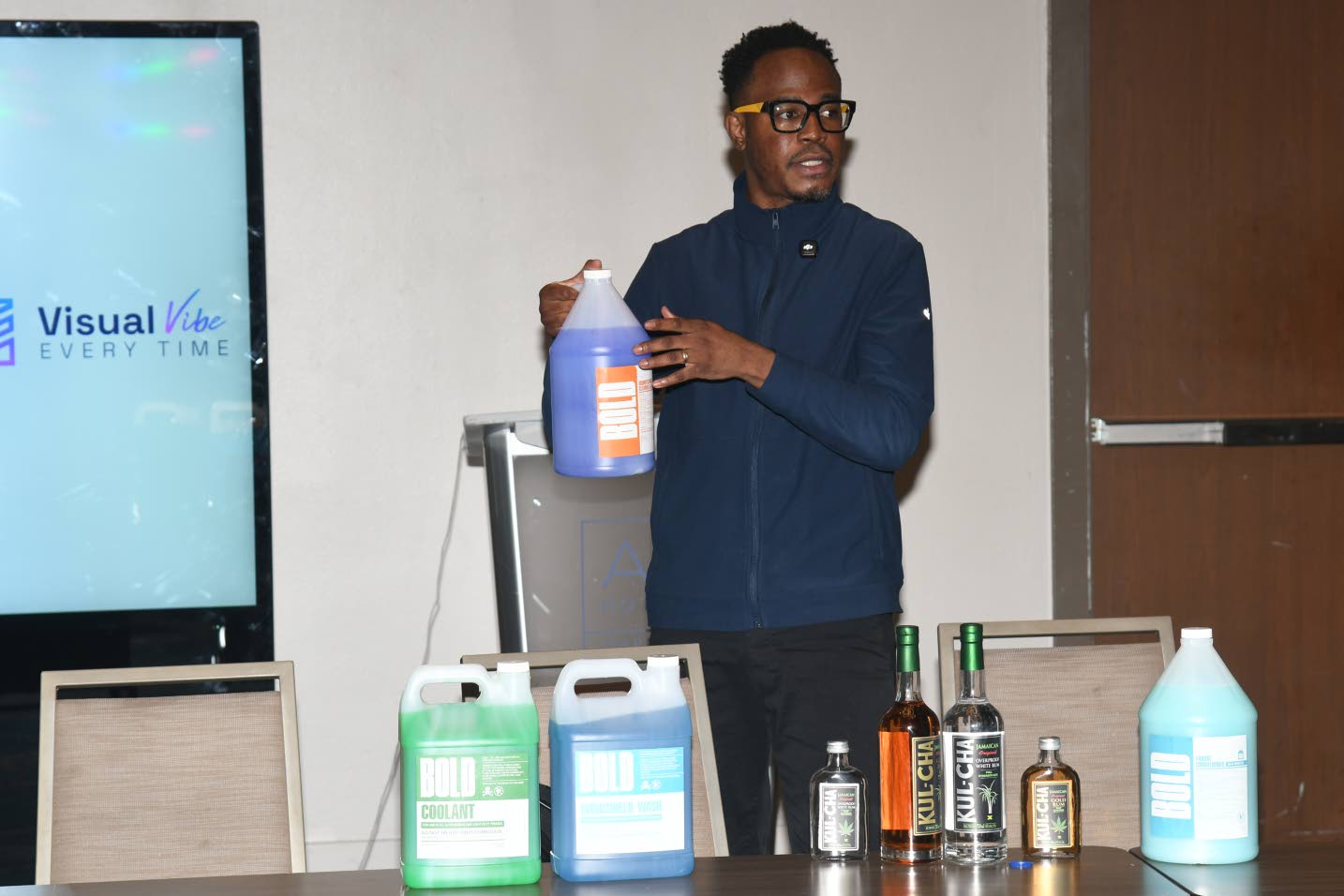
Chairman and CEO of Kintyre HoldingsTyrone Wilson showcases a number of the products carried by the company’s manufacturing division, during the annual general meeting held on March 19 at the AC Hotel Kingston. (Photos: Karl Mclarty)


