



Gov’t urged to consider sale and lease plan for hurricane-hit schools
WITH nearly 700 schools still needing repairs after they were destroyed by Hurricane Melissa last October, chairman of the Education Transformation Oversight Committee Dr Adrian Stokes is urging the Government to consider inviting private sector entities to use pension funds to rebuild the plants and lease them back to the State.
Stokes made the proposal during an Education Transformation Oversight Committee’s quarterly press conference at Shortwood Teachers’ College on Thursday as he argued that the scale of the recovery is too large for the national budget.
He said after the devastation caused by the Category 5 storm the country now has an opportunity to replace damaged school plants with stronger, better designed learning environments.
“Bold choices are required by the Government of Jamaica to ensure proper funding is secured to rebuild on the scale and speed that the disaster calls for. As I have stated elsewhere, the national budget cannot accommodate the scale of the financial capital needed to rebuild,” said Stokes.
At the centre of his proposal is a model that would allow the Government to partner with Jamaican pension fund holders, and other long-term investors rather than relying solely on direct public spending or external borrowing.“For every school built by the Government, the State should seek to sell that school to pension funds and other long-term investors and enter simultaneously into long-term contracts with those same investors. Alternatively, pension funds can build the schools and lease back these schools to Government on a long-term basis,” he said.
Stokes sought to head off any suggestion that such an arrangement would amount to privatisation of public education, insisting that the State would retain control of the institutions and that students would remain unaffected in practical terms.
He framed the proposal not only as a recovery tool, but also as a financial strategy that could benefit both the country and pension contributors by keeping investment returns at home while easing the immediate fiscal burden on the Government.
“Students keep their classrooms, pension savers gain stable, long-duration returns, and importantly, the Government converts $190 billion in deficit pressure into fiscal space without mortgaging Jamaica’s future to foreign creditors,” Stokes said.
While the pension fund proposal has not yet been adopted as Government policy, permanent secretary in the Ministry of Education, Skills, Youth and Information Dr Kasan Troupe indicated that the concept is not entirely new to the ministry and is broadly in line with work that had already begun around public-private partnership (PPP) models.
“It’s similar to what the ministry began some time ago, I think coming out of COVID, and when we got the challenge to redesign how we built our schools, we actually did an assessment on the public-private partnership, and we got the assistance of one of our international development partners (IDPs) to assist us with putting a consultancy together, and a series of work activities were done to pull a report together that we have tabled. And so there is an appetite for PPPs in Jamaica,” Troupe said.
She pointed to Christel House Jamaica as an example that the model is not unfamiliar in the Jamaican context.
Still, Troupe was careful to stress that no formal decision has yet been made by the Government to use that model in the current rebuilding effort. Instead, she said, it remains one of the approaches now being actively considered as the ministry and its partners try to accelerate repairs and long-term reconstruction.
“So currently, we have our NET (National Education Trust) leading the process. We have our technical services unit leading the process. We have our donors who are also helping us. And those are some of the elements of the rebuilding plan,” she said.
According to Troupe, for now, the ministry’s immediate focus remains on spending the funds already allocated and getting damaged schools back into shape as quickly as possible.
“The Government has committed $18 billion in this year to assist us, and that will add to our previously approved budget of $3.4 billion. So we have over $21 billion investing into the rebuilding of our schools this year, and we are grateful… So we are looking forward to moving the work along in the infrastructure portfolio and expending the $18 billion and getting all our schools — almost 700 schools — back up and running,” Troupe said.
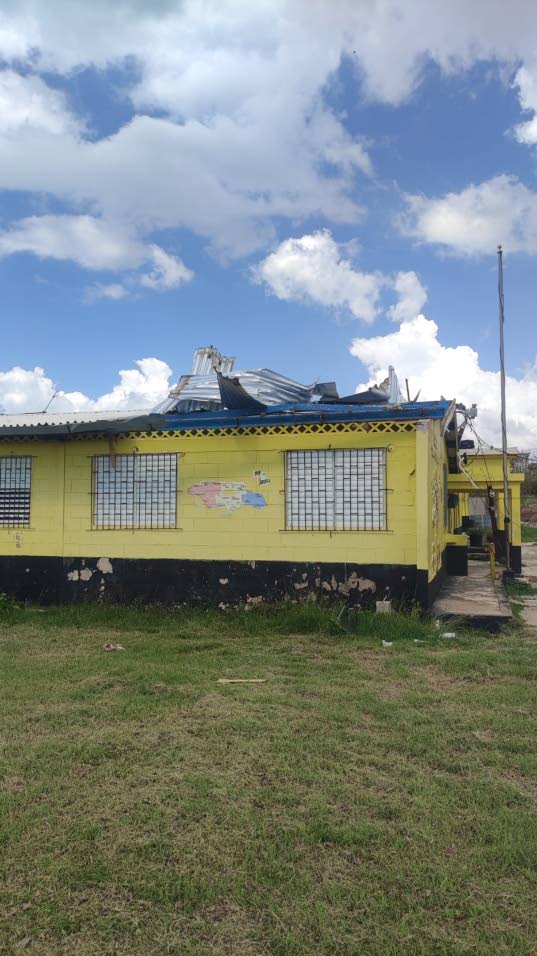
Sandy Bay Primary School in Treasure Beach, St Elizabeth following the passage of Hurricane Melissa on October 28 last year.
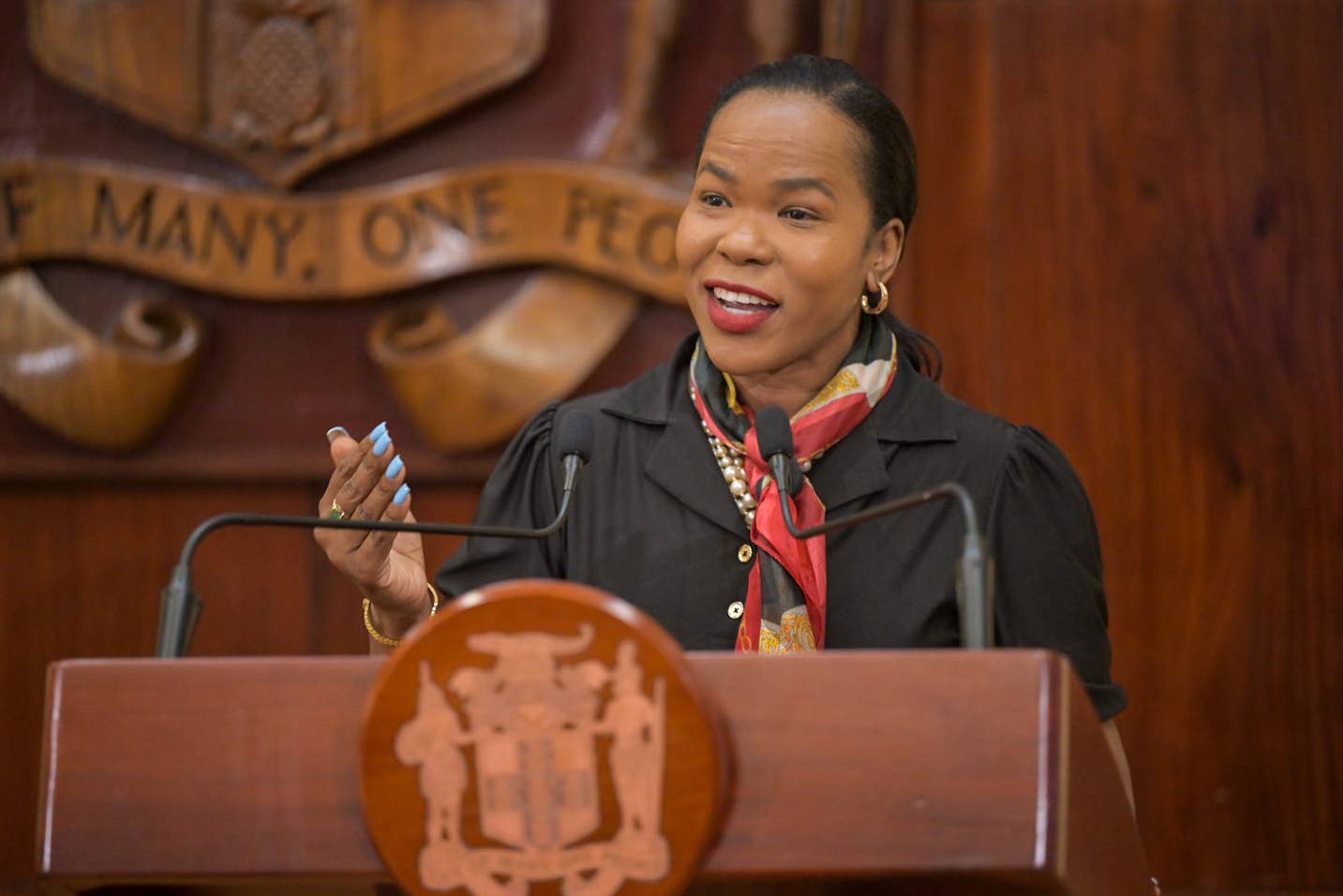
TROUPE…for now, the ministry’s immediate focus remains on spending the funds already allocated and getting damaged schools back into shape as quickly as possible


