


Subscribe Login
Jamaica Observer
ePaper
The Edge 105 FM Radio Fyah 105 FM
Jamaica Observer
ePaper
The Edge 105 FM Radio Fyah 105 FM
    • Home
    • News
      • Latest News
      • Cartoon
      • International News
      • Central
      • North & East
      • Western
      • Environment
      • Health
      • #
    • Business
      • Business Bites
      • Social Love
    • Sports
      • Football
      • Basketball
      • Cricket
      • Horse Racing
      • World Champs
      • Commonwealth Games
      • FIFA World Cup 2022
      • Olympics
      • #
    • Entertainment
      • Music
      • Movies
      • Art & Culture
      • Bookends
      • #
    • Lifestyle
      • Page2
      • Food
      • Tuesday Style
      • Food Awards
      • JOL Takes Style Out
      • Design Week JA
      • Black Friday
      • #
    • All Woman
      • Home
      • Relationships
      • Features
      • Fashion
      • Fitness
      • Rights
      • Parenting
      • Advice
      • #
    • Obituaries
    • Classifieds
      • Employment
      • Property
      • Motor Vehicles
      • Place an Ad
      • Obituaries
    • More
      • Games
      • Elections
      • Jobs & Careers
      • Study Centre
      • Jnr Study Centre
      • Letters
      • Columns
      • Advertorial
      • Editorial
      • Supplements
      • Webinars
    • Home
    • News
      • Latest News
      • Cartoon
      • International News
      • Central
      • North & East
      • Western
      • Environment
      • Health
      • #
    • Business
      • Business Bites
      • Social Love
    • Sports
      • Football
      • Basketball
      • Cricket
      • Horse Racing
      • World Champs
      • Commonwealth Games
      • FIFA World Cup 2022
      • Olympics
      • #
    • Entertainment
      • Music
      • Movies
      • Art & Culture
      • Bookends
      • #
    • Lifestyle
      • Page2
      • Food
      • Tuesday Style
      • Food Awards
      • JOL Takes Style Out
      • Design Week JA
      • Black Friday
      • #
    • All Woman
      • Home
      • Relationships
      • Features
      • Fashion
      • Fitness
      • Rights
      • Parenting
      • Advice
      • #
    • Obituaries
    • Classifieds
      • Employment
      • Property
      • Motor Vehicles
      • Place an Ad
      • Obituaries
    • More
      • Games
      • Elections
      • Jobs & Careers
      • Study Centre
      • Jnr Study Centre
      • Letters
      • Columns
      • Advertorial
      • Editorial
      • Supplements
      • Webinars
  • Home
  • News
    • International News
  • Latest
  • Business
    • Business Bites
  • Cartoon
  • Games
  • Food Awards
  • Health
  • Entertainment
    • Bookends
  • Regional
  • Sports
    • Sports
    • World Cup
    • World Champs
    • Olympics
  • All Woman
  • Career & Education
  • Environment
  • Webinars
  • More
    • Football
    • Elections
    • Letters
    • Advertorial
    • Columns
    • Editorial
    • Supplements
  • Epaper
  • Classifieds
  • Design Week
Why the UN declaration on the slave trade matters
On March 25, 2026 the UN General Assembly designated the transatlantic African slave trade as “the gravest crime against humanity”
Columns
Kwasi Konadu  
March 30, 2026

Why the UN declaration on the slave trade matters

The resolution passed by United Nations General Assembly on March 25, 2026 seeking recognition of the transatlantic slave trade as the “gravest crime against humanity” potentially creates a broader definition of crimes against humanity in international law and allows for restitution claims against perpetrators.

The resolution could elevate the legal and moral standard for what counts as the worst crimes against humanity and compel more people to legally pursue reparation or compensation cases and thus deter such crimes.

Proposed by Ghana, it was adopted with 123 votes. The United States, Israel, and Argentina voted against it. Fifty-two countries abstained, among them the UK and European states.

There has never been a single “gravest crime” designation applied to one human event or condition. Instead, international law defines categories of crimes considered the most serious. Examples are genocide, war crimes, crimes of aggression, and crimes against humanity. Being classified under these categories triggers severe legal consequences. These include global prosecution, lifelong accountability, international sanctions, and reparation claims.

Ghana’s declaration views transatlantic slavery and its system of forced African labour as the worst crime ever committed. It explains how millions of Africans were abducted, treated like property, and abused because of their race.

The declaration points out that the effects of slavery still influence inequality and racism today. It calls on all nations to recognise what happened, teach its history honestly, and remember the victims. It also works towards fixing the lasting damage, including institutional and monetary reparations.

I have researched and written extensively on the slave trade and its impact. I argue that Ghana’s resolution represents more than a moral or diplomatic statement. It marks a decisive step in an ongoing effort of historical reclamation and political transformation. It asserts that the histories of enslavement, displacement, and organised theft are foundational to the modern world.

More importantly, it insists that recognition must lead to action. For contemporary Africa, this moment is about leveraging historical truth to reshape present conditions and future possibilities within a global system still marked by the legacies of transatlantic slaving.

Transatlantic slaving was not an isolated historical episode but a foundational process that made the modern world. Between the 15th and 19th centuries, over 12 million Africans were forcibly removed from their homelands. It was a massive, organised system of theft that left African societies dealing with long-term demographic, political, and economic disruptions.

During the 1800s slavery changed form. It became tied to European imperialism. Powerful nations such as Britain and France took over land in Africa and other regions. The countries that had been major slave traders became the leading imperial powers in Africa. For example, French forces in the late 1800s still captured people and forced them into service. Laws in French West Africa didn’t truly end slavery. They simply allowed colonial governments to take over land.

The colonising countries often claimed they were bringing “civilisation”. Similarly, European colonisers in Central Africa — especially under Belgian rule in the Congo Free State (1885-1908) — caused massive suffering and death. Around 10 million people died over about 40 years.

Over the course of transatlantic slaving, Africans participated, resisted, adapted, and preserved cultural and intellectual systems that would later shape diaspora communities and their bonds with Africa. Those bonds included shared historical experiences, cultural practices, religious systems, political ideas, and intellectual traditions that travelled and transformed across the ocean.

Recent calls for reparatory justice emerge from this long-standing network of connections.

Ghana’s resolution comes out of a convergence of continental and diaspora political efforts. African states and Caribbean nations have increasingly coordinated their positions on historical injustice and reparation.

Ghana’s resolution was built on earlier declarations:

• the Abuja Proclamation of 1993 formally recognised that a moral debt is owed to the peoples of Africa for slavery and colonisation

• the Durban Declaration and Programme of Action, tabled at the United Nations in 2001, in which transatlantic slaving was acknowledged as a crime against humanity

The Ghana declaration sets a precedent. It seeks to redefine the moral language of the international order. Elevating it as the gravest crime underscores slavery’s scale and duration. Its systemic nature establishes it as the fundamental architect of global capitalism, racial hierarchies, and modern state formation.

The Ghana declaration recognises the centrality of transatlantic slavery and compels a reassessment of how modern inequalities are explained and addressed.

For contemporary Africa, this recognition carries material implications. The aftermath of transatlantic slaving are evident in patterns of underdevelopment, external dependency, and unequal integration into global markets. A formal recognition at the highest level of international governance strengthens the basis for claims to reparatory justice.

Such claims may take multiple forms. These may include investment in infrastructure, education, and health systems. There could also be reforms to global financial institutions that boost mobilising resources within African borders.

Equally significant is the resolution’s role in consolidating pan-African and diasporic solidarity. By aligning African states with Caribbean nations and broader diaspora communities, it reactivates a political consciousness rooted in shared histories and strategic alignments.

A unified transatlantic African bloc possesses greater leverage within — and outside — international institutions and can more effectively advocate for systemic transformation.

The Ghana resolution also functions as a global educational intervention. Public understanding of transatlantic slaving often remains fragmented or minimised. This is true particularly in regions where some groups or historical individuals benefited from it.

By placing this issue before the UN General Assembly, Ghana compels a broader confrontation with the scale and consequences of transatlantic slaving. This is essential for historical accuracy as well as for shaping near future policies and coordinated actions.

The resolution will face resistance. Some nations such as the US and Great Britain remain wary of the legal and financial implications of a “gravest crime” recognition. The subject of reparation for them is contentious and untenable. These tensions reveal enduring asymmetries in global power and the difficulty of translating moral or historical claims into enforceable outcomes.

Yet resistance itself underscores the resolution’s significance. It exposes the extent to which historical injustices remain embedded in contemporary political and economic power arrangements.


Kwasi Konadu is a professor in Africana and Latin American Studies at Colgate University.

Reprinted from The Conversation.
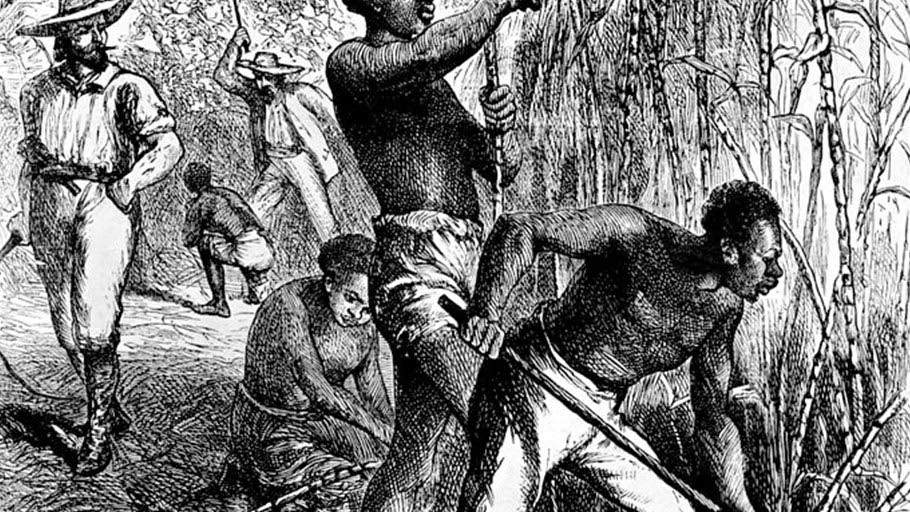
Transatlantic slaving was not an isolated historical episode but a foundational process that made the modern world.online

Transatlantic slaving was not an isolated historical episode but a foundational process that made the modern world.

Kwasi Konadu

{"xml":"xml"}{"jamaica-observer":"Jamaica Observer"}
img img
0 Comments · Make a comment

ALSO ON JAMAICA OBSERVER

Leaders Montego Bay hold off Cavalier in JPL third round
Latest News, Sports
Leaders Montego Bay hold off Cavalier in JPL third round
March 29, 2026
ST JAMES, Jamaica- Leaders Montego Bay United outlasted defending champions Cavalier 3-1 in their Jamaica Premier League third round game at Jarrett P...
{"jamaica-observer":"Jamaica Observer"}
G2K elects first female president
Latest News, News
G2K elects first female president
March 29, 2026
Sashana-Lee Edwards was on Sunday elected president of Generation 2000 (G2K), becoming the first woman to lead the young professional affiliate of the...
{"jamaica-observer":"Jamaica Observer"}
World Cup risks being ‘stage for repression’ says Amnesty International
International News, Latest News, Sports
World Cup risks being ‘stage for repression’ says Amnesty International
March 29, 2026
LONDON, United Kingdom (AFP) -- Amnesty International warned this summer's football World Cup, spread across three North American countries, risks bec...
{"jamaica-observer":"Jamaica Observer"}
Brown wants increased stipend paid to senators
Latest News, News
Brown wants increased stipend paid to senators
March 29, 2026
KINGSTON, Jamaica — Opposition Senator Lambert Brown is calling for the implementation of the 2023 proposal that would have seen the stipend paid to s...
{"jamaica-observer":"Jamaica Observer"}
Newly renovated Yallahs Market reopens
Latest News, News
Newly renovated Yallahs Market reopens
March 29, 2026
ST THOMAS, Jamaica — The Yallahs Market in St Thomas is now officially reopened to vendors and shoppers following the completion of phase one of recon...
{"jamaica-observer":"Jamaica Observer"}
Reggae Boyz, DR Congo gear up for showdown in World Cup decider
Latest News, Sports
Reggae Boyz, DR Congo gear up for showdown in World Cup decider
March 29, 2026
Preparations are ramping up for a high-stakes World Cup qualifying play-off match between Jamaica’s Reggae Boyz and the Democratic Republic of Congo (...
{"jamaica-observer":"Jamaica Observer"}
Leaders MBU and defending champions Cavalier clash in JPL third round
Latest News, Sports
Leaders MBU and defending champions Cavalier clash in JPL third round
PAUL A REID Observer writer reidp@jamaicaobserver.com 
March 29, 2026
ST JAMES, Jamaica  — League leaders Montego Bay United and defending champions Cavalier SC are set to clash on Sunday in a crucial third-round Jamaica...
{"jamaica-observer":"Jamaica Observer"}
Wilful Skilful reflects on 15-year journey with debut EP ‘Growth’
Entertainment, Latest News
Wilful Skilful reflects on 15-year journey with debut EP ‘Growth’
March 29, 2026
There is a reason Wilful Skilful named his first EP  Growth . After 15 years in the music business, he believes personal and professional improvements...
{"jamaica-observer":"Jamaica Observer"}
❮ ❯

Polls

HOUSE RULES

  1. We welcome reader comments on the top stories of the day. Some comments may be republished on the website or in the newspaper; email addresses will not be published.
  2. Please understand that comments are moderated and it is not always possible to publish all that have been submitted. We will, however, try to publish comments that are representative of all received.
  3. We ask that comments are civil and free of libellous or hateful material. Also please stick to the topic under discussion.
  4. Please do not write in block capitals since this makes your comment hard to read.
  5. Please don't use the comments to advertise. However, our advertising department can be more than accommodating if emailed: advertising@jamaicaobserver.com.
  6. If readers wish to report offensive comments, suggest a correction or share a story then please email: community@jamaicaobserver.com.
  7. Lastly, read our Terms and Conditions and Privacy Policy

Recent Posts

Archives

Facebook
Twitter
Instagram
Tweets

Polls

Recent Posts

Archives

Logo Jamaica Observer
Breaking news from the premier Jamaican newspaper, the Jamaica Observer. Follow Jamaican news online for free and stay informed on what's happening in the Caribbean
Featured Tags
  • Editorial
  • Columns
  • Health
  • Auto
  • Business
  • Letters
  • Page2
  • Football
Categories
  • Business
  • Politics
  • Entertainment
  • Page2
  • Business
  • Politics
  • Entertainment
  • Page2
Ads
img
Jamaica Observer, © All Rights Reserved
  • Home
  • Contact Us
  • RSS Feeds
  • Feedback
  • Privacy Policy
  • Editorial Code of Conduct