



US Embassy pleased with support for mental health in Jamaican communities post-Hurricane Melissa through Project HOPE
BARRETT TOWN, St James — The United States Embassy in Jamaica has heaped praise on the effort from Project HOPE in relation to the work they have done to assist Jamaicans impacted by the passage of Hurricane Melissa in October last year.
Chargé d’affaires at the embassy Scott Renner said he was especially pleased with the work being done to assist individuals to deal with the mental strain associated with the Category 5 storm that ripped through sections of Jamaica.
“Rebuilding isn’t just about putting a roof back on your house, it’s about getting yourself back to a state where you’re okay again and hopefully, then, you can help your kids and your wife and your husband get okay again,” he told reporters following a visit to a Project Hope Mobile Medical Unit in Barrett Town on Friday.
He explained that he had been to western Jamaica in the immediate aftermath of the storm but is now returning and was keen to get feedback on how residents were managing the situation.
“You would have heard most of my questions were probably about the mental health side because you can just look at the people, and they look fine, they’re walking down here, walking down the hill,oh, they don’t need help, it seems and sometimes, you know, there’s the medical, you know, physical things but that mental thing especially,” he suggested.
He said that he was even more pleased with the support given to children as part of the programme, seeing how significant the situation could have been for them.
“I’m super focused on the children who have gone through this; they’re confused, they don’t understand it totally, maybe their parents aren’t working now because the hotels are closed and so they’re just under this stress,” he stated.
“I feel like we always, as adults, have a responsibility to take care of kids but I love the work they’re doing here to really work with those kids, work with the vulnerable people and just help people,” he said.
Project HOPE is being funded through a US$2-million partnership from the United States taxpayers, part of a larger $22-million relief initiative to the Jamaican people following the storm.
Under the Project HOPE Mobile Unit, residents across Jamaica, including Barrett Town, are being assisted with medical assistance such as free distribution of sanitation kits and the provision of medical care, prescription medication and mental health services.
Renner said he was pleased with the overall impact of the programme which has seen 82 such mobile medical units being deployed across Jamaica since November 6.
“We’re just really proud to be able to support that, to see them doing this. It’s always great when the work of an embassy can affect real people’s daily lives, like the two ladies I was speaking to, just now, really help individual people’s lives,” he said.
Emergency response coordinator from Project HOPE Jamaica Kemesha Swaby explained that this was something that they have doing as part of their work in other spaces.
“As a global health organisation for Project HOPE, we see health in a holistic way and that includes mental health. So, of course, we wanted to take the same integrated approach into the programming that we’re doing in Jamaica,” she said.
“We have a fantastic team on the mental health and psycho-social support side who also integrate with our mobile medical units because we don’t see it separate at all. It is such an important integration to see to the well-being of people as they’re accessing the other physical health services,” she added.
Mental health and psycho-social support specialists were on hand to talk and interact with residents, endeavouring to get them to understand what transpired and how they could deal with it the issues.
Barrett Town resident Sattahue “Evalyn” Grange said she welcomed the initiative, noting that she had learned how to deal with things that impacted her mental health better than before.
“Today we learned things we didn’t know before like when we are depressed, how we must put our hands behind our heads and up and down, you can feel like even the blood pressure stabilising and everything,” she said.
She was also grateful for the other support from the medical teams, such as the sanitation support provided and other key services delivered throughout the course of the day.
“I really feel good about the people that come along to help us. After this hurricane and everything, we didn’t have no water, no light, everything was so bad but seeing people coming along to help us, we really appreciate them,” she said.
Spot Valley resident Avea Campbell was also grateful for the support provided, given that she too was victim of the storm and it’s impact on the area.
“In the hurricane, I lost my roof, I lost just about everything and I am trying to recuperate,” she said.
The Project HOPE initiative is expected to continue for another month, with more communities benefiting from similar level of support.
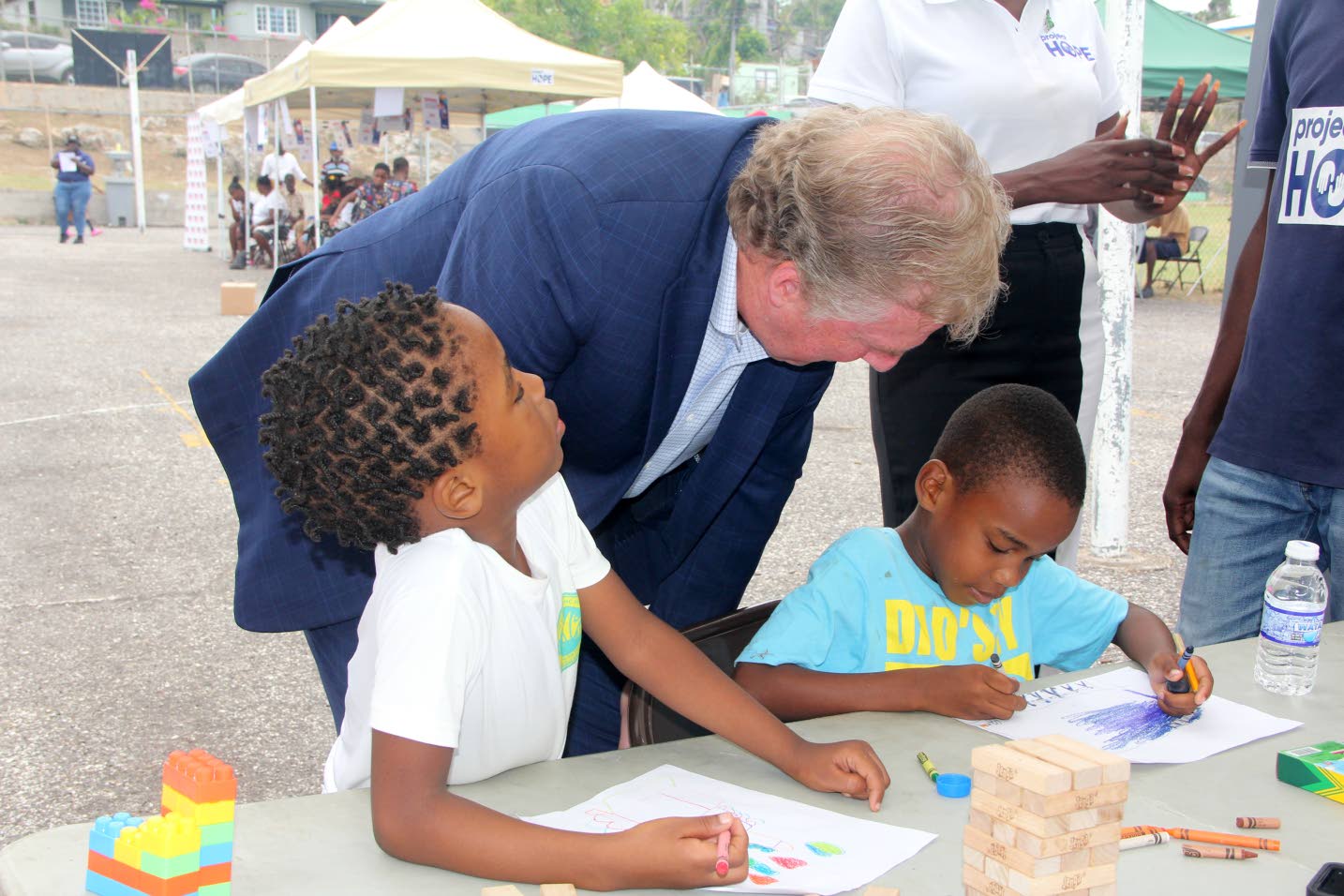
Chargé d’Affaires at the US Embassy in Jamaica, Scott Renner, interacts with King McFarlane and Joshua Brown during his visit to Project Hope’s Mobeil Medical Unit in Barrett Town on Friday.
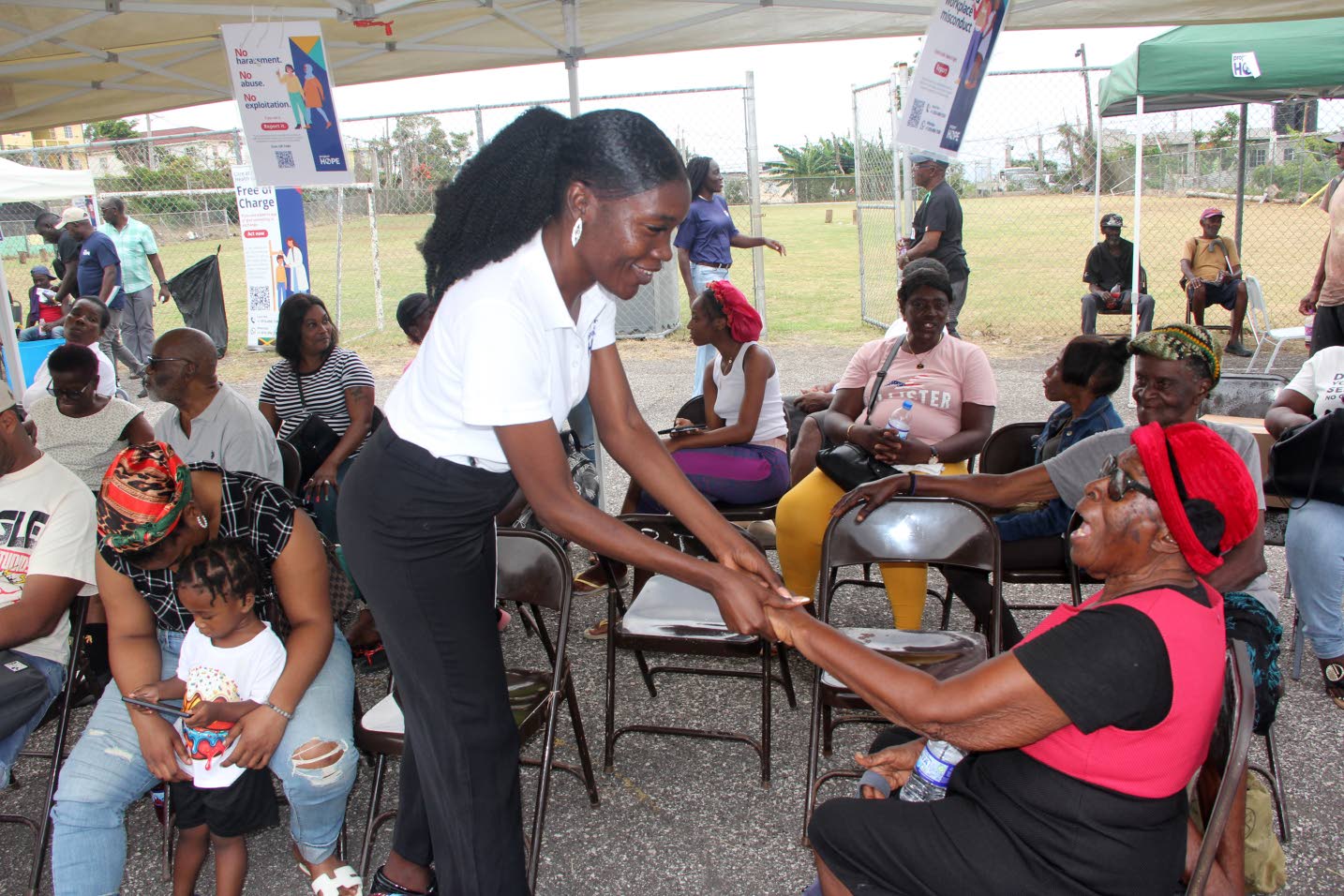
Mental health and psycho-social support coordinator for the Project Hope Mobile Medical Unit interacts with residents on Friday.
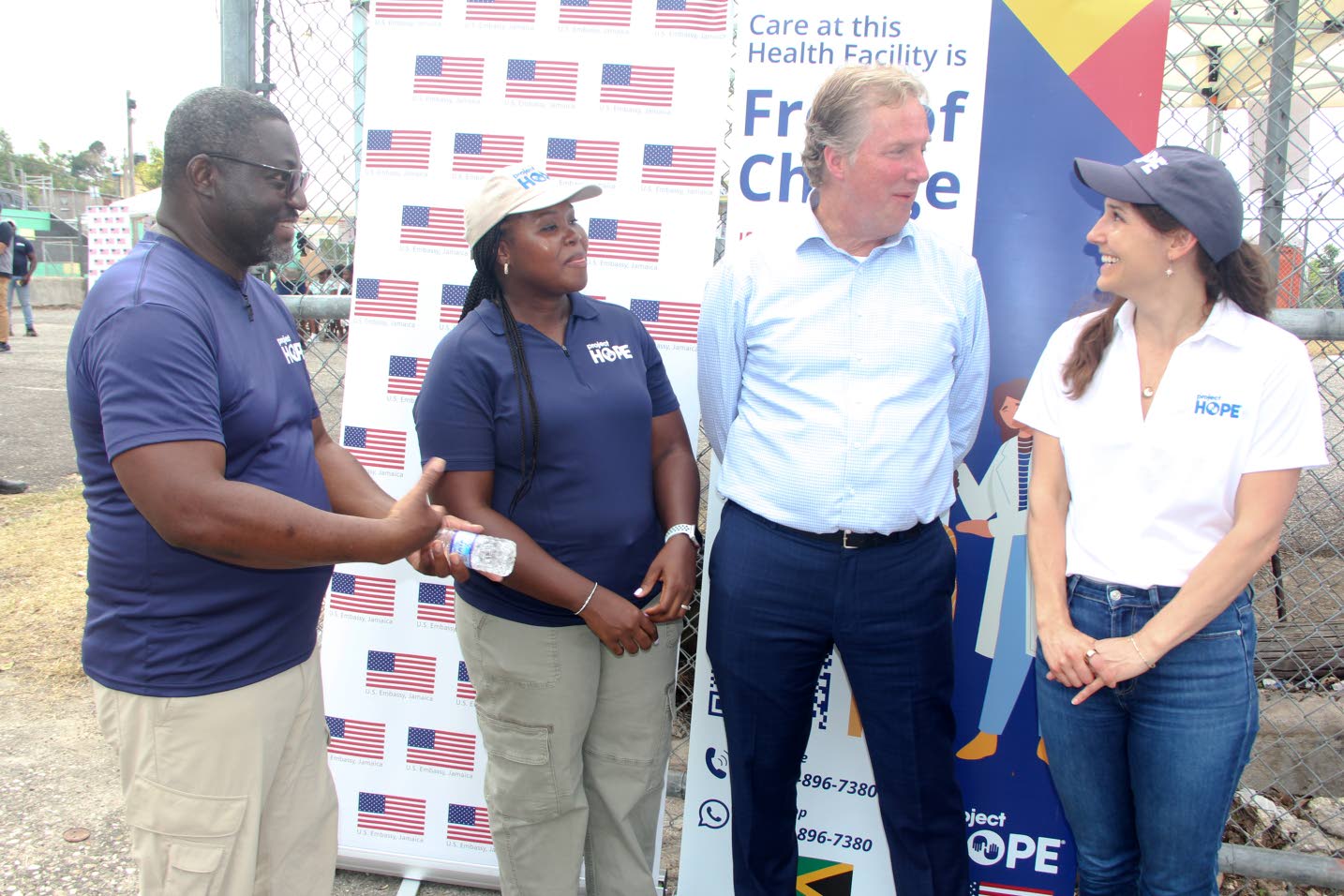
Chargé d’Affaires at the US Embassy in Jamaica, Scott Renner (second right), chats with members of the Project HOPE team. (From left): Country director, Dr Didinu Tamakloe; Emergency Response Coordinator Kemesha Kelly- Swaby; and Programme manager for the Americas and Humanitarian Initiatives for Project HOPE, Sara Leonard.


