



Ganja? Or hemp?
Forensics lab can now test THC percentage in cannabis
KAMAU Janai, a justice of the peace and former director of the Cannabis Licensing Authority who served two terms, has pointed to “a great victory” following the conclusion of a courtcase which revealed that between 2015 and 2024, no systems were in place to test the THC content of seized cannabis plants to determine if they were hemp or marijuana.
Janai, who is also a liaison officer for the Ministry of Justice representing the Rastafari community, told the
Jamaica Observer last Tuesday that a victory for Detective Sergeant Tamika Taylor and her fiancé Royan Harris in the Morant Bay Parish Court a day earlier, highlighted inefficiencies in the system.
After four years of Harris and Taylor’s case being before the court, both were freed on charges of ganja possession, dealing in ganja and cultivating ganja. During their trial, defence attorney-at-law Marcus Goffe argued that the Government forensic lab, between 2015 and 2024, did not have the capacity to test and thoroughly explore the tetrahydrocannabinol (THC) content present in cannabis. As a result, he contended that many youth were prosecuted unfairly. Also, the cannabis was found on a farm that was being operated by a Rastafarian organisation, which has the right to grow ganja for sacramental purposes. Harris was said to be the overseer at the farm.
“I am happy that justice has been exercised and that it has shown that there are discrepancies in the system. Apparently they have got a new machine now that determines whether the vegetable matter is at a THC level to be considered ganja or hemp. If it is under one per cent, it is considered hemp and not ganja. The THC has the content that has the psychotic element.
“It is a great victory, not just for Rastafari but for all users of ganja, and a victory to show that the justice system actually works. It is a good look for the Rasta community and for the ordinary users of ganja that if the police stops you, there ought to be some determination and if it goes down to the lab, we are glad there is equipment in place now to determine whether the thing is ganja or not. From a scientific perspective, from a logical perspective and from a humanitarian perspective, it is a good victory,” Janai told the Observer.
GOFFE… there likely has been a large number of cases which have been unjustly prosecuted
He added that the Rastafari community has been struggling with cases before the court because, in some cases, understanding of the Dangerous Drugs Act is lacking in some cases.
“I went to court last year about seven times and I have been there three times this year regarding Rastafari and their rights to use ganja under the Dangerous Drugs Act, and once Rastafarians have ganja in their possession, they are not to be charged. In cases we have had the ganja returned to us,” he said.
Detective Sergeant Taylor told the Observer that her case proves that the hundreds of cases in which people were arrested and prosecuted for possession of cannabis between 2015 and 2024 should be examined.
“For that nine-year gap, between the amendment of the Dangerous Drugs Act and the lab being able to determine the percentage that can differentiate between ganja and hemp, it means that all convictions between that nine-year period would have to go under question at this point.
“One of the main reasons why this case was dismissed is because the evidence that was brought by the expert witness from the forensic lab, it was borne out that they were not in a position to test the per cent of the substance to say whether it was ganja or hemp. I must blow my own horn in this regard, because I was the person who brought up this to indicate that this is something that they cannot differentiate,” Taylor said.
Meanwhile, Goffe said that there likely has been a large number of cases which have been unjustly prosecuted. This, he said, resulted in “unjust convictions of persons for ganja offences” when the State was not able to discharge its evidential burden to prove whether someone was found in possession of ganja or hemp, which has a higher THC content than hemp.
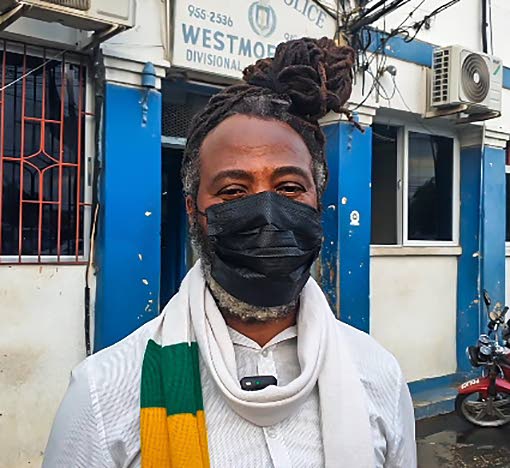
JANAI… I am happy that justice has been exercised and that it has shown that there are discrepancies in the system


