



Rastafari JP concerns
Chang suggests further ganja law reforms to allow Rastas to willingly serve
MONTEGO BAY, St James — Lamenting that a member of the Rastafarian community declined an appointment as a justice of the peace (JP) due to concerns about breaching laws related to the smoking of marijuana, Member of Parliament for St James North Western Dr Horace Chang is contending that the current decriminalisation structure should be taken one step further.
Rastafarians have long agitated for the full legalisation of the herb. Under the Dangerous Drugs (Amendment) Act, 2015, the possession of small quantities of ganja has been decriminalised and its use recognised for sacramental purposes within the Rastafarian community. However, Dr Chang seemingly suggested that further reform is necessary.
The encounter he was referencing was with Lewis Brown, also known as Ras Brown, a leader of the Rastafari Coral Gardens Benevolent Society (RCGBS), who declined the offer to be appointed a JP due to concerns about breaching the law.
“I think as we move on, we have to change that situation. [Culture] Minister Olivia Grange, you have to work with me to ensure that we can have Rastafari JPs who can serve without breaching their beliefs and their principles. I look forward to that,” Chang said, addressing Grange, who was also present on Good Friday at a ceremony to formally hand over land titles to the RCGBS in Albion, St James.
“He [Brown] made it clear to me that part of his sacrament is ganja, and as the law stands, he would be in breach. Until that is addressed, he could not accept the appointment,” Dr Chang said, noting that the decision reflected Brown’s commitment to his beliefs and principles.
Dr Chang, who is also national security minister and deputy prime minister, underscored that Jamaica has made significant strides in recognising and respecting Rastafarian culture, but maintained that more progress is required.
“We have come a long way, and we need to show respect for our culture, our people, and the practices that have shaped us as a nation,” he said.
Reflecting on his long-standing involvement in discussions around ganja reform, Dr Chang said he has been engaged in the dialogue for years, though he has chosen not to be overly vocal in recent times.
“I have been hearing the discussions more, and have taken part in them for quite some time,” he said.
“We have achieved some progress, but there is still more to be done,” he added. “Much of the current discussion is not something I will get into publicly, given my role as a minister of government and the issues involved. But I can say that the present situation needs to be reviewed, and I will leave it at that.”
Good Friday’s ceremony formed part of the annual commemoration of the 1963 Coral Gardens massacre. On April 11, Good Friday that year, police raided a Rastafarian camp in Coral Gardens, St James. At the end of the raid, eight Rastafarians were dead and hundreds more injured and displaced at the hands of the State. The handover of titles for Lots 84A and 84B represents a significant step in restitution efforts.
Dr Chang said the land will provide security of tenure and serve as a safe, structured space for Rastafari elders, tailored to their cultural and social needs.
He also credited the leadership of the RCGBS, including Brown and Pamela Rowe-Williams, for their persistence and patience in pursuing justice and maintaining focus on the Rastafarian community’s objectives over the years.
“As a Member of Parliament for this area I am very pleased that some of the correction is taking place in the same constituency that it started in. So we’ll speak now not only of Coral Gardens, but of Albion…” Chang said.
Grange, along with chief executive officer of the National Land Agency and Commissioner of Lands Cheriese Walcott, participated in the title handing over ceremony.
Meanwhile, Brown, speaking on behalf of the Rastafarian community, expressed gratitude for tenureship of the plot land in Albion.
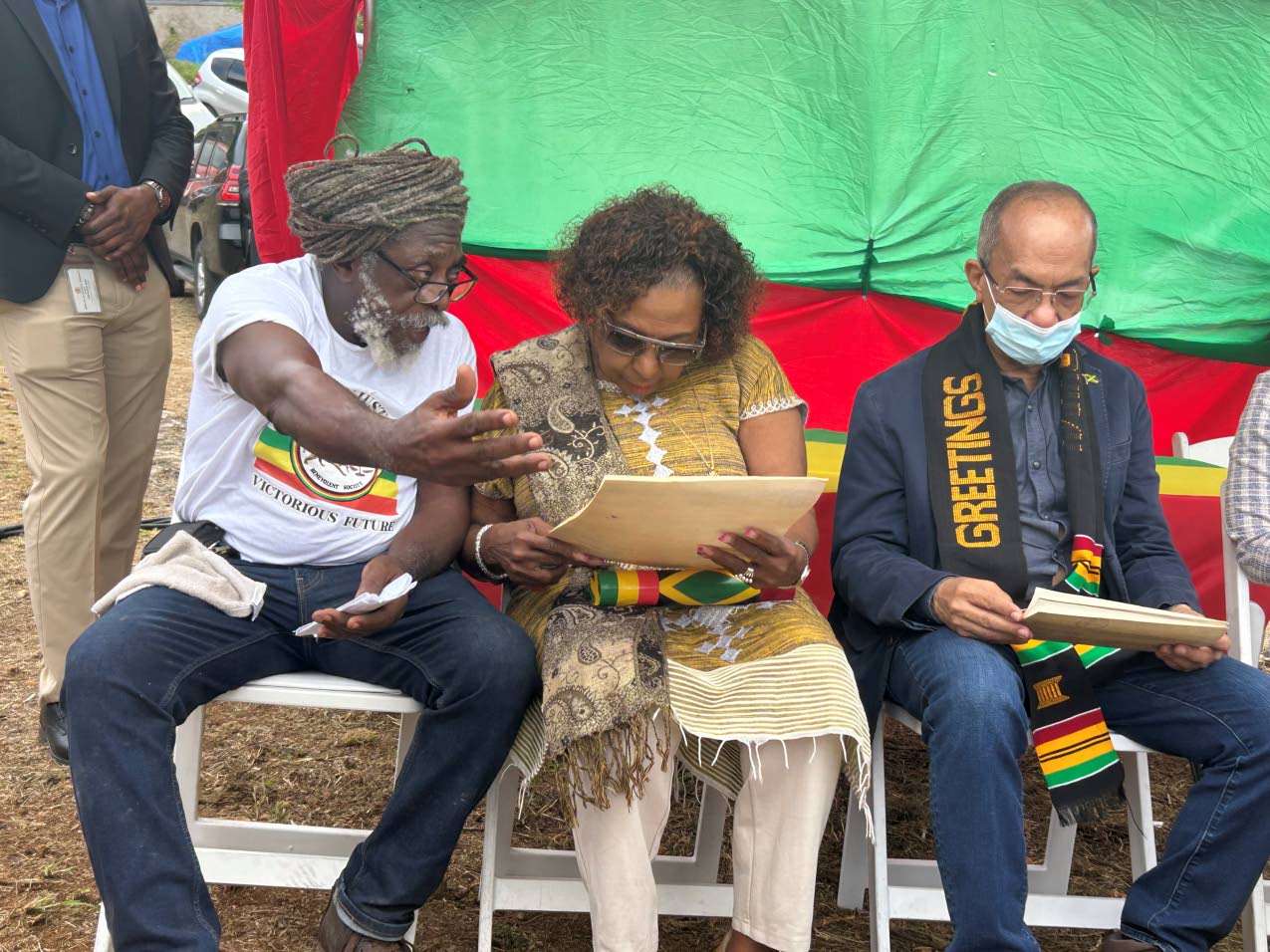
Ras Brown (left) makes a point to Culture Minister Olivia Grange during a ceremony to formally hand over land titles to the Rastafari Coral Gardens Benevolent Society in Albion, St James on Good Friday. Looking on is St James North Western Member of Parliament Dr Horace Chang. (Philp Lemonte)


