



Zinc fence replacement sparks hope
Partners embark on long-term upgrade for stigmatised communities in St Andrew North Central
EFFORTS to revitalise violence-plagued communities in St Andrew North Central have moved into a new phase with a wide-scale zinc fence removal project now underway.
This is to be followed by renaming of some communities which have been stigmatised over the years.
Member of Parliament (MP) for the constituency, the Jamaica Labour Party’s Delano Seiveright, told the Jamaica Observer that the zinc fence replacement has started in Park Lane and Cassava Piece as part of efforts to improve the safety and living conditions of residents.
“We will be removing the zinc and replacing them with walls. This improves dignity, reduces the sense of abandonment, enhances visibility and order, and creates a cleaner, more stable environment. Physical surroundings matter. Additionally… we will also move towards renaming some of these communities as part of that shift in identity and outlook,” said Seiveright.
“Quite frankly, I have long been annoyed by ugly rusty zinc fences and the poor aesthetics it creates. It reinforces stigma and a sense of neglect that these communities do not deserve. I am keen on real transformation. Add to that, with crime significantly down across the St Andrew North Police Division — including months with zero murders — the timing is right to push forward with visible, meaningful change,” added Seiveright.
He told the Observer that work will be done in phases with focus placed on the communities of Park Lane, 100 Lane, White Hall Avenue, Mannings Hill Road, Cassava Piece, Lady Huggins, and surrounding areas.
“We are prioritising areas where the visual impact is greatest, where safety and accessibility can be improved, and where communities are ready to engage. I want to see communities which are clean, orderly, aesthetically pleasing and free from stigma. We are also guided by residents input and practical considerations around implementation,” said Seiveright as he underscored that the effort is a multi-year transformation project that will take some time to complete.
The first-term MP pointed out that the initiative is a collective one involving State entities, community stakeholders, private sector partners, and civil society — with its final cost still being calculated.
“Funding will come from a mix of public, private, and civil society support. We are committed to transparency in how resources are secured and used, and to keeping stakeholders and residents informed throughout. One American foundation has already pledged $5 million through civil society channels towards zinc fence removal and the construction of proper walls,” he said,
According to Seiveright, more than $3 million has already been spent on the project.
He underscored that the initiative is not just about removing zinc, but forms part of a broader transformation agenda.
“When communities look better, behaviour often follows. Young people in particular respond to their environment. This is about building pride, raising expectations, and reinforcing that these communities are places of value and opportunity. This is about long-term urban renewal that lifts both the physical environment and the people within it,” Seiveright said, pointing to the ongoing social intervention in the communities led by head of the St Andrew North Police Division Superintendent Randy Sweeney.
“This is a mix of physical redevelopment, social engagement, sterling police interventions by Superintendent Sweeney and St Andrew North Police Division team, youth-focused initiatives, training and education support. It aligns with wider upgrading efforts like the Manor Park bus lay-by and vending upgrade project, a strong public-private partnership involving Pan Jamaica Group, Richard Lake, the Lisa Hanna Foundation, Burger King, Popeyes, Wisynco, KSAMC (Kingston and St Andrew Municipal Corporation), and others,” added Seiveright.
He said feedback received from residents has already been very encouraging with many wanting to lift the standard of their community and remove long-standing signs of neglect.
Seiveright added that residents are engaged through ongoing discussions and community interactions to ensure the changes reflect their needs.
“Their input is critical to shaping the work and ensuring it reflects real needs. We are focused on replacement with proper, lasting structures, not just removal. Sustained engagement, community ownership and follow-through will be key to maintaining progress.
“This is a large undertaking, but we are taking a steady, partnership-driven approach to get it done. Success will be measured by visible improvements, the replacement of zinc fencing with proper structures, stronger community pride, and continued social stability. Ultimately, it is about sustained transformation, not just short-term change,” declared Seiveright.
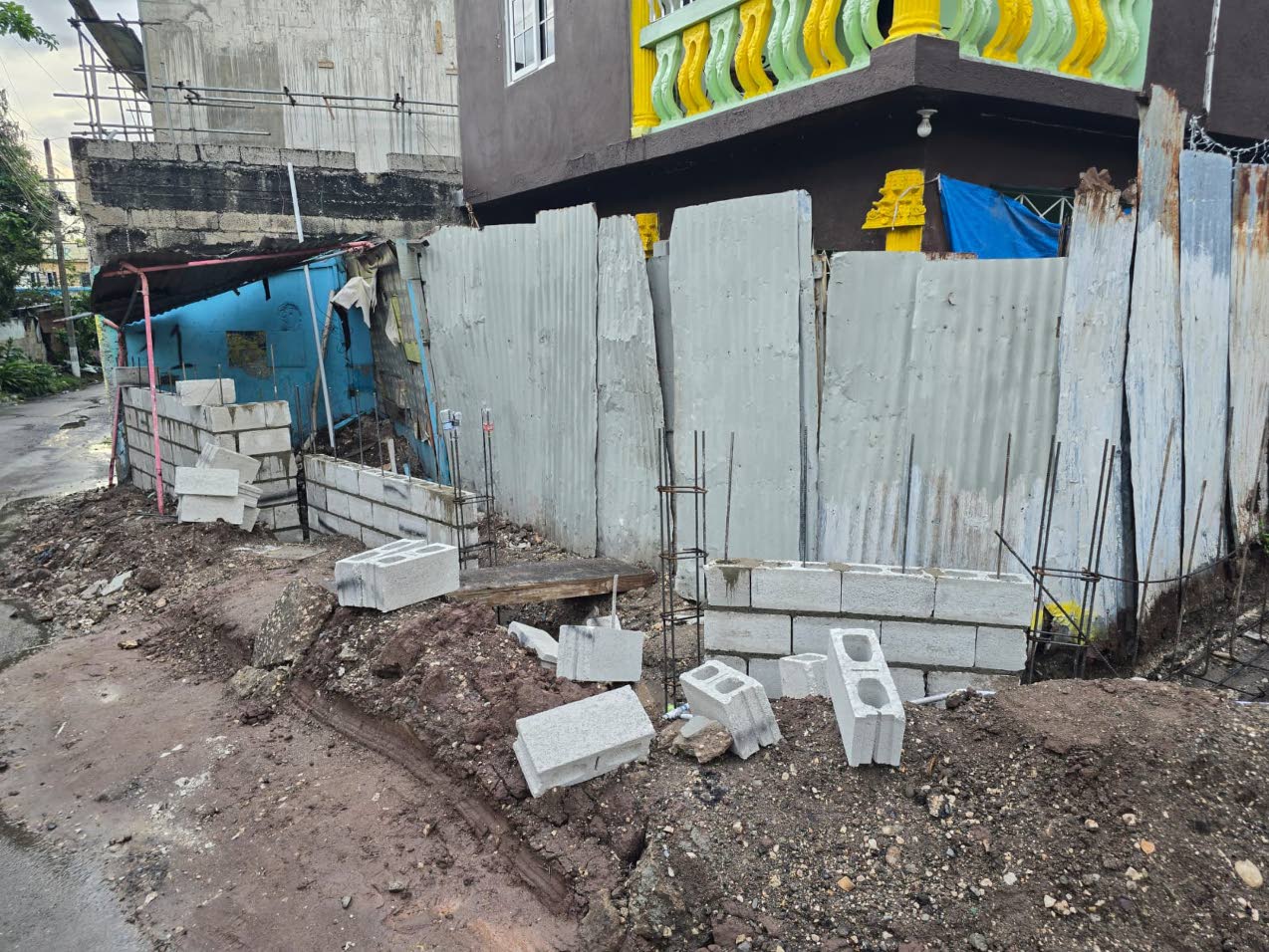
Zinc fence replacement underway in Park Lane, off Red Hills Road in St Andrew.


