



Gas tax under fire
Fuel hikes reignite pressure on gas tax after weeks of $4.50 increases
Key Points:
Rising global oil prices have pushed Petrojam fuel costs up by about $21–$22.50 over five weeks, with taxes accounting for roughly 31 per cent of pump prices
Mayberry’s Christopher Berry is urging the Government to cut SCT on fuel, arguing that high energy costs are squeezing households and raising production costs across the economy
While a tax cut could ease pressure on consumers, it risks widening the Government’s fiscal deficit, which is already projected to exceed $190 billion
Mayberry Group Executive Chairman Christopher Berry is calling on the Government to review the special consumption tax (SCT) on fuel products as higher petrol prices squeeze consumer pockets.
State-owned refinery Petrojam Limited has added $21 to $22.50 to its petroleum product prices over the last five weeks as global oil prices soar due to the blocked Strait of Hormuz in the Middle East. That translated to at least 14 per cent higher prices charged to marketing companies, retail service stations and other users.
According to Petrojam’s April 1 pricing for 87 gasolene costing $172.3828, $37.7761 was related to the Government’s SCT while $15.6712 is for the ad valorem SCT. This meant that 31 per cent of the final price was related to the Government’s SCT compared to the ex-refinery price of $118.9355.
“I think though that the Government should look at trying to put in place some policies which will offset the big increases in the cost of fuel,” Berry noted on an April 2 Mayberry Investments virtual briefing.
Berry added, “In the fuel that we consume as consumers in Jamaica, there’s a big SCT charge which hits us in our electricity bills, it hits us in our fuel prices. These are expenditures that the average family can’t really offset.”
Berry’s comments come against the backdrop of Jamaica experiencing its second major external shock in just six months. The passage of Hurricane Melissa left Western Jamaica significantly damaged and reduced the availability of rooms which impacted the winter tourism season.
With the current Middle Eastern disruption, the cost of oil derivatives and related products have begun to spike in price. The cost of fertiliser, a key agricultural input used to increase production yields, has already spiked due to the supply shock which has cut off one-third of the world’s seaborne trade in the input.
Higher fuel prices have also become a double whammy for manufacturers as liquified natural gas (LNG) and electricity prices increase the cost of production while higher diesel prices impact the cost to transport and distribute these products.
“I don’t expect any issue with the availability of food. The challenge will be with the affordability,” said Richard Pandohie, chief executive officer (CEO) of Seprod Limited, in a recent
Television Jamaica interview on the upcoming hike in food prices.
Seprod is one of Jamaica’s largest manufacturers and distribution conglomerates. The company is involved in the manufacturing of flour, snacks and drinks along with the distribution of several products for various brands.
Brent crude oil prices are up 82 per cent to US$11.39 while West Texas Intermediate (WTI) crude prices are up 99 per cent to $115.52 as of Monday. Brent crude usually trades above WTI prices due to the cost of transportation over water. The inversion of WTI trading above Brent crude prices reflects the market pricing in deliverability of products to users.
In Southeast Asia, India and Vietnam have cut some fuel taxes and excise duties on petrol and diesel to help address the price and supply shock. Bangladesh, Nepal and Sri Lanka have cut operating hours for businesses and declared national holidays to deal with the ongoing energy crisis.
When Jamaicans were hit with higher energy prices in 2022, former Finance Minister Dr Nigel Clarke introduced a special provision to the tune of $2 billion to provide targeted support to groups that would be most adversely affected by higher gas and energy prices. Dr Clarke also introduced a 20 per cent subsidy for JPS (Jamaica Public Service) customers that used up to 200 kilowatt hours of electricity per month between April to July 2022.
“Although the higher SCT on the increased prices of the fuel will offset some of the government’s negative cash flows, the effects on the actual overall economy are much worse than the positive increase to the Government. I think the Government would do well looking at taking off some of those [fuel] taxes because it’s just going to ruin the economy,” Berry noted.
Petrojam is the country’s sole refinery which adjusts its pricing mechanism every Wednesday based on changes observed in the US Gulf Coast reference price (USGC). USGC prices are up 67 per cent between February 27 to March 27 to US$3.043.
The pricing mechanism has a limit or a cap of $4.50 which is the maximum price that petroleum products can go up or down on a weekly basis. This means that the refinery will absorb some of the cost of higher input prices whenever there is a spike or shock in overseas prices. Thus, the $4.50 price increase might not match the actual $20 price adjustment on the open market.
According to Minister Daryl Vaz, the refinery had absorbed US$5 million ($795 million) in higher prices up to the week of March 27. He noted that the Government might have to intervene via the consolidated fund or net international reserves (NIR) to address the costs Petrojam is currently absorbing. Petrojam recorded a US$28.66 million net loss in the March 2025 fiscal year and was projected to have a US$9.63 million net loss for the March 2027 fiscal year (FY).
“I had a meeting with the minister of finance to brief her, and she is very aware of the situation and the variable costs etc. The bottom line is that we have a duty to make sure that obviously the economy continues with the least possible impact,” Vaz said in a recent interview with
Nationwide News Network.
Petrojam imports crude supplies primarily from Brazil, Ecuador and Columbia while purchasing finished products are imported from the open market which includes the United States of America (USA). While Petrojam’s refinery stock lasts for four weeks, Minister Vaz noted that Petrojam had secured written commitments from its suppliers that there would be no disruption to supplies.
Although a reduction in the SCT charged on fuel would benefit consumers, it would further widen the gap in the Government’s budget. The country derives at least $45.30 billion in annual fuel SCT via Petrojam which collects the tax on behalf of the Government. Petrojam collected US$225.82 million in fuel SCT for the March 2025 FY and was estimated to receive US$247.49 million in fuel SCT for the March 2026 FY. Petrojam projects that it will collect US$284.63 million in fuel SCT with an acquisition price of crude of US$80.19 per barrel in the March 2027 FY.
The Government of Jamaica (GOJ) is already projecting a $134.6-billion deficit for the March 2026 FY and a $190.7-billion deficit for the current fiscal year. This form of indirect taxation is easy to collect for the Government but affects the entire economy. Minister Fayval Williams recent 2027 FY budget has $18.04 billion and $15.6 billion in new taxes for the next two fiscal years. This underscores the impact to the country after Hurricane Melissa.
With JPS customers already seeing a higher fuel charge on their monthly bills and businesses pencilling in a higher minimum wage for June 1, Jamaicans will be put under additional pressure as it deals with a slower economy and higher costs in their everyday lives.
BERRY…I think though that the government should look at trying to put in place some policies which will offset the big increases in the cost of fuel.
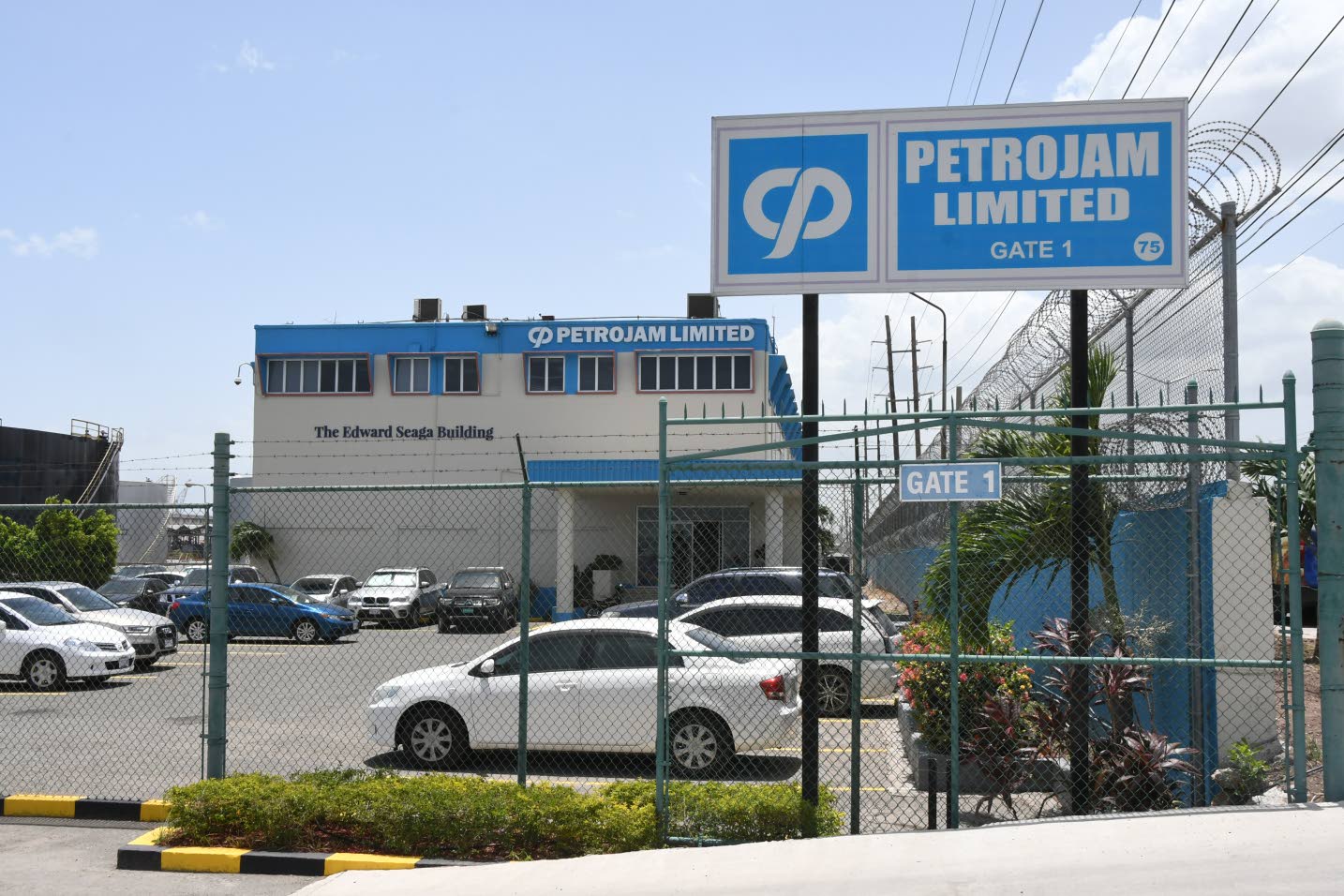
Petrojam’s main office on Marcus Garvey Drive. Bryan Cummings


