



IMF: Oil-importing economies at risk
THE International Monetary Fund (IMF) is warning that oil-importing economies, including small island states, are among the most vulnerable to the economic fallout from the Middle East conflict, as higher energy prices continue to ripple through the global economy. The shock, described as “large, global and asymmetric”, has seen the world’s daily oil flow cut by about 13 per cent and liquified natural gas (LNG) supply by roughly 20 per cent, disrupting supply chains and increasing costs across economies. Oil prices surged from US$72 per barrel on the eve of the conflict to a peak of US$120, and while prices have since eased, they remain significantly higher than pre-war levels, with many countries still paying a premium for access to limited supplies.
“Higher prices for key inputs feed into many consumer goods, lifting inflation,” IMF Managing Director Kristalina Georgieva said.
More than 80 per cent of countries are net oil importers, placing a large share of the global economy at risk, with small island developing states and Sub-Saharan African economies among the most vulnerable due to weaker economic buffers and heavy reliance on imported energy. While policymakers can play a role in managing the impact, the nature of the shock means some level of adjustment is unavoidable. The fund warned that the oil shock represents a supply-side disruption, requiring economic adjustment, and cautioned against broad, untargeted interventions such as price controls, export restrictions and wide-scale subsidies, which could distort markets and deepen global pressures.
“I appeal to all countries to reject go-it-alone actions — export controls, price controls, and so on — that can further upset global conditions: Don’t pour gasoline on the fire; you need this gasoline to drive your cars,” Georgieva warned.
Instead, policymakers are being encouraged to adopt targeted and temporary measures to support vulnerable groups while maintaining fiscal discipline. Central banks, the IMF noted, should remain focused on price stability, with a readiness to act if inflation pressures intensify, even as tighter monetary conditions could weigh on growth. Fiscal support, where necessary, should be aligned with medium-term frameworks and limited to those most affected, particularly given the constrained fiscal space facing many economies. The fund also pointed to the importance of energy policy, with several countries already implementing conservation measures, including reduced fuel use and remote work arrangements, as part of efforts to manage demand. At the same time, financial regulators are being urged to remain alert to risks, as prolonged periods of easy financial conditions could reverse quickly amid heightened uncertainty.
“Good policies make a difference,” she said.
The scale of the economic impact remains uncertain and will depend on how the conflict evolves, with the IMF indicating that its upcoming World Economic Outlook will outline a range of scenarios, from a relatively swift normalisation to more prolonged disruptions where oil and gas prices remain elevated and second-round effects take hold. The fund noted that all scenarios were initially based on strong global momentum, supported by investment in artificial intelligence, favourable financial conditions and broader economic activity.
“In fact, had it not been for this shock, we would have been upgrading global growth… but now, even our most hopeful scenario involves a growth downgrade,” she said.
Georgieva attributed the shift to infrastructure damage, supply disruptions, loss of confidence and other scarring effects, pointing to disruptions in key energy and trade routes as examples. Georgieva cited Qatar’s Ras Laffan complex — which produces about 93 per cent of the Gulf’s LNG, with roughly 80 per cent exported to Asia-Pacific — noting that the facility has been largely shut since early March after sustaining direct hits and could take between three and five years to return to full capacity. She also pointed to ongoing disruptions in shipping through the Bab-el-Mandeb strait in the Red Sea, where traffic remains at roughly half of 2023 levels, underscoring the longer-term impact on global trade flows.
“So the reality is, we don’t truly know what the future holds for transits through the Strait of Hormuz… what we do know is that growth will be slower, even if the new peace is durable,” she added.
Countries able to export oil and gas without disruption are expected to be less affected. In contrast, those directly impacted by the conflict or heavily reliant on imported energy are likely to bear the brunt of the shock, driving an increase in demand for financial support as countries move to manage the fallout. The IMF projects that assistance could rise by between US$20 billion and US$50 billion, noting that the figure would have been significantly higher were it not for stronger policymaking by many emerging market economies in recent years.
“We are well resourced to meet this shock. So, yes, our 191 member countries can count on us to support them with financing if needed,” Georgieva said.
The fund noted that global debt pressures are already rising, with higher benchmark yields pushing up borrowing costs and increasing the share of government revenues spent on interest payments. This is further limiting fiscal space, prompting calls for countries to use resources carefully and rebuild buffers once the shock subsides.
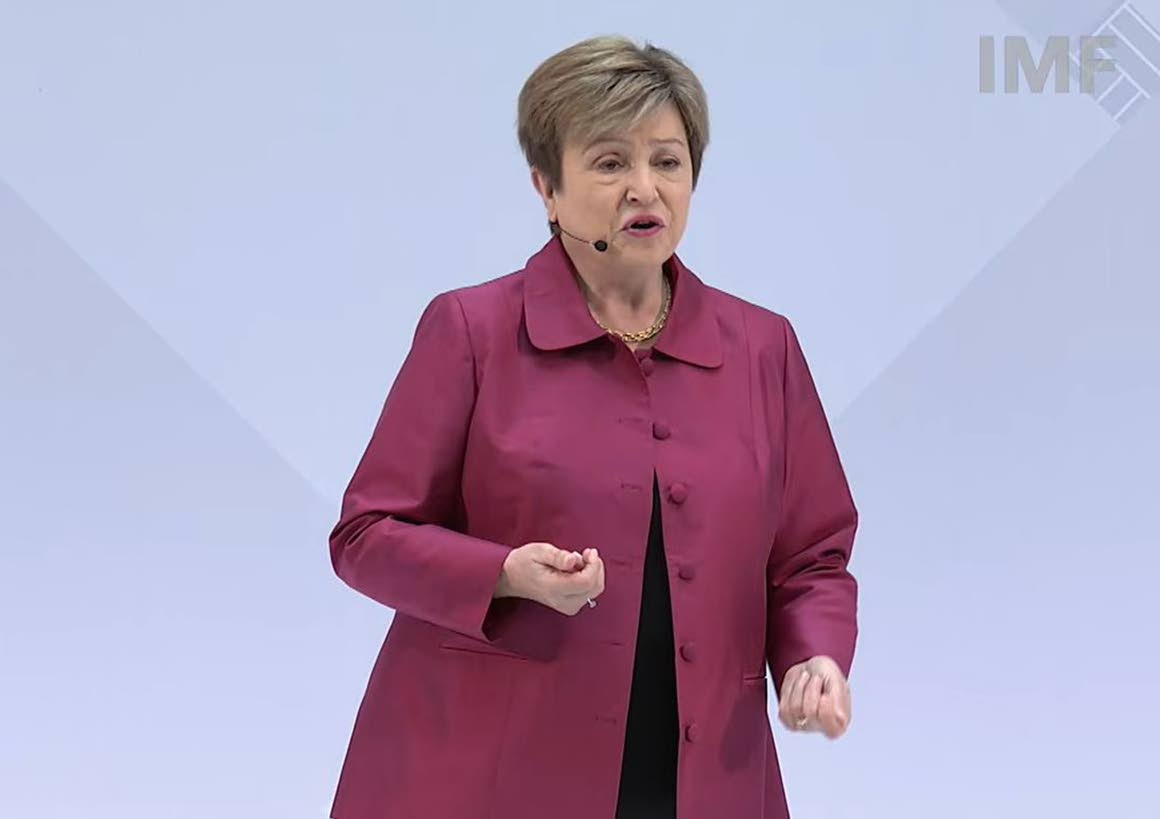
GEORGIEVA… I appeal to all countries to reject go-it-alone actions; export controls, price controls, and so on…that can further upset global conditions: don’t pour gasoline on the fire, you need this gasoline to drive your cars.
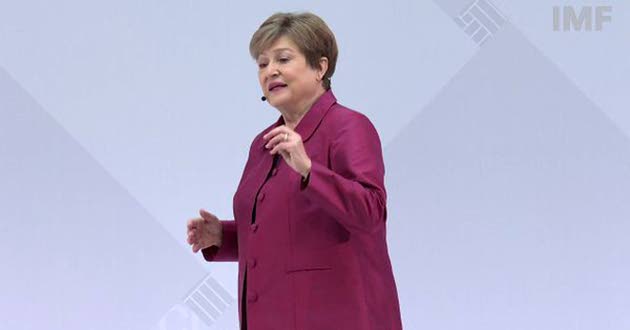
IMF Managing Director Kristalina Georgieva delivers a speech on the global economic outlook and policy priorities ahead of the 2026 IMF–World Bank Spring Meetings.


