



Misplaced diversion
Behavioural cases crowd programme meant for offenders, advocate warns
The Office of the Children’s Advocate is cautioning that Jamaica’s child diversion programme is being stretched beyond its purpose, as children with behavioural issues — not criminal offences — are increasingly being referred due to a lack of alternative support systems.
The warning came during a sitting of Parliament’s joint select committee reviewing the Child Diversion Act on Thursday, where Children’s Advocate Diahann Gordon Harrison highlighted what she described as a growing misalignment in how the programme is being used.
She pointed out that child diversion was designed specifically for children who have committed offences, offering them a pathway away from the formal justice system through counselling and rehabilitation.
However, Gordon Harrison charged that the programme is increasingly being used to manage children with behavioural challenges.
“Child diversion is meant to deal with children who have actually committed a criminal offence, not children who are running away or who are skulling (missing) school. Therefore, to overextend the programme by having to treat with matters that require a social and therapeutic intervention under the rubric of care and protection does not stay true to the objectives of the Child Diversion Act and the mandates of the child diversion office. Neither is this practise in conformity with the internationally accepted principles of child diversion,” Gordon Harrison said.
The children’s advocate presented data from several parishes to illustrate the extent of the misguided use of child diversion as she noted that a significant percentage of referrals involve children classified as having behavioural difficulties rather than those accused of crimes.
“The resources are being used for children who really shouldn’t be there in the first place and so that is an over-stretching of the programme. It is a bastardisation of the programme as well because it’s being used for a purpose that it was not created to be used for and it’s taking away the resources from children who are in conflict with the law and really should be diverted,” added Gordon Harrison.
According to Gordon Harrison, the problem stems largely from the absence of properly functioning therapeutic care centres, which are intended to provide specialised support for children with behavioural challenges under the Child Care and Protection Act.
“These therapeutic facilities — which I understand are not operational at this time despite the passage of the Act — need to become operational and equipped with the necessary human and physical resources as a matter of urgency. To continue to operate without them exposes Jamaica to continued negative international scrutiny and entrenches a practise that represents a disservice to our children and really ties the hands of the court when they’re faced with dealing with children who do have behavioural challenges and need a residential therapeutic facility,” Gordon Harrison warned.
She further noted that the lack of suitable placement options is forcing courts into difficult decisions, sometimes resulting in children being placed in correctional facilities despite being eligible for diversion.
The situation, she argued, not only undermines the principles of juvenile justice but also risks exposing vulnerable children to environments that may do more harm than good.
Committee chairman Minister of Justice Delroy Chuck questioned how children who have committed no offence end up before the courts, prompting further discussion on the pressures faced by families and the limited options available to judges.
Gordon Harrison explained that in many cases parents who are unable to manage their children turn to the court system for help, leaving judges with few alternatives in the absence of proper support services.
State minister in the Ministry of Justice Marisa Dalrymple-Philibert supported the concerns raised by Gordon Harrison as she noted that the issue reflects long-standing gaps in Jamaica’s child care infrastructure.
Dalrymple-Philibert pointed out that without therapeutic facilities, children are often returned to environments ill-equipped to address their needs, resulting in repeated cycles of intervention without meaningful improvement.
“I want to confirm exactly what Mrs Gordon-Harrison is saying, and it is true, and really what she’s saying is that we need to provide a facility for those children, and there are a lot of them all around the country, and it is true that the courts are sending them to homes, and they are not equipped… Minister, those [therapeutic] centres have never existed. Those children have ended up in children’s homes for generations, and I say so from personal knowledge of the situation all over, and that is an area that needs to be addressed,” declared Dalrymple-Philibert.
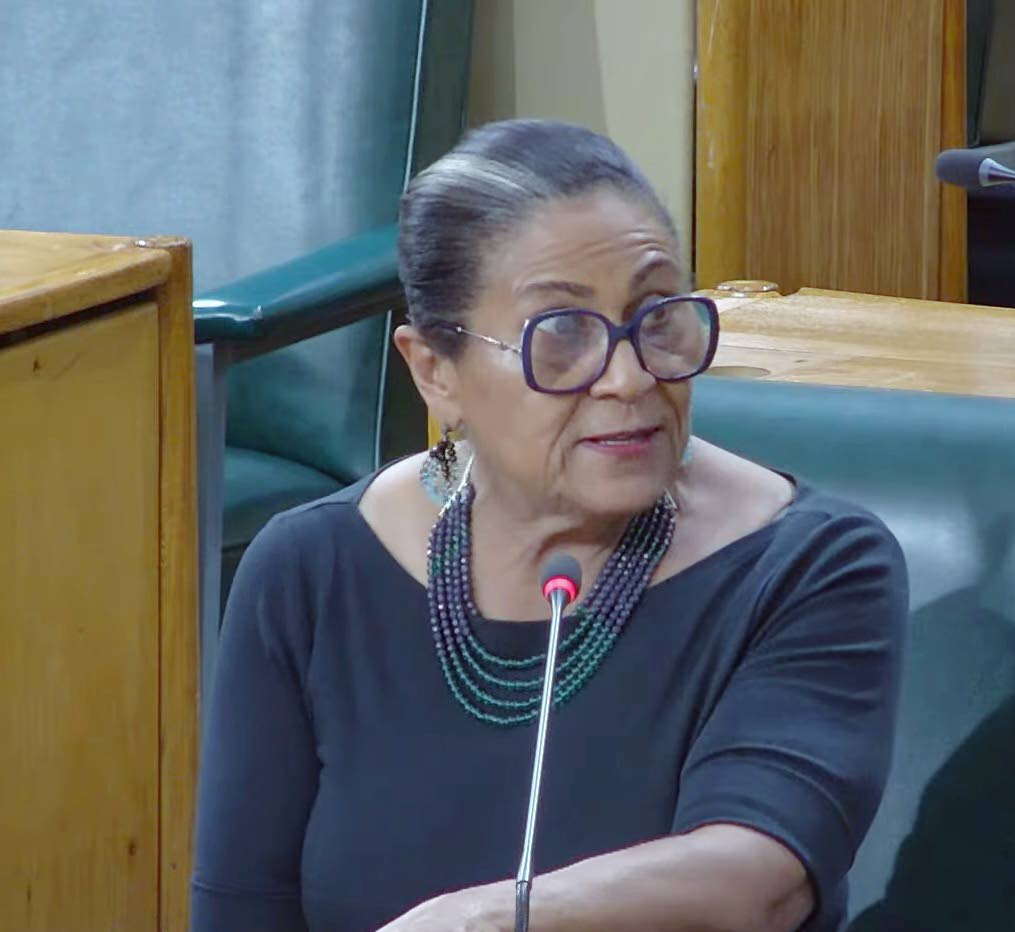
This screen grab shows state minister in the Ministry of Justice Marisa Dalrymple-Philibert addressing Parliament’s joint select committee reviewing the Child Diversion Act on Thursday, where she supported concerns about gaps in the system and highlighted the lack of therapeutic care facilities for children with behavioural challenges.


