



Coalition firm in rejection of close-in-age sex pass
WARNING against any shift in policy, the Jamaica Coalition for a Healthy Society (JCHS) has urged legislators to confront the deeper drivers of adolescent risk-taking and has insisted that the law on sexual relations between minors must remain unchanged.
The JCHS has also called for greater focus to be placed on the emotional and neurological impact of early sexual activity.
The pro-Christian group made its call during deliberations of Parliament’s joint select committee reviewing the Child Diversion Act last Thursday, where stakeholders continued their examination of how best to reduce the number of children entering the justice system.
Advocacy officer for the JCHS, Philippa Davies, told the committee that while legislative reform is often the focus, the real issue lies in understanding why children engage in behaviour that bring them into conflict with the law.
She argued that early sexual activity is one of the key contributing factors and warned that attempts to normalise such behaviour, or introduce legal exceptions, could have far-reaching consequences for young people.
“We strongly object to this suggestion [of close-in-age sex legislation] and to the notion that minors can consent to sex, whether with each other or with adults. We also disagree with the suggestion that adolescent sex is to be deemed as normal, mere exploration, and unharmful. This is so far from the truth. Sex is more than a physical act. It carries long-term psychological consequences,” Davis told the committee.
She pointed to studies on the science of adolescent brain development and argued that young people are biologically less equipped to make complex decisions, particularly those involving long-term consequences.
“The prefrontal cortex is called the executive decision part of the brain. It is responsible for long-term planning, setting priorities, impulse control, and complex decision-making… and it is the last part of the brain to mature… between 25 and 30 years of age… even if adolescents understand that something is dangerous, they may still engage in risky behaviour,” argued Davis.
She also pointed to national data suggesting that many young people’s first sexual experiences are not fully consensual, challenging the assumption that adolescent sexual relationships are harmless.
The JCHS submission came amid increasing calls from some groups for “close-in-age” exemptions to be introduced into the law.
President of the JCHS Dr Wayne West, stressed that while children should not be criminalised unnecessarily, the law must still serve as a guide for behaviour.
“We are not saying that if persons are caught in sexual activity at their age, that they should be criminalised. We say we keep the law as is, because the law is a teacher, and we don’t want the law to be used to teach something else…We are not denying that things do happen. But what we are saying is that the law is a teacher, and there is a consequence to activity. So we don’t want the law to teach people that there is no consequence to activity,” West said.
At the same time, the coalition is advocating for a more preventative approach, including greater education, parental involvement, and the promotion of healthier behavioural choices among young people.
Committee chairman Minister of Justice Delroy Chuck acknowledged the complexities surrounding the issue as he argued that, in some cases, rigid application of the law can have long-term consequences for individuals who engaged in consensual activity as teenagers.
Chuck pointed to cases in which teenagers engage in consensual sexual activity but later face lasting consequences due to criminal records as he raised questions about fairness and proportionality.
“Because, if a person is actually convicted when they are a teenager for consensual sex, it follows them for the rest of their lives, to be frank with you… there are many, many farm workers now who are asking for expungement because when they were 16… they had pleaded guilty to consensual sex,” Chuck said.
He questioned if discretion in the justice system could provide a middle ground, particularly in cases involving minors close in age, and suggested that such matters could be diverted before reaching the courts.
The JCHS indicated support for diversion in such cases, but maintained that this should not translate into a change in the law itself.
State minister in the Ministry of Justice Marisa Dalrymple-Philibert also weighed in, acknowledging the importance of strong moral guidance for young people but cautioning against a rigid legal approach that could permanently harm their future prospects.
She argued that many adults, who are now productive members of society, may have engaged in similar behaviour during their youth and should not have their lives defined by early mistakes.
Dalrymple-Philibert argued that the justice system must find ways to balance accountability with rehabilitation, particularly for young people who may have acted without full maturity or understanding.
She highlighted the real-life consequences of criminal records as she pointed out that some people are denied employment opportunities because of actions taken as teenagers.
“You’re correct, we need to teach children all the good values. But I hold strongly to the fact that it happened to people who are excellent adults and leaders in society now that made mistakes as young people, sex with women underage, between minors. We are saying at this point, when it happens, there must be a way not to criminalise them, help them through the Child Diversion Programme,” she expressed.
The Child Diversion Act, which is under review, was introduced to provide alternatives to prosecution for children who come into conflict with the law, focusing on rehabilitation through counselling, mentorship, and support services.
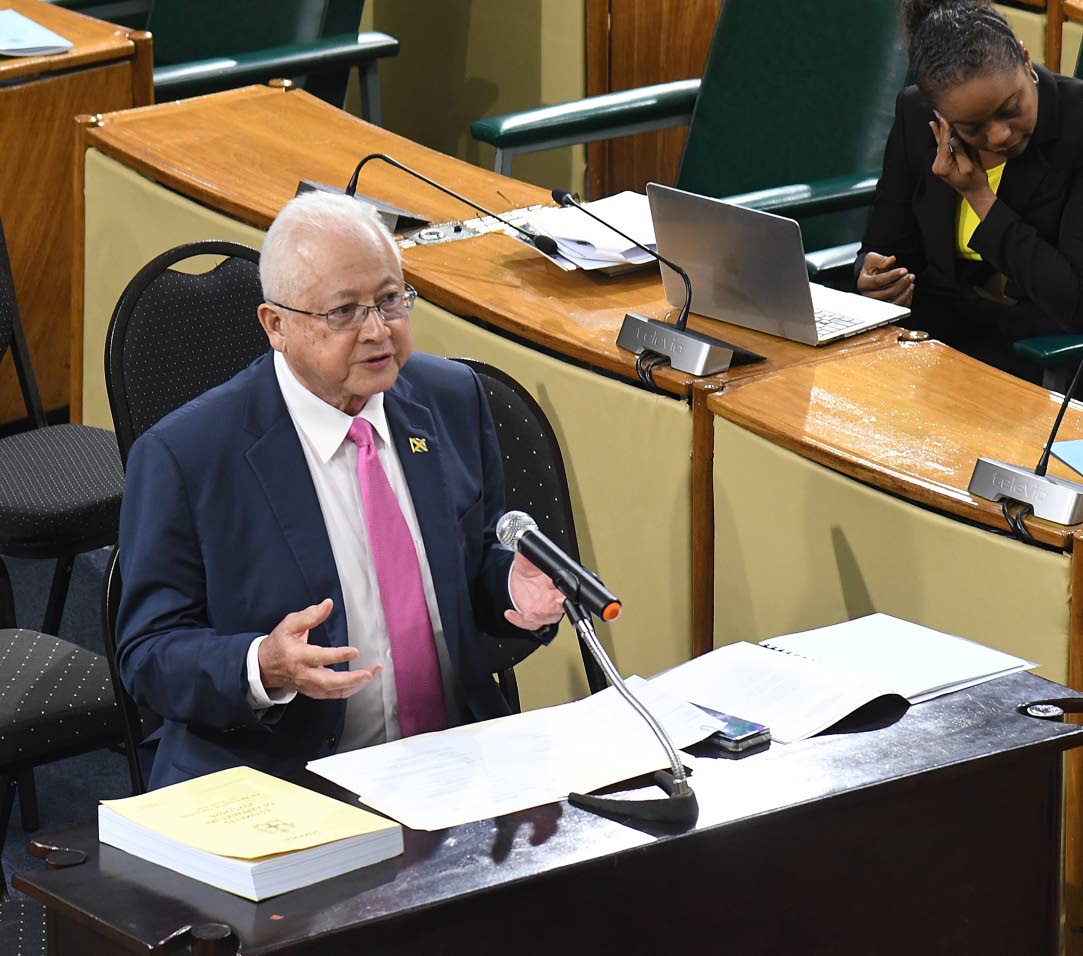
CHUCK… rigid application of the law can have long-term consequences for individuals who engaged in consensual activity as teenagers Photo: Karl Mclarty


