



The secret struggle of former national footballer Michael ‘Zun’ Clarke
He taught himself to read on a journey to academic triumph
A soft chuckle, tinged with the satisfaction of hard-won triumph, escapes former national footballer Michael “Zun” Clarke as he reflects on the unlikely path his life has taken. His journey stretches from the streets of a tough community on Waltham Park Road in the Corporate Area, through the intensity and pride of Manning Cup football competition at Tivoli Gardens High School, to the lecture halls of a university in the United States where he eventually earned a bachelor’s degree in counselling and guidance.
Beneath that gentle laughter lies a story of extraordinary perseverance, anchored in a truth few suspected: Throughout his years in primary school, Clarke could not read.
“Maybe the reason for that is I didn’t even have a reading book,” he told the Jamaica Observer, explaining that things were so tough for his single mother, Isadora, that she simply “couldn’t afford” to purchase a book for him.
At the time Clarke, whose father died when he was just four years old, was attending Whitfield Town Primary School.
Instead of wallowing in self-pity, Clarke — the youngest of nine children for his parents — said he decided to teach himself to read while training at the then Cable and Wireless playing field near Cortina Avenue where he lived.
“I started out like, I would get a word out of the dictionary, write the letters, and in the evenings I would be running around the track, spelling that word, pronouncing it. Every day I learned at least two, three words,” Clarke said. “And then I start to put things together, sentences; so I actually taught myself how to read.”
He said that by the time he got to Tivoli Gardens High, he “had a lot of catching up to do” as he wasn’t as proficient as he should have been at that level.
But after completing high school without any O’ Level subjects, Clarke realised that he was behind the eight ball, so after being awarded a football scholarship to Alderson Broaddus University he vowed to make the best of the opportunity.
“When I actually got the scholarship I’m saying to myself, ‘What the hell is this?’ I said to myself, ‘Zun, this is your last chance to get something in your head’; and trust me, I got something in my head. I studied almost day and night and made the Dean’s List with a 3.6 and then a 3.8 grade point average,” he told the Sunday Observer.
“I never failed a class in college. It was so funny, after my undergrad [programme] I did so well I got an academic scholarship to go to West Virginia University in 1985 and got accepted in the abnormal psychology programme,” he said.
That achievement came just over a decade after Clarke, then 15 years old, entered Tivoli High on the evening shift and crossed paths with Olympian Neville Myton, who, at the time, was football coach at the school.
Myton, who represented the country at the 1964 Olympics while still attending Excelsior High School, had developed a reputation for spotting talent.
“Mr Myton saw me playing one evening in the auditorium and he asked me my name, and I told him. And he asked me if I wanted to come on the morning shift, so I told him, ‘Yes’. He told me to present myself the Monday morning at school, so I went there before the school gate opened,” Clarke said, smiling at the memory.
“He made me start training for the Colts team. We won Colts that year,” he said, adding that he remembers Tivoli defeating visitors Kingston College (KC) 1-0 — a victory that stood out for him as it was the first time, in his recollection, that Tivoli ever beat KC in any sport.
In 1976 Clarke, now a striker on Tivoli’s Manning Cup team, basked in his school’s success at that level of urban schoolboy competition. That team was packed with exceptionally talented players, among them Dennis “Den Den” Hutchinson, who later represented Clarendon College; Ken Bailey; Leon Osbourne; and brothers Dave and Delmonte Clarke (no relation to Zun).
Asked to share his memory of that Manning Cup victory, Clarke said: “To be frank with you, it was almost surreal that a young school, five years old, could achieve that much in such a short period of time. And after a while it started dawning on me like, ‘Holy crap, we achieved that!’ And the following year we almost achieved it again, you know, so it’s like, ‘Oh, so these things can be done,’ ” he told the Sunday Observer.
He recalled listening to Jamaicans marvel at the team’s achievements, but to the players it was simply them playing their normal game.
“We didn’t do anything extra, you know, we just played as we normally played,” he said.
After high school Clarke played for Cavalier and worked on the production line at Seprod. He also represented Jamaica, recalling that the last game he played in national colours was in 1987 when he was already living in the United States.
“It was that game with John Barnes and Luther Blissett. I came to Jamaica to pick up my green card and I trained with the national team. I didn’t start though, but I played in that game. I went on, it was like, an exhibition match,” he said.
Clarke found that football’s demand for quick thinking, skill and strategy served him well after university when he started working at New York City Parks and Recreation, followed by a long tenure with the New York State Office of Children and Family Services as a youth counsellor.
“It’s like an agency that deals with delinquent youths. The court would place them with us…because they’re juveniles…and then, after they reach like 18, they would be turned over to the penal system,” he explained.
“As a youth counsellor you hear some stories; some dangerous stories from the little girls, I’m talking about girls 12 to 18 years old — stories about abuse and things like that,” Clarke said.
He acknowledged that when he started the job the stories drained him mentally because he has two daughters with his wife, Sandra.
“At one point in time my wife was saying, ‘Don’t bring work home…if that’s going to be, leave the job and find something else to do.’ So, you know, after a while it’s like you get…hardened to the stories and you know what to expect, so you know how to counsel. So you sit down with them, and you talk to them and empathise with them, you know. But it was serious. It was a serious thing to hear the stories that these little girls told,” he said.
Eventually, Clarke, who marked his 67th birthday in January this year, retired in December 2000.
These days he spends his time travelling, mostly between Jamaica and the US where he owns property.
He looks on with pride at the achievements of his daughters Aneka, who just turned 41, and Michelle, 31, as well as his 45-year-old son Leon, from a previous relationship.
“He’s a principal at a high school in Delaware. He has a PhD and is married with two daughters,” Clarke shared, adding that his son is a graduate of the University of Delaware, which he entered on an American football scholarship.
“He played soccer, but he took up the American football and he got a scholarship. He was very good at it,” the proud father shared.
He also said that Aneka, who studied at Temple University on an academic scholarship, is now a certified public accountant, while Michelle, a graduate of Howard Business School, is now a strategy consultant with a digital technology firm in Washington, DC.
However, amid the happiness Clarke now enjoys with his wife and children sits the painful events leading to his mother’s passing in 2020 — the year Jamaica reported its first case of COVID-19.
“COVID didn’t kill her, she died of natural causes. I try not to remember, to be frank with you. This is hard to say. It was when the country was shut down. The ports were shut…nobody could come in and I was abroad,” he said, unable to mask the pain in his voice.
As soon as the lockdown was lifted he got on the first flight he could book, arriving home to pay homage to the woman who made huge sacrifices to ensure he received an education.
He took some solace in the fact that his mom lived 102 years, describing her in cricketing parlance as “a good batswoman”.
“Good, good, good cricketer, man. Yeah, she bat well.”
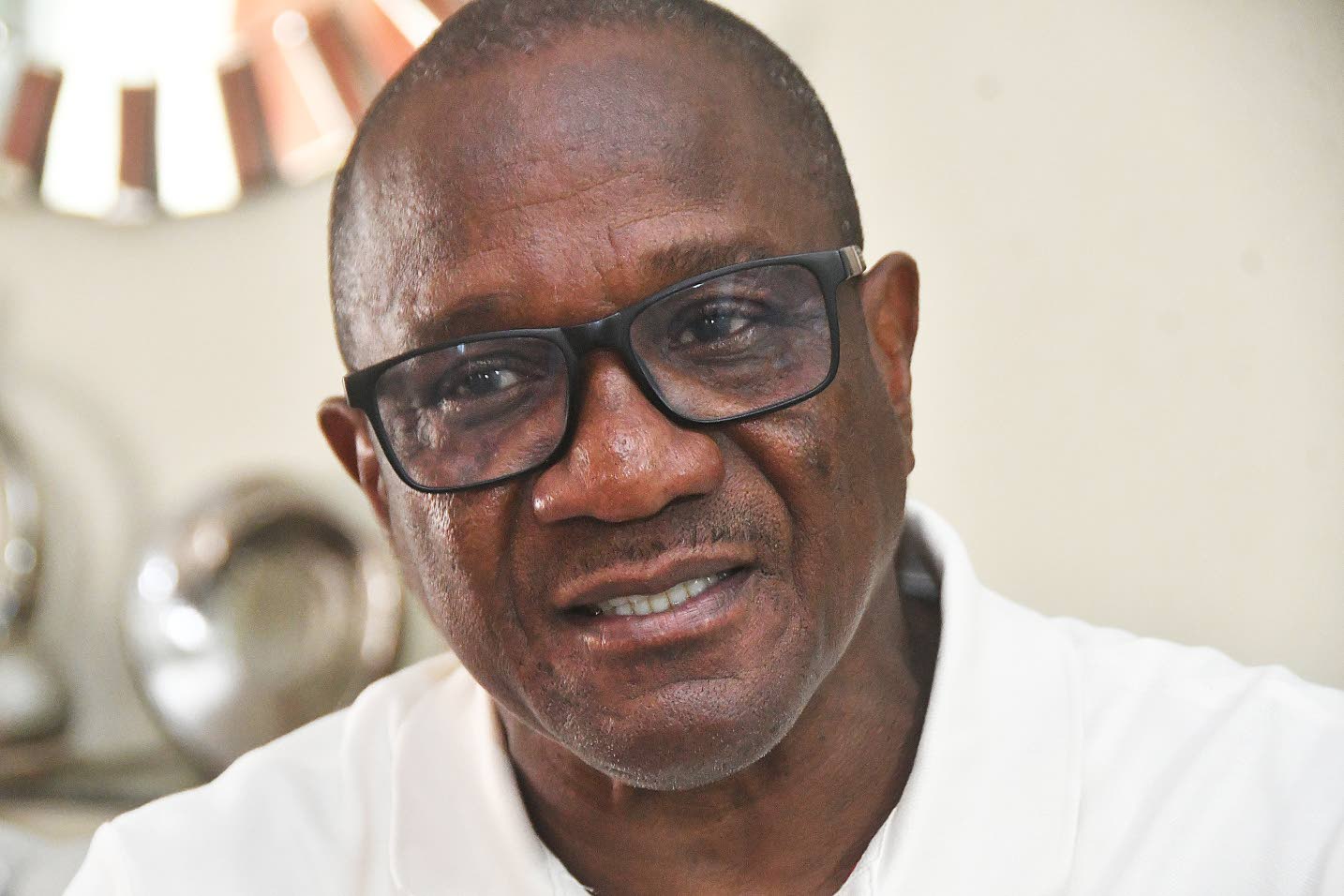
Michael “Zun” Clarke shares how he taught himself to read while training on a playing field in the evenings when he was in primary school. (Photo: Garfield Robinson)


