



JaBBEM slams proposal for hotel beach pass fees
... proposes amenity-based charges
PRESIDENT of the Jamaica Beach Birthright Environmental Movement (JaBBEM), Dr Devon Taylor says the proposed hotel beach pass system would not ensure true free access to Jamaica’s foreshore, arguing instead that hotels should allow free entry while charging for amenities, including bathroom facilities and other services.
The Beach Access and Management Policy for Jamaica was tabled in Parliament by Prime Minister Dr Andrew Holness last month. The policy focuses on developing a modern, inclusive definition of a beach, as well as definitions for the foreshore, backshore, and water shelf. It outlines how the Government will improve access to beaches, specifies the required legislative amendments, and details changes to the considerations for new development approval.
The document states that “hotels will be encouraged to implement a beach pass system to facilitate access by the public to hotel beaches, at a reasonable fee, to persons who are not guests of the hotel. The owner or operator of each hotel instituting such a system will consult with the National Environment and Planning Agency in determining the fee structure.”
Taylor said even though the foreshore is public land, the policy encourages hotel operators to create, manage, price, and benefit financially from controlling access to it.
“The foreshore and the floor of the sea are vested in the Crown, so the hotel doesn’t own it. And our interpretation of vestation in the Crown is a trust held in perpetuity for the people in a decolonised, independent Jamaica, not a Crown trust that is owned by the King of England, neither a trust that is owned by the Government of Jamaica. When I say the Government, I’m talking about the Parliament, which includes the Cabinet and the parliamentary Opposition. It cannot be that the interpretation of that is that they own it,” Taylor told the Jamaica Observer.
“It can’t be, because they are not a static thing, they come and they go, and they can’t just, at will do what they want to do with it. It is Government of the people, it is Government by the people, and it’s Government for the people, so therefore the vestation of the Crown is of the people because the people are the custodians of the land, Jamaica, and custodians of the foreshore on the floor of the sea… The hotel can’t be using a resource of the land, a treasure of the land, the heritage that the constitution speaks of, and then it’s charging people to use it,” he reasoned.
He noted that where a hotel provides amenities, then it would be fair for them to charge for access to the facilities, but not for access to the beach.
“The hotels build their bathroom, they have their other amenities there — the bar and their rooms. Yes, if somebody wants to use that and pay to go there, fine, but when it comes on to the foreshore you can’t charge us to use the beach.
“Charge people to use your amenities because, already on land, sometimes you have to use a public bathroom and you have to put some money in somebody’s hand to get to use the bathroom, but we are against a system that our heritage is sold back to us when the person who is blocking us don’t own it,” he told the Sunday Observer.
Taylor noted that several Caribbean countries like Barbados, St Kitts and Nevis, The Bahamas, and Cayman Islands have free beaches and their systems operate smoothly.
“We do not see chaos and disorder and mayhem… and neither do we see hotels losing money and not benefiting, so it is a farce to say that private beach and the exclusion of Jamaicans from the foreshore to allow hotels to run is required because hotel business is not going to operate. We do not subscribe to that, and there is no evidence that supports that…claim,” said the president of the beach advocacy group.
Taylor added that the policy treats access to public beaches as contingent on compliance with regulations rather than as an inherent right.
“It frames access as a privilege granted by the State or conditionally provided by a licensee, exercising the language of permission rather than rights. Linking beach access to a Government-sanctioned licensee reinterprets the colonial architecture of the past and permits in green, black, and gold,” he said, calling for the public’s access to the foreshore to be absolute, unconditional, and immune from any licensing regime.
He said equally alarming is the policy’s endorsement of the construction of artificial beaches.
“Removing natural limestone and volcanic rock formations, which serve to dissipate wave energy, prevent storm surge, and sustain fisheries, represents coastal engineering driven by profit motives. The creation of artificial beaches also transforms Crown-vested, submerged land into private amenities, effectively dispossessing the nation while masquerading as a provision of leisure. JaBBEM demands a moratorium on artificial beach construction and an independent ecological audit of all existing installations,” he said.
Taylor called for the document to be withdrawn and revised, stressing that “the sea belongs to Jamaica. The beach belongs to Jamaica. The foreshore belongs to Jamaica. No licensing framework changes that fact”.
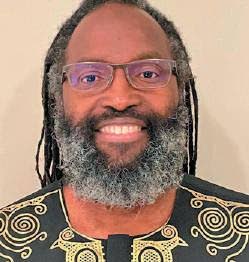
TAYLOR…the sea belongs to Jamaica. The beach belongs to Jamaica


