



SPOTTED!!!
Who?
Ghanaian musician Livingstone Etse Satekia aka Stonebwoy
On his performance at Dream Wknd…
It was amazing! I hope it encourages other artistes to join the movement. I feel like I’m carrying the weight of Afrodancehall on my shoulders, and I’m dedicated to moving it forward. It’s a huge responsibility, and I want to see others step up and help me elevate it.
His involvement in dancehall… I believe music is a spiritual experience — it connects with you on a subconscious level before you even decide if you like it or not. Growing up, reggae and dancehall resonated with me just as much as my African music. I realised this was music born outside of Africa by fellow black people, and it instantly felt like home. As a youngster, it gave me a deeper reason to embrace the music. It was more than just hearing and loving it; it was about accepting that this sound came from people like me, making it feel intrinsically a part of us. I believe this connection is embedded in our DNA. That’s the essence I want to bring to my music. I pull from dancehall and reggae, and I blend them with highlife and the indigenous Ghanaian styles I grew up with. That’s where my inspiration truly began.
On the similarities between Jamaican and Ghanian culture…
Our cultures are very similar given that the populations of both of our countries are [predominantly] black. It’s in our shared history — the rebellions and the fight for freedom are in our blood. Nanny of the Maroons, a Jamaican national hero, is from the Ashanti tribe. It’s a connection that is no longer a secret; the world, especially black people, now understands that Caribbean and African nations are connected not just because we are black, but also by a shared ancestry.
We also share similarities in food. Cornmeal porridge, for example is a dish that’s a staple in both places. In Ghana, we use corn in many ways, but the cuisine varies by region and tribe. As a member of the Ewe tribe, I grew up eating cou-cou, which is made from millet and is very popular where I live. It’s fascinating to see how our food traditions, though distinct, share a common thread.
Jamaicans have rice and peas... we have a dish called Waakye. Jollof rice is actually Senegalese. It originated from the Wolof tribe. While Senegal is the originator, both Ghana and Nigeria have put their own spin on the dish. We also have a special claim to jollof beef, which is a unique twist on the classic. I’ve always given credit to Senegal, but I believe Ghanaian jollof is the best you can find. I know there is a rice and peas war with Ghana and Jamaica! I can speak to that because in 2014, I was with the late Peter Morgan from Morgan Heritage, doing a show in Guyana. It was the first time that I had ever gone on tour. These guys are like my godfathers and I’ll always be grateful for them. We started a Waakye/Rice and Peas war, because he has been to Ghana so many times. And he knew that rice and peas originated from the Hausa tribe in Ghana and that is how it finds its roots here. Anytime I eat rice and peas, I wish I had the Shito [pepper sauce]… it’s similar to Scotch bonnet pepper.
Third time’s the charm! I performed at Reggae Sumfest in 2018, Rebel Salute in 2022 and now 2025, Dream Wknd…. I know Jamaica is known for having a tough crowd, but honestly, if that were completely true, they wouldn’t have such a deep love for the music. I think when people have music at their core and know it so well, they’re naturally going to have high expectations. It’s not about being difficult; it’s about being passionate. At Reggae Sumfest, I was recognised as one of the best performers of the entire show. With more than 50 artistes performing over three days, that was a huge honour for my first time on that stage. Every time I perform in Jamaica and step off stage, people tell me, ‘Stonebwoy, you are Jamaican! Don’t tell me that you are from Africa’. That is a powerful compliment that gives me great encouragement, because my goal is to bridge the gap between our cultures. At Dream Wknd, it was another splendid performance, as the crowd’s reaction showed they were embracing my sound. People recognise that it’s fresh, new, authentic, and a hybrid of styles. Which is why I coined the term afrodancehall 12 years ago.
It’s important for me to push Afrodancehall… A significant portion of my inspiration is dancehall music. I have to credit the Jamaicans who invested so much blood, sweat, and tears to build reggae and dancehall into the global force it is. I’m not ashamed to embody that sound; in fact, I consider it an honour. Sometimes you do feel the fear of not being fully accepted due to a different accent. You might feel that to truly embody the music, you have to be born in Jamaica or at least live there. Even though I live in Africa, I carry global influences with me, and you can hear that in my accent and my music. I’m proud of that, because it’s my own personal melting pot. I see myself as a cultural custodian. While reggae and dancehall have played a big role, Africa and Afrobeats are a part of me. I could have called my music ‘Afrofusion’ to cover everything, but by being specific about Afrobeats and dancehall, I’m confidently stepping into what I believe an African artist should do — inspire others. There are so many of us who have always been inspired by reggae and dancehall.
My list of collaborations with Jamaican artistes is extensive… with over 50 to date. The one with Sean Paul was particularly impactful. He gave me a chance in 2017 and has been a mentor and big brother to me ever since. I was in Atlanta recording a track and knew it needed his energy. Reaching out and having him collaborate was a game-changer; it was my turning point that brought me to Jamaica to shoot the video. I credit a lot of my success to him. Being featured on Morgan Heritage’s Grammy-winning album
Strictly Roots in 2015 and working with legends like Beenie Man, as well as artistes like Spice, D’Yani, and I-Octane.
Masicka and I are currently in talks… Of course, a collaboration with Vybz Kartel is also a dream for any artiste! Shawn Storm and I have also been in communication since his release. I’m actively working to bring Jamaican artistes to perform in Ghana. I know Kartel wants to perform in Ghana and I hope that goes well because I have been known for bringing Jamaican artistes to Ghana. I know it is a defining moment for their careers. I’m hopeful that we can make some of these collaborations a reality. If the Vybz Kartel collaboration happens, we’ll be involved one way or another, as our ultimate goal is to grow and elevate dancehall music.
On Vybz Kartel’s release bringing energy back into dancehall…
That energy was crucial because it takes many people to make a movement successful, just as your national motto says, ‘Out of Many, One People’. But Vybz Kartel deserves direct credit for several things. His energy and influence were needed even before his incarceration, as he was a thriving force pushing dancehall to the world in his unique way. Even before his release, there was a debate about whether Afrobeats was taking over dancehall. I’ve always said I don’t believe that. Why must there be only one spot for either Afrobeats, reggae, or dancehall? I’ve stated before, that reggae opened doors for African artistes in the West. No disrespect to traditional African music, but for it to gain recognition, it often had to align with a typical African style or jazz.
Highlife is the bedrock of the Ghanaian sound and the origin of what we now call Afrobeats… both technically and structurally. However, I have never agreed with the idea that Afrobeats is “taking over” dancehall. Instead, I’ve always maintained that Afrobeats is simply having its moment in the spotlight. It’s time for African music to be at the forefront in the West, and you can see that in the rising numbers, sold-out stadiums, and streaming influence. This is actually a good thing for dancehall, as it shows two black-originated genres are both finding their place and thriving. Reggae opened the door, and dancehall took the lead. For a long time, Africans in the diaspora who wanted to connect with their roots had to identify with Jamaica or the Caribbean because they couldn’t simply say, ‘I’m from Ghana or Nigeria’. Now that Afrobeats is having its moment, why can’t dancehall affiliate with that success? Why shouldn’t dancehall feel proud? Kartel’s return has brought dancehall energy to a new high, and that hasn’t taken the spotlight away from Afrobeats. My brothers are killing it, and I’m confident that Afro-dancehall is next to get its shine. Artistes like Moliy from Ghana has a huge hit
Shake It To The Max which is an Afrodancehall song.
That spurred controversy whether we should call it dancehall or Afrobeats... Why must we always make this a controversy? We need to embrace the merger because our cultures need to unite. I’ve always put myself forward as a sacrifice, ignoring the insults and championing the Afrodancehall style. The results are undeniable: Moliy’s hit was produced by my good friend Silent Addy. This is a full-circle moment. It could have been any producer from anywhere, but it was Jamaica and Ghana. The biggest song on the charts right now is a collaboration between us. Moily, that’s my girl!
On separating reggae from dancehall... These two genres — reggae and dancehall — can absolutely stand on their own. They have distinct patterns, so it’s easy for them to exist separately or come together. I actually think it would be better if they had their own categories. That way, if an artiste drops a great reggae project and another releases a successful dancehall project in the same year, they can both get the credit they deserve. But if they’re not separate, it’s not a huge deal. The music is doing great, fans are showing up, and I see big Caribbean music festivals finally starting to do justice to the genre after all these years.
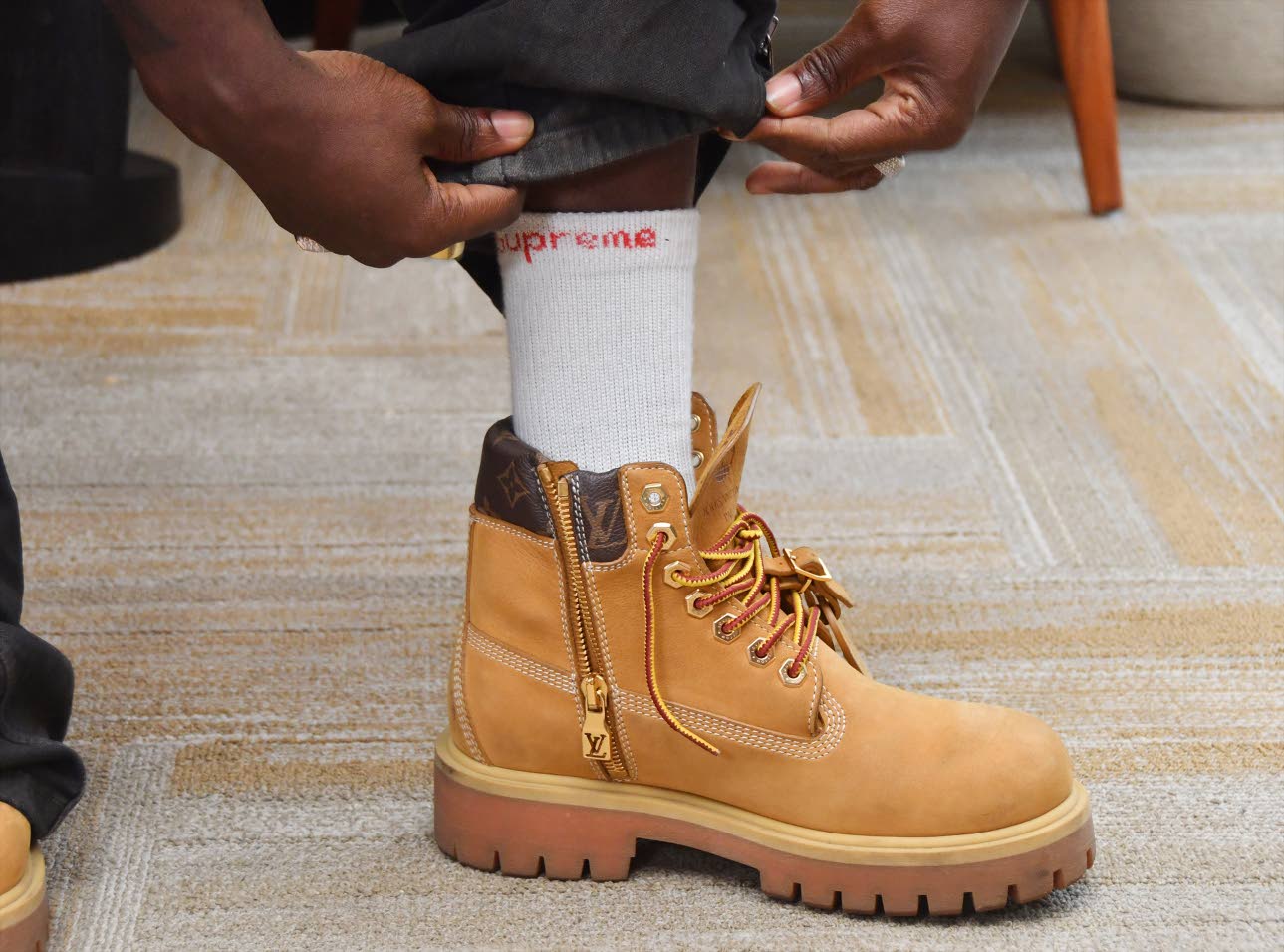
STONE Bwoy’s FIT Timberland boots and Supreme socks (Photo: Naphtali Junior)

STONE Bwoy’s FIT Timberland boots and Supreme socks, which I’ve paired with Rick Owens dark shadow pants and a tank top. The top is a customized piece — a shirt I personally cut to create a unique look. My accessories include a chain from Frost of London with rose gold diamonds, grillz by Eric Kryaftsman, and a beanie skull cap I customised myself. (Photo: Naphtali Junior)

STONE Bwoy’s FIT My accessories include a beanie skull cap I customised myself. (Photo: Naphtali Junior)
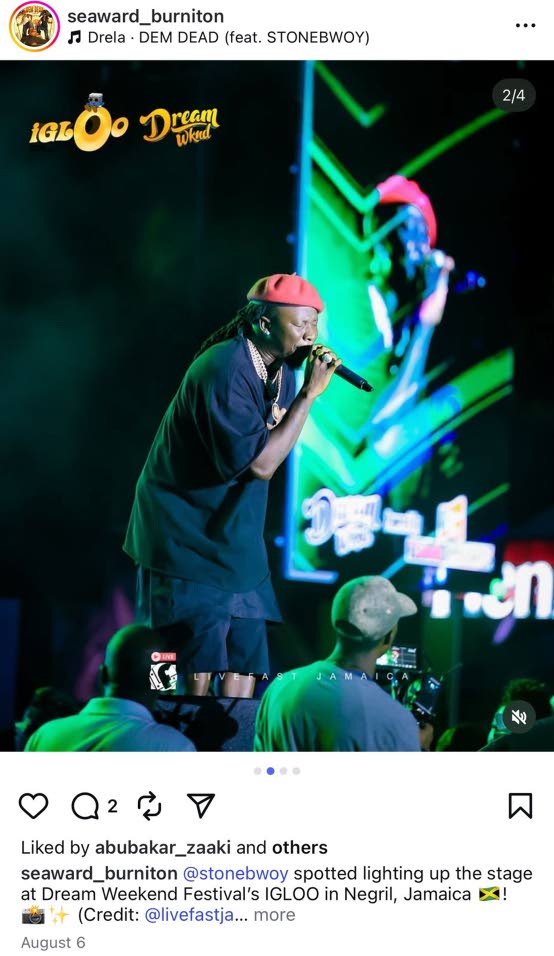
Ghanaian superstar Stonebwoy performs at Igloo during Dream Wknd 2025 (Photo: IG/@seaward_burniton)

Ghanaian musician Livingstone Etse Satekia aka Stonebwoy (Photo: Naphtali Junior)
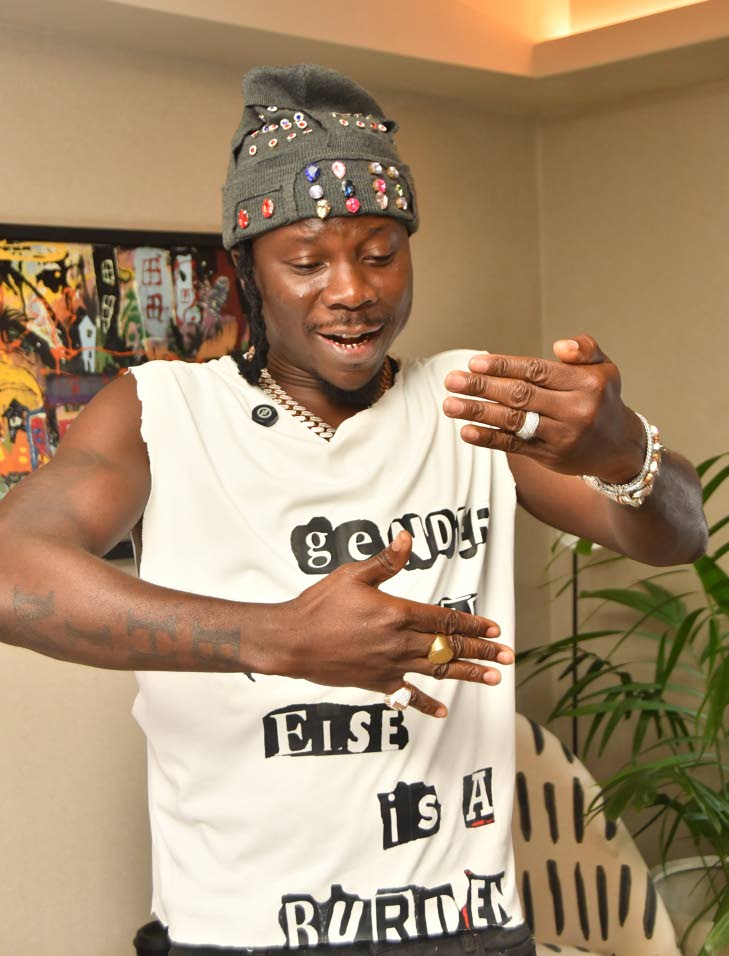
‘I believe this connection is embedded in our DNA. That’s the essence I want to bring to my music. I pull from dancehall and reggae, and I blend them with highlife and the indigenous Ghanaian styles I grew up with. That’s where my inspiration truly began.’ (Photo: Naphtali Junior)
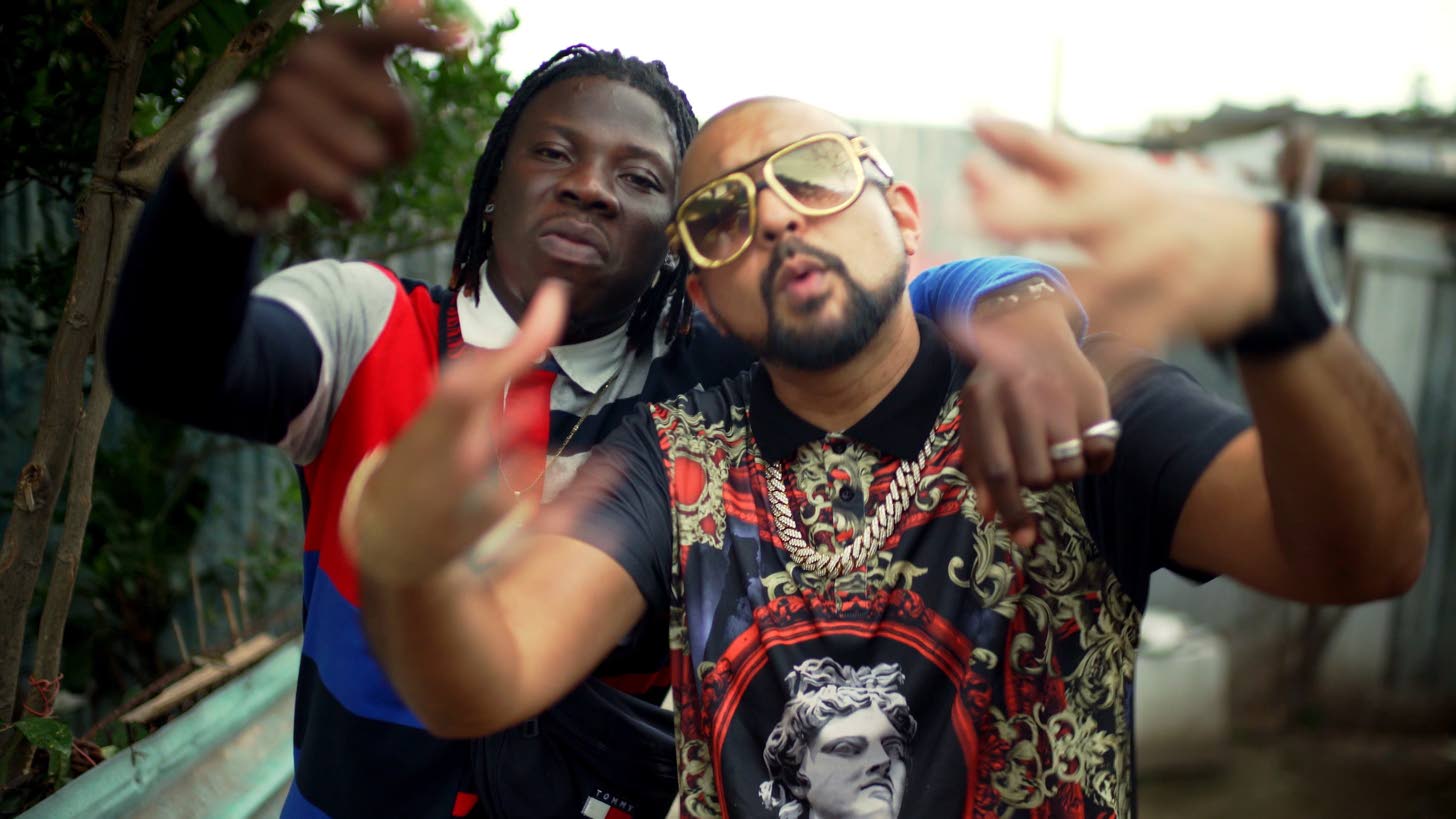
A screengrab from Stonebwoy’s Most Original video, featuring Sean Paul.
![[USE TOGETHER]https://soundcloud.com/morganheritage](/jamaicaobserver/news/wp-content/uploads/sites/4/2025/08/image_8-33.jpg)
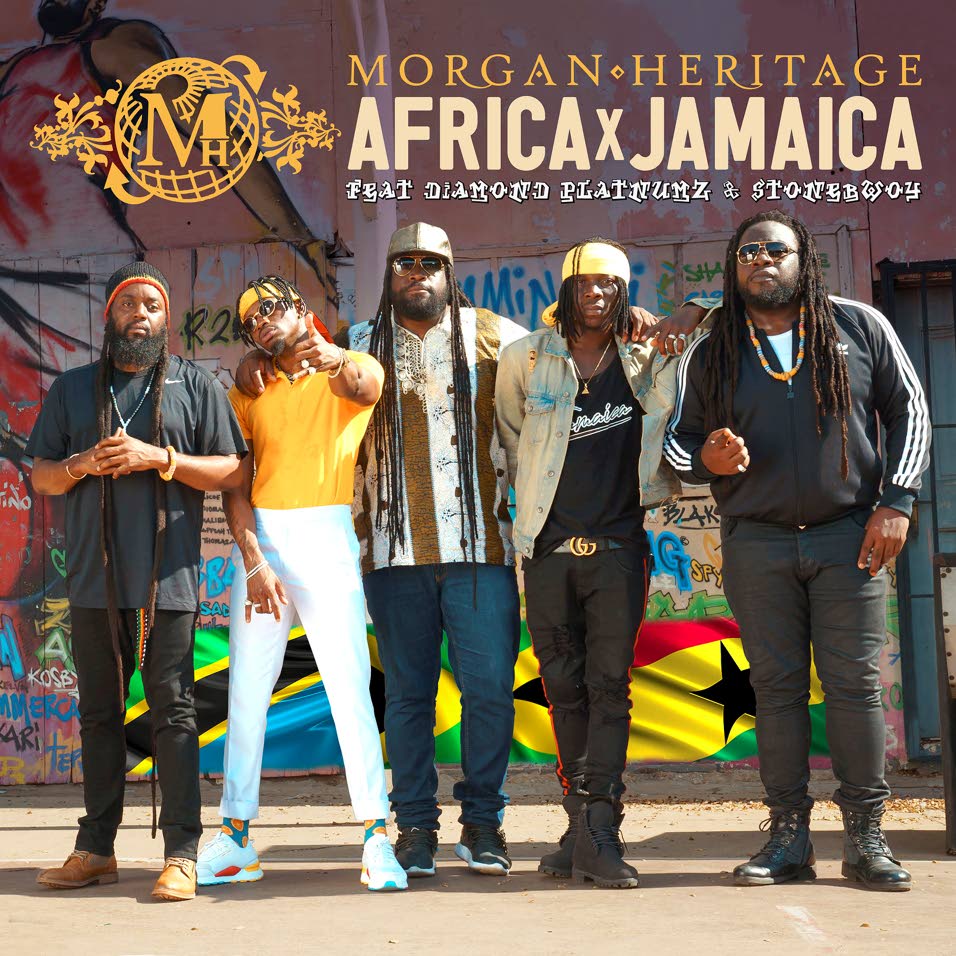
Stonebwoy, alongside Diamond Platnum, is featured on Morgan Heritage’s 2019 song Africa x Jamaica.
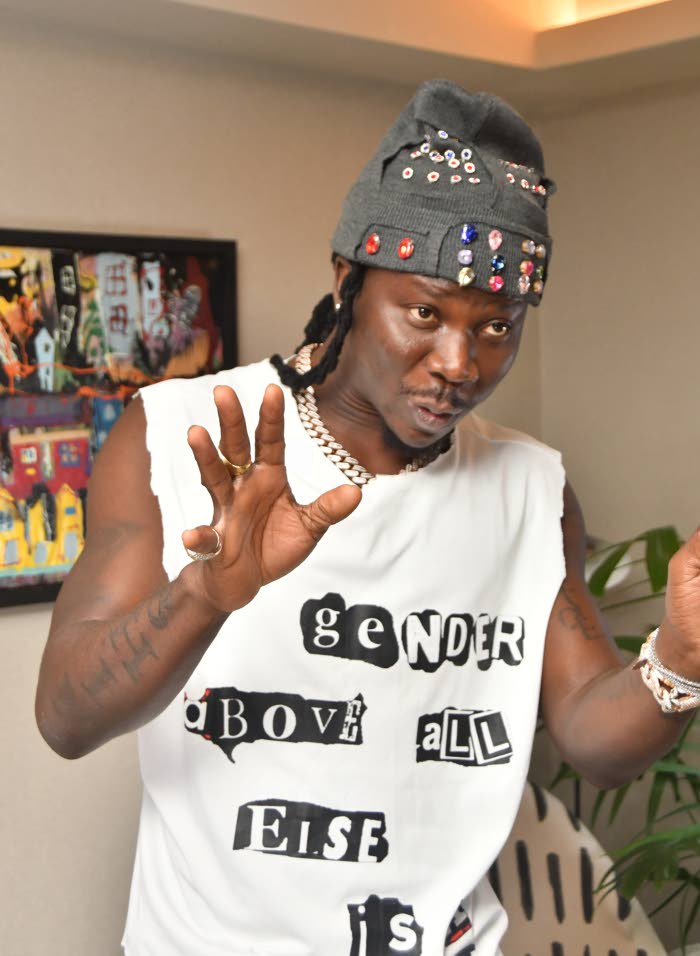
I believe music is a spiritual experience — it connects with you on a subconscious level before you even decide if you like it or not (Photo: Naphtali Junior)
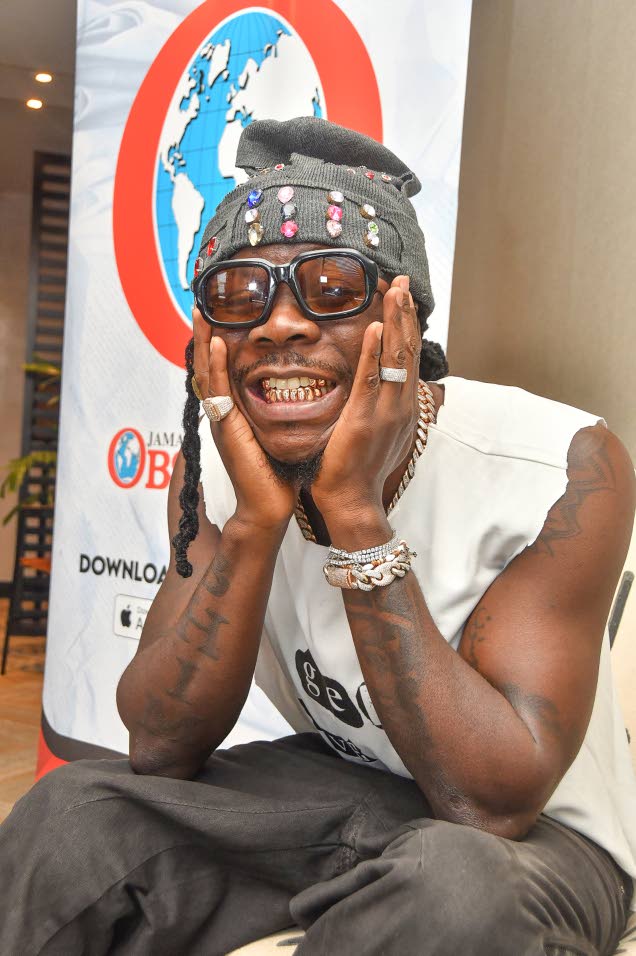
STONE Bwoy’s FIT Timberland boots and Supreme socks, which I’ve paired with Rick Owens dark shadow pants and a tank top. The top is a customized piece — a shirt I personally cut to create a unique look. My accessories include a chain from Frost of London with rose gold diamonds, grillz by Eric Kryaftsman, and a beanie skull cap I customised myself. (Photo: Naphtali Junior)


