



Caribbean farmers face uncertainty as Middle East war disrupts global food systems
… FAO and Caricom call for coordinated response
FARMERS across the Caribbean are facing growing uncertainty as the escalating Middle East conflict continues to disrupt global energy and agricultural supply chains, driving up costs and threatening food security across the region.
The latest geopolitical tensions, sparked by instability in the Persian Gulf since February, have hit import-dependent economies hardest, exposing the region’s heavy reliance on foreign supplies for food, fuel and agricultural inputs.
Speaking at a recent high-level dialogue event hosted by the Food and Agriculture Organisation (FAO), Caricom acting Secretary General Wendell Samuel said the current crisis exposes some long-standing structural weaknesses in the Caribbean.
“Our economies remain highly exposed to global shocks transmitted through energy markets, food systems, and international supply chains,” he stated.
With consequences already being felt across many island states, he stressed that shipping disruptions, rising freight rates, and increased insurance costs have all compounded the problem — particularly for those countries that often rely on just-in-time imports or have limited storage capacity.
“Inflation, food affordability and fiscal stability are also no longer just abstract risks — they are immediate public policy concerns,” Samuel added.
The FAO, also warning against the spillover effects of the war, said it has quickly evolved into a global shock that has placed small, import-dependent economies, like those in the Caribbean, at risk.
“This is not a crisis that only affects one region,” FAO’s Chief Economist Máximo Torero-Cullen said in his remarks during the high-level meeting. “It began in the east, but it has quickly moved west.”
At the core of the disruption is the blockage of the Strait of Hormuz, a critical trade corridor through which significant volumes of oil, natural gas and fertilisers pass. Ongoing tensions along that route have restricted shipping flows — triggering volatility in global energy and input markets.
For farmers — particularly in the Caribbean — the impact from this impasse has been immediate, especially as rising fertiliser prices and higher fuel and transportation costs squeeze the life from already-thin profit margins.
“They must decide whether to plant with fewer inputs, which reduce productivity, or not plant at all,” Torero-Cullen said as he outlined some of the challenges with which farmers are faced.
“Some may also have to shift to crops that require less fertiliser,” he continued.
While global food prices have remained relatively stable so far due to existing stocks, the FAO official has however cautioned that this may not last if production continues to decline in upcoming planting cycles.
As global prices for key production input begin to edge upward, concerns about food security and social stability across the region have also begun to mount. While higher import costs put pressure on government budgets, households, on the other hand, are also being faced with an increasing difficulty in affording some of the most basic goods.
“The gravest risk is rising food insecurity, as even small changes in real income can lead to large increases in poverty in our region,” Samuel said.
The Caricom executive further said that as governments across the Caribbean navigate this new challenge, this could force some to implement short-term measures such as targeted subsidies, cash transfers and food assistance programmes, though these could further strain already limited fiscal space.
Against this backdrop, the FAO and Caricom have both called for a coordinated regional response, one aimed at managing the immediate crisis and building long-term resilience.
“This situation calls for a coordinated strategy. A fragmented response will be insufficient,” Samuel said in his call to action.
For the Caribbean, Samuel said how leaders respond to the current crisis will be critical in determining its ability to withstand future shocks.
Among measures outlined in the draft of a regional response framework, he highlighted the need to have more sustained policies focused on stabilising markets, coupled with longer-term strategies to reduce structural vulnerabilities.
“Concerning the longer-term goals, these should include measures built around renewable energy adoption, diversification of fertiliser sources, as well as a general strengthening of regional food production systems,” Samuel noted.

Wendell Samuel, Caricom acting secretary general
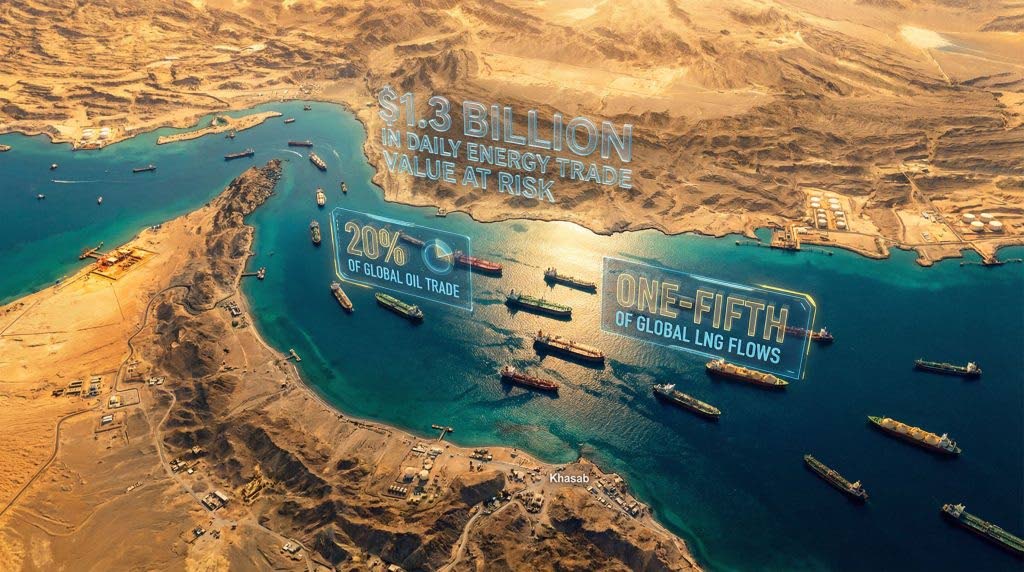
Recent geopolitical tensions in the Persian Gulf, beginning in February, have been sending shockwaves far beyond the Middle East, with serious implications for global agri-food systems, particularly for farmers in the Caribbean.


