



Chinapoo’s 50 per cent dividend pledge
Guardian to drive payouts with ‘jaws’, acquisitions
GUARDIAN Holdings CEO Ian Chinapoo is outlining an ambitious plan to raise dividend payouts to 50 per cent of core earnings within 18 months, signalling increasing confidence in the company’s underlying profitability and cash flow generation.
The move marks a significant shift toward higher, more predictable shareholder returns, with interim dividends for 2025 nearly doubling compared to the prior year. For the second quarter to June, the board declared a dividend of TT$0.22 per share, joining the first quarter’s TT$0.21, bringing total interim payouts for the year to TT$0.43 per share — an 87 per cent increase over the same period last year. As a result, shareholders now earn nearly a six per cent return on their investment through dividends alone, up from just under five per cent a year earlier.
The payout ratio stands at 10 per cent of total earnings per share and 25 per cent of core profits, reflecting a balanced policy that rewards investors while preserving capital for growth.
Funding the Dividend Growth
In a separate interview with the Jamaica Observer, Chinapoo noted, “If you look, we were at a 20 per cent dividend payout before, and now we’re moving to 25 per cent.”
This growing dividend payout reflects a deliberate distinction between recurring earnings and one-off capital gains. While the sale of Thoma Exploitatie B.V. in January 2025 provided a significant non-recurring boost — injecting TT$649 million post-tax into Guardian’s capital base — the company stresses that future dividend increases will primarily be supported by steady growth in its core insurance operations.
The 3.21 per cent rise in Guardian Holdings’ share price since late July underscores investor approval of the company’s financial strength and dividend strategy.
The Guardian Holdings CEO provided details on a clear dividend payout target based on continuing operations in his interview with
BusinessWeek. “Our goal is to actually get to a 50 per cent dividend payout ratio. We were 20, now we are at 25. Our goal is to get to 35 per cent by year-end, and then to 50 per cent within the next 12 to 18 months.”
Operational Foundation
Chinapoo’s dividend ambitions rest squarely on a foundation of wealth creation, underscored by Guardian’s remarkable 89 per cent jump in equity — or book value — since the end of 2022, now nearing TT$5.5 billion. This surge was propelled by steady growth in core business profitability alongside the TT$649 million windfall from the January 2025 sale of Thoma Exploitatie B.V. While this one-off transaction turbocharged the balance sheet and enabled the special step-up in dividends, the company emphasises that future book value growth — and dividend capacity — will depend on ongoing operational excellence, investment discipline, and rigorous capital management.
Guardian’s post-tax profit from continuing operations increased slightly by 0.5 per cent to TT$395 million for the six months ending June 30. However, CEO Chinapoo highlighted that the core insurance business grew by 10 per cent, showing improved efficiency in underwriting despite higher claims. The smaller overall profit growth is due to investment market ups and downs, which caused a TT$88 million drop in net fair value gains compared to last year.
“So when you look at the core business, that’s in profitability, we’ve been growing about 10 per cent, which I think in this environment, is quite strong, given all the headwinds that you see in the world today, especially with rising reinsurance rates, rising health insurance costs, and it’s because of rising health price inflation.”
Claims Crisis & Health-care Focus
Health claims represent a critical but challenging part of Guardian’s business. Chinapoo acknowledged that the life, health and pension segment “is not the most profitable part of the business,” largely because rising health care and medicine costs cannot be passed on dollar for dollar to customers. “So yes, we have had to increase the premiums because, you can’t have a plan that’s actually losing money; otherwise, you won’t be able to survive in the long run…The reinsurers are also charging more, especially after COVID upset the whole industry. It’s a tough balancing act, but necessary to maintain sustainability.”
He emphasises that managing healthcare inflation extends beyond premium adjustments. “We see the only real way that we can really manage the cost here, is to help people understand how better to manage their own health,” as a means of reducing future claims costs. This approach takes on heightened urgency after Guardian paid TT$2.077 billion in gross claims during the first half of 2025 — a TT$262 million or 14.4 per cent year-on-year surge. Critically, its life, health and pensions segment accounted for TT$1.64 billion of the total claims burden and drove nearly 60 per cent of the claims increase, significantly outpacing its 5 per cent revenue growth.
Facing that TT$1.64 billion in claims largely driven by imported medical inflation, Guardian is investing in prevention as a cost-containment tool. “So we encourage and cover the costs of more preventative care, check-ups and similar initiatives,” Chinapoo explained. “Helping people better manage their own health is crucial because healthcare inflation is driven by factors beyond our control, like high medication prices and foreign exchange exposure. In the Caribbean, we are price takers when it comes to medicine and medical equipment, so wellness efforts are one of the best ways to manage cost pressures over time.”
Property & Casualty (P&C) Pressures
There were pressures on the property and casualty side as well. Revenues from this segment grew five per cent while claims jumped 34 per cent highlighting margin pressure despite top-line growth. Property and casualty revenues were impacted mainly by “strong momentum” in getting new business among the property, motor, casualty and marine lines of business principally in Trinidad, Dutch Caribbean and Netherlands markets. The growth in claims on the other hand was driven by the motor and property portfolios.
“Reinsurance costs are going up, claims are going up, but overall we were able this year to hold our reinsurance costs for the most part. So that is going to help our customers in the coming year. You might have certain classes of business that might have little increases and so on, but overall, we expect to be able to hold our reinsurance costs and therefore manage for our customers, despite the increases in claims and so on….”
Robert Almeida, chairman of Guardian Holdings, outlined that “despite the continued tightening of reinsurance markets, net expenses from reinsurance contracts held declined in the current half-year period by 28 per cent, mainly from a higher level of incurred claims recovery”, particularly in the property and motor lines of the property and casualty segment.
“Jaws” Efficiency Strategy
This reinsurance efficiency exemplifies CEO Ian Chinapoo’s core philosophy of widening the “jaws” — his metaphor likening the business to a shark’s mouth, in which the upper jaw represents revenue and the lower jaw represents expenses.
“So whatever inflation that comes about, we must be able to operate even more efficiently than whatever cost the inflation creates. So that way, we keep the jaws open,” he said, pointing to higher profit as being necessary to sustain the planned dividend payout.
For the first half of 2025, profits were driven mainly by the sale of Thoma. The TT$649 million it generated pushed profit to TT$1.044 billion, up 160 per cent from a year ago.
“We have more to come in the balance of this year and in future years,” Chinapoo said. “What we’ve been doing, as evidenced by these results, is focusing on perfecting the core, which is the core insurance revenue,” he added, pointing to the direction of focus for the regional insurer.
Acquisition Strategy: Portfolios, Not Companies
With the boost from the Thoma transaction now realised, Guardian Holdings is looking ahead. Chinapoo is clear that such extraordinary gains won’t be the norm — future growth in book value, and thus dividend capacity, will hinge on core business performance, prudent reinvestment, and strategic portfolio acquisitions.
“The area of most focus for us would be in the Dutch Caribbean right now and, in terms of looking at growing, when I say acquisitions, not just companies,” he outlined. “We [are] looking at portfolios. So we may go to another company and say, ‘we’re interested in taking this portfolio off your hand,’ because we believe we could operate it more efficiently than they can because of our scale, because of our reinsurance relationships, because of our systems and customer experience.”
“So, they may have a good portfolio. We might think we can make it great. So when we look at acquisitions, it’s not just buying the shares of a company. We might say, ‘Sell us your motor portfolio, sell us your health portfolios,’ and then we take it over.”
Chinapoo did not specify which entities’ insurance portfolios are being targeted for acquisition; however, he was clear that any investment decision must exceed its internally set rate of return.
“And our target return on equity is 20 per cent. So, if our new investments that we are looking at don’t exceed the 20 per cent return on equity, we will prefer to put more money into our dividends and reward the shareholder.”
Chinapoo stated that the only time the company will hold on to any capital in the future is if they have new investments that can be significantly accretive to the shareholder.
The Dutch Caribbean aside, he said the company is also looking to at growing in Guyana and consolidating its investments in the Cayman Islands where it has equity holdings in two brokerages.
“In the case of Guyana, we’re building partnerships with existing firms there where we can support them. We already are in the process on these things,” he added. This aligns with the broader market context, where Guyana’s insurance sector is experiencing notable growth, driven by both life and general insurance segments and projected to expand at over 8 per cent annually through 2026, according to globaldata.com.
He admits to moving “a little slow” in the Guyana market, estimating that the company “probably lost 12 months” due to its own delay, but he pledged to push more aggressively going forward.
Asset Management Revival
While emphasising a focus on the core insurance business, Chinapoo also highlighted the importance of funds under management. Reflecting on past opportunities, he said the company should have pursued “smaller asset management investment businesses” in Trinidad and Tobago more aggressively and, similarly to Guyana, acknowledged that they should have acted sooner.
“The asset management business will rebound this year. It’s the timing of some of their transactions because that business is not only asset management, it’s also investment banking. We are looking at potential transactions in that space as well that would allow us to get to more scale there, because the scale we have in the life, health and pensions and the property and casualty business, we do not yet have in the asset management business,” he told BusinessWeek.
“So that is a focus for us. It’s a core strength of the NCB Financial Group, of which we are part, [and] it will behove us not to go after growth in that area.”
The company recently announced the acquisition of NCB Insurance Agency’s pension portfolio in Jamaica, which is currently awaiting regulatory approval. This acquisition is expected to significantly enhance the company’s ability to provide pension administration services in the Jamaican market. In addition, the company is already the largest pension provider in Aruba and the Dutch Caribbean and holds a strong position in Trinidad.
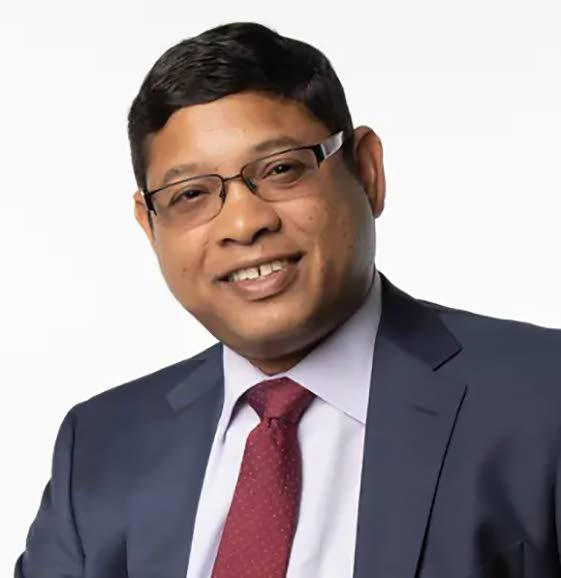
CHINAPOO…our goal is to actually get to a 50 per cent dividend payout ratio. We were 20, now we are at 25. Our goal is to get to 35 per cent by year-end, and then to 50 per cent within the next 12 to 18 months.


