



Jamaica deploys nuclear tech in battle against coffee leaf rust
Key Points:
– New nuclear project to fight coffee leaf rust: Jamaica launched a project using cobalt-60 gamma irradiation at The University of the West Indies to develop coffee plant varieties resistant to leaf rust fungus, which has caused up to 50% losses in local crops.
– Lack of industry consultation: Key coffee industry leaders, including the Jamaica Coffee Growers’ Association president, were not consulted about the project and only recently learned of it, though they support efforts to improve the sector.
– Broader agricultural and health applications: Besides coffee, the irradiation technology will also target other crops like ginger and yam, improve export quality by controlling pests, and tackle mosquito-borne diseases through sterile insect techniques to reduce illnesses like Zika and dengue.
JAMAICA has launched a nuclear project to combat a devastating coffee fungus that has been crippling local crops without consulting key industry leaders, the Jamaica Observer has learned, as the country races to protect a premium export whose earnings fell 36 per cent last year. The project was officially launched on Tuesday.
Coffee leaf rust, a fungal disease that has ravaged coffee plants across the Caribbean since an initial outbreak in 2012, has been hamstringing production in Jamaica, with some coffee farmers suffering up to 50 per cent losses in fields. The disease seriously weakens coffee plants by killing leaves, reducing photosynthesis, lowering berry production, and eventually can kill the plant, leading to substantial yield losses and economic damage for coffee farmers.
Donald Salmon, president of the Jamaica Coffee Growers’ Association, told the Jamaica Observer those losses acutely impact small farmers who make up 80 per cent of the industry, adding that he is now seeing the fungal disease appearing in elevations at which it was not previously detected.
“I support anything positive to improve the industry,” Salmon said when asked about the nuclear technology that has been deployed to help reduce the losses. He however said he was never consulted nor have any knowledge about the project, saying he was hearing about it the first time when this reporter contacted him for comments.
However, executive director of the Scientific Research Council (SRC) Dr Charah Watson, whose agency has been at the forefront of the study to develop coffee plant materials that are resistant to the leaf rust disease, said the research is still in its infancy, the reason for Salmon saying he does not have knowledge of the project.
“We are still in the experimental phase. Stakeholders would be broadly aware of the research but are not yet privy to the specific details of what the work entails,” Watson said when asked about stakeholders’ complaint about being left out of the project.
She said after labwork on the plants is complete both at SRC where the plants will be propagated and at the International Centre for Environmental and Nuclear Sciences (ICENS) where they will be irradiated, the next phase would be to test it against particular diseases and microbes to ascertain their tolerance.
“All of that takes a good while. We are looking at about a two-year process and it could take up four years,” Watson added.
The technology, a new cobalt-60 gamma irradiation facility at ICENS, a research facility based at The University of the West Indies (The UWI), which hosts the only research reactor in the Caribbean. Professor Charles Grant, ICENS director general, told the Business Observer, the facility will use controlled bursts of radiation to develop disease-resistant coffee varieties through accelerated natural mutation,
“What we are doing is speeding up nature,” Grant said, in explaining the process, while pointing out that it happens naturally. “It’s how over time plants change and how we cross-breed plants. It’s what happens naturally.” The facility accelerates plant breeding without genetic modification. While it may sound like science fiction, Grant said it is a promising tool for addressing some of the persistent challenges facing Jamaican agriculture.
Salmon questioned how the new planting material will be distributed to farmers given that most may be financially incapable of replacing all their crops in the near term.
Coffee production in Jamaica has been declining since it peaked at close to 650,000 boxes in the 1996/97 crop season with production this year estimated at 225,000 boxes. Seventy per cent of Jamaica’s coffee output is exported, chiefly to Japan, but also to the United States with smaller sums going to other countries.
Dr Norman Grant, managing director of the Mavis Bank Coffee Factory, said he too was unaware of the irradiation project at The UWI, Mona which targets the coffee industry, and in particular, eliminating coffee leaf rust disease. After Watson’s rationale for his lack of knowledge of the project was told to him, Grant who also chairs the Jamaica Coffee Exporters Association welcomed the news and expressed his willingness to come on board through a memorandum of understanding with ICENS and SRC. But he points out this project should come with more focus on the coffee industry to double output over the next five years.
“So where we are now, we have recommended to the ministry to implement the crop restoration and establishment programme (CREP), which is an investment in terms of input and supplies. Under this programme we propose the repair of our farm roads, dealing with pests and diseases, supplying inputs to the coffee farmers such as fertilizer and chemicals, improving irrigation and training farmers,” the Mavis Bank Coffee Factory boss said.
He estimates such a programme would cost taxpayers $350 million per annum, adding to $1.5 billion over the five year period he is hoping it will be implemented. The expectation is that yields will triple from 30 boxes of coffee beans per acre to between “90 and 100 boxes per acre” which Grant believes could boost export earnings which have hovered around US$25 million per annum, though it dipped 36 per cent in 2024 to US$16 million.
Given what’s at stake, his namesake at ICENS outlined why the coffee industry will get the initial focus of the irradiation machine at the nuclear facility.
“It’s a very high-end product, and it is geographically tagged to Jamaica… and it being one of the most expensive coffees in the world, it’s our flagship product, so to speak,” Professor Grant noted.
The new irradiator was procured by the International Atomic Energy Agency (IAEA) through its technical cooperation programme and is now being used to also develop new varieties of ginger, yam and sweet potato — staple crops which not only contribute to food security in Jamaica but are also key national exports as irradiation can control spoilage and food-borne pathogenic micro-organisms or insect pests without significantly affecting taste or smell.
Speaking specifically about how the irradiation machine can help to boost output by reducing crop damage caused by fruit flies, Grant drew the example of Jamaica’s efforts to boost mango exports to the United States. He pointed out that worms in mangoes are caused by fruit flies laying their larvae on the fruits which go on to destroy the crop.
“That also impacts on your export possibilities, because unless you treat the fruit, either by boiling it or by fumigation, which I think is now illegal, those fruit flies cause fast spoilage of the fruit as well as potentially infecting the countries that you’re sending the fruit to. So, a lot of these countries will actually not allow you to export your products.”
Grant said the technology could enable exports of currently restricted crops by “ensuring no live larvae remain” to meet international import standards.
Jamaica’s total agricultural exports at US$76.5 million in 2024, about 4.5 per cent of the total, was down 17 per cent, according to the Statistical Institute of Jamaica. However, food imports for household consumption rose 6.4 per cent to US$1.2 billion during the same period, contributing to a US$5.4 billion visible trade deficit.
“We intend to start proof of concept work…that could then be utilized for shelf-life extension of seasonal crops and phyto sanitation to increase crop export,” Grant noted.
Coffee variety trials will begin in late 2025, with commercial services for seasonal crops to follow. The IAEA-funded facility became operational this year after pandemic delays to the approximately $1.15 million project.
Beyond agriculture, the technology will combat mosquito-borne diseases. Professor Grant confirms plans to deploy sterile insect technique (SIT), against Aedes aegypti mosquitoes, vectors for Zika and dengue. “Integrated vector management can significantly reduce mosquito-borne illnesses,” he notes, referencing Jamaica’s 2016 chikungunya outbreak that cost an estimated $6.6 billion in lost productivity. The facility’s design allows regional collaboration on both crop protection and disease control.
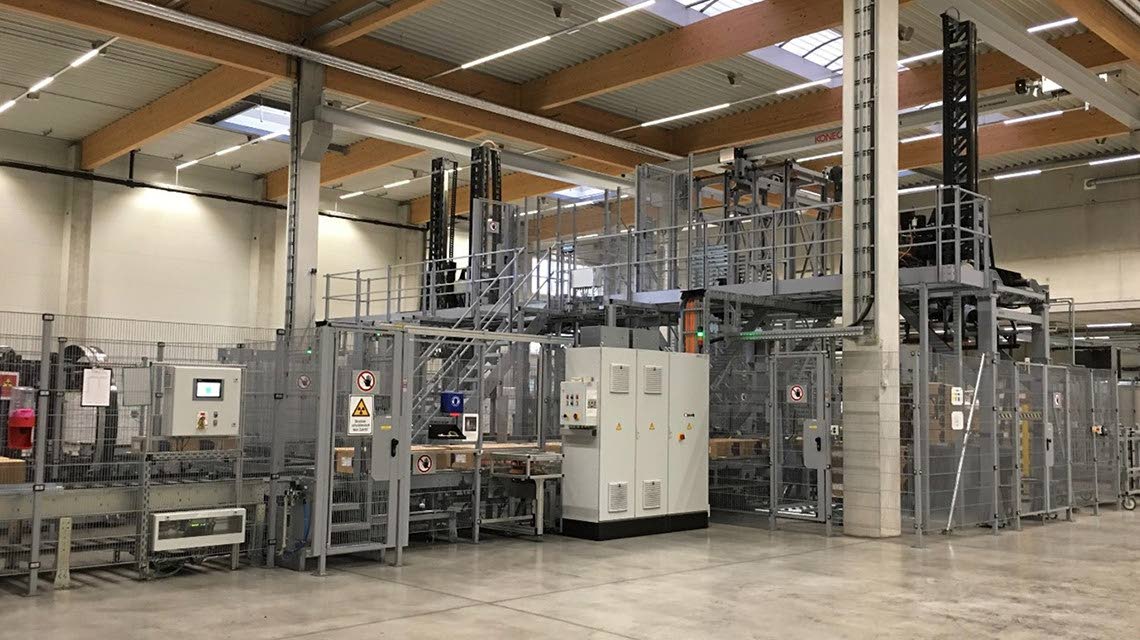
An industrial irradiator is a facility or device that uses ionizing radiation—such as gamma rays from radioactive cobalt-60, electron beams, or X-rays—to expose products or materials for purposes including sterilization, food preservation, and material modification. Common applications include sterilizing medical equipment, killing insects and bacteria in food, extending shelf life, preventing sprouting in crops, and altering material properties for manufacturing. The process is highly controlled to ensure safety, and it does not make irradiated products radioactive.

GRANT…what we are doing is speeding up nature.
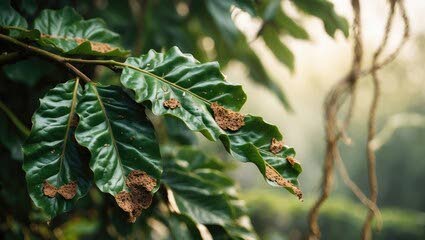
A coffee plant displaying leaf rust disease. The disease caused by a fungus devastates up to 50 per cent of crops on some farms.


