



No end to flooding, unless…
Urban planning expert points to need for storm water infrastructure overhaul, enforcement of building code
Urban planning consultant Professor Carol Archer says last Friday’s deluge in the Corporate Area which trapped motorists and wrecked homes will continue unless there is a complete overhaul of the current storm water infrastructure and enforcement of existing building legislation.
“We have the necessary legislation, what we need is the enforcement, plain and simple. Right now, what is happening is the lack of enforcement, so persons are still getting away with the kinds of development. They will argue that there is no regulation for the Building Code so who is going to enforce rainwater harvesting when there is no regulation? Let’s move on that, let’s get it done, and let’s update,” Professor Archer told the
Jamaica Observer on Tuesday.
Archer, a University of Technology, Jamaica lecturer who specialises in urban governance and management and urban planning theory and practice, said while research data to which authorities are privy show climate change impact and the intensity and duration of rainfall, this knowledge has not been brought to bear on how developments are approved. She said, as such, Friday’s flooding from the torrential rain, which lasted just over an hour, was not just a question of clogged drains.
“The issue, though, is that, notwithstanding the data, the consideration as to how we approve development has not been taken on board based on the data. So, for example, we know that rainfall has increased significantly; all the data show that. How you build in sensitive areas — whether on hillsides or in close proximity to drains and gullies — that has to be considered, not just where you build, but how you build,” she stated.
“With the question of where you build, the data should inform the decision-makers that where you build, especially in those sensitive areas, should be limited at best or they should then apply some further engineering measures to manage the impact of climate change. We have the data, so if you know you are building in areas that are susceptible then you have to use the various technology to inform how you build,” Archer continued.
She also argued that developers who have taken to the hills are not exactly guiltless.
“If you build on the hillside, what you have to do to protect the structure that is being built is that you have to pave over; it prevents the water from percolating. What then happens is that you increase the run-off, so rather than the water going through the soil it runs off because of the concreted area, or if not concrete, you have people channelling the water off the private property, and if channelling is not done to specification, the volume of water is increasing that is now coming on the road,” she pointed out.
“So if you were to now, for example, go to Tavistock [in St Andrew] there are sections that were recently paved over and the roadways are now disturbed because of the volume of water. Where you would have had one plot you now have five, six plots of paved area forcing the water on the road. So the roads up there are being destroyed. You have the increased volume coming down the road, so the volume and the velocity with debris — because in some areas you have loose gravel — the impact of those on the roads destroyed the roads that were just paved over,” Archer lamented.
She said for certain size developments the authorities should lay down the law for the treatment of storm water.
“In certain situations what you would require for certain size developments is that they channel the water. So rather than putting it on the road, they do rainwater harvesting, and rainwater harvesting is not catching water in a black tank, it is allowing for water to percolate and collect at certain points. Because you know the type of the development and the nature of the development will continue to increase, you say to the developers, ‘Manage the run-off,’ so rather than just having them channel the water onto the road, the water is stored [in] underground tanks, pipes that lead from roofs into collection points,” she noted.
Archer, in the meantime, has mooted “water retention facilities” for flood-prone areas.
“It’s a relatively new concept, referred to as the Sponge City…where throughout the cities you have open green spaces, but technically speaking, they are really not in the truest sense. In dry times they look like nice play areas, but the way they are designed is that when it floods they then turn into little lakes and the water then is released slowly into tributaries and the waterway or is used back. We had opportunities for us to develop those types of facilities,” she said.
“The perfect one would have been along Barbican near Loshusan supermarket; rather than put up concrete barriers, we could have built from where the water drained into the ground and then it is led into collection ponds at certain points. Right now it is paved off, you have expanded none of the drains, they have been cleaned. But if you have a two-inch drain, for example, and you have increased the paved areas and you have increased the density in an area that had all single-family [dwellings] and you have quadrupled that density over the last five years without expanding and/or cleaning the drain, you are going to have and continue to have what we experienced on Friday across the Corporate Area,” Archer warned.
She said that maintaining, repairing, and upgrading drains are essential, so too observance of building and land management codes.
“If we were to adopt the Sponge City concept, we would have to develop the criteria in terms of how we develop the city and the things we require in terms of our roadway, so it is not just about requiring regular maintenance because what is currently there is being inundated by the climate change factors. So we then need an overhaul of what we currently have so that we are better able to respond,” she pointed out.
In June this year, just ahead of Parliament’s dissolution for the September 3 General Election, then minister without portfolio in the Ministry of Economic Growth and Job Creation with responsibility for works Robert Morgan told Parliament that the Government had earmarked $2.8 billion for repairs and upgrades to the national gully network and for critical flood management works for the 2025 Atlantic hurricane season which began in June and ends on November 30.
He said approximately $2 billion had been allocated for comprehensive gully works, and a significant portion of the funds will be directed towards works on the Sandy Gully and its tributaries in the Corporate Area as well as the North Gully and South Gully in St James.
In noting that the Government is intensifying its focus on flood management through a series of strategic interventions designed to reduce the devastating impacts of flooding, Morgan said the interventions include river training works to redirect and stabilise water flow; rehabilitation of eroded gullies; and critical upgrades to the country’s drainage systems.
The Meteorological Service on Tuesday said a trough is expected to remain across the island over the next few days and should bring scattered afternoon showers and isolated thunderstorms across sections of most parishes Thursday and Friday.
The entity is to indicate its measurement date for the rainfall in the Corporate Area last Friday.
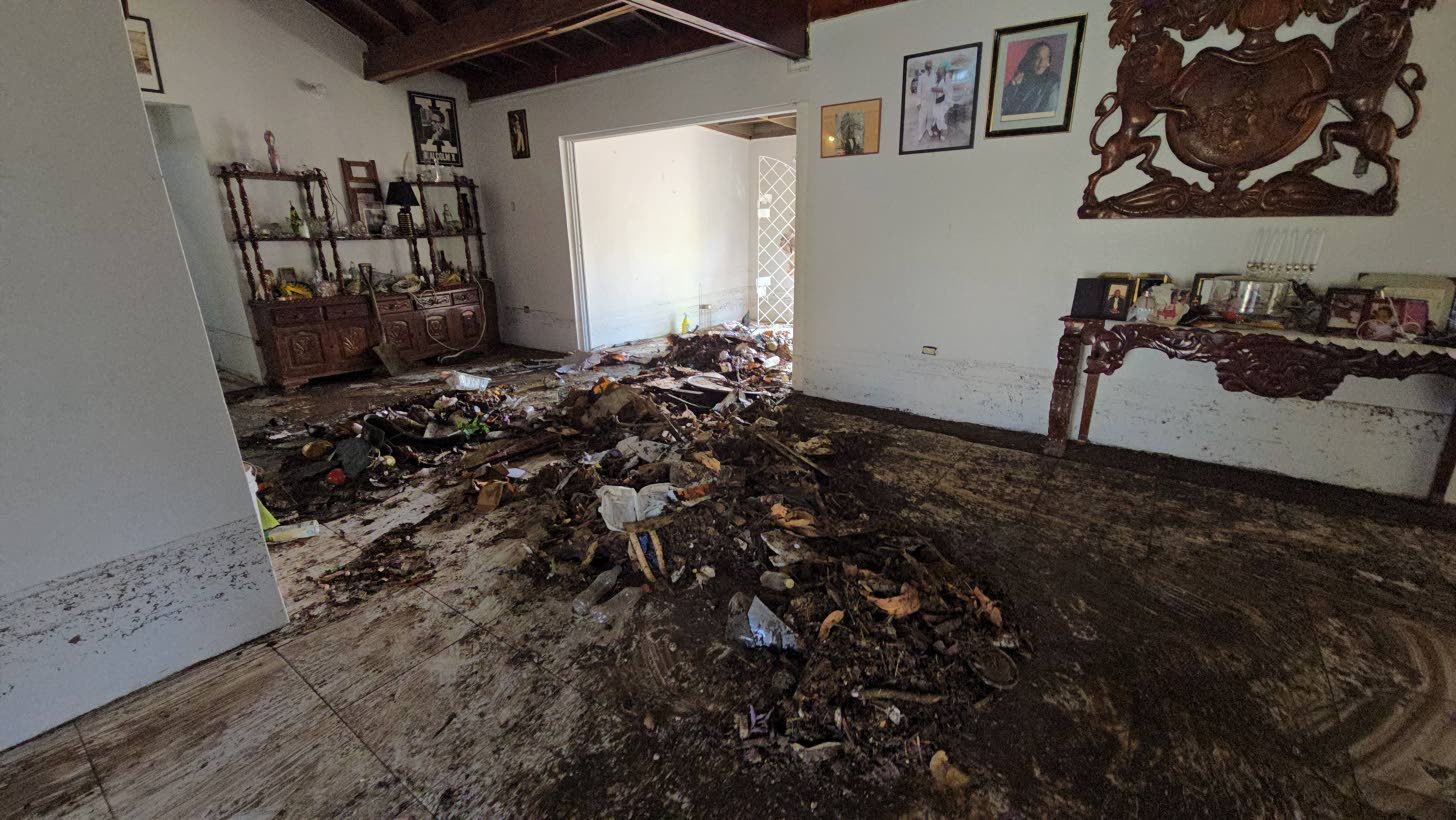
Debris seen inside a house at Trafalgar Park in New Kingston last Saturday after the home was inundated with water from a nearby gully, which brought with it mud and other debris, on Friday when heavy rains lashed the island.
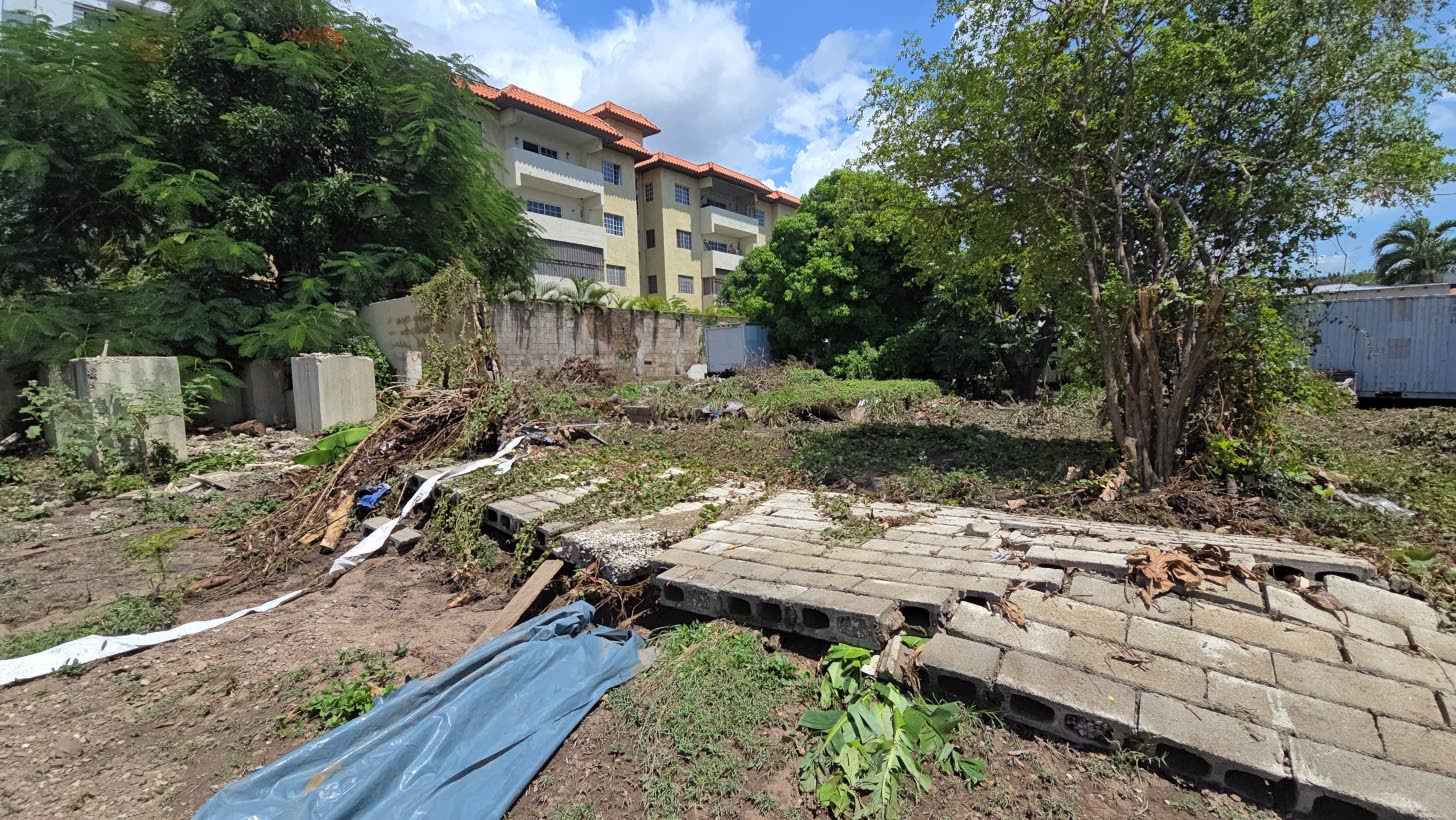
A homeowner’s wall lies in ruins in the Trafalgar Park community of New Kingston last Saturday after raging water from a nearby gully came full force, downing the structure on Friday.
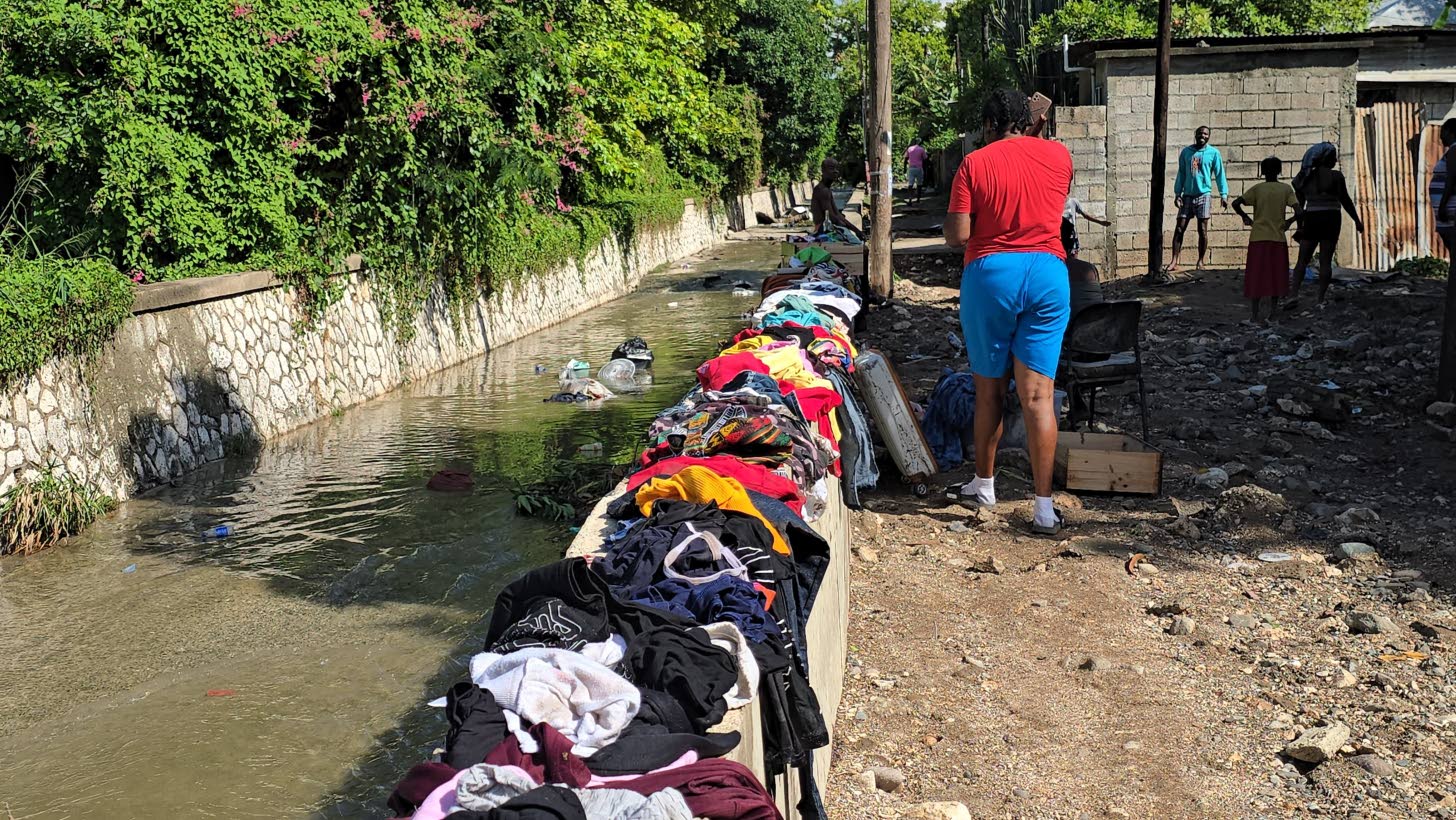
Residents lay out clothes in the sun last Saturday after raging flood waters from the nearby Burger Gully in Mountain View, St Andrew, overflowed during heavy rain on Friday.
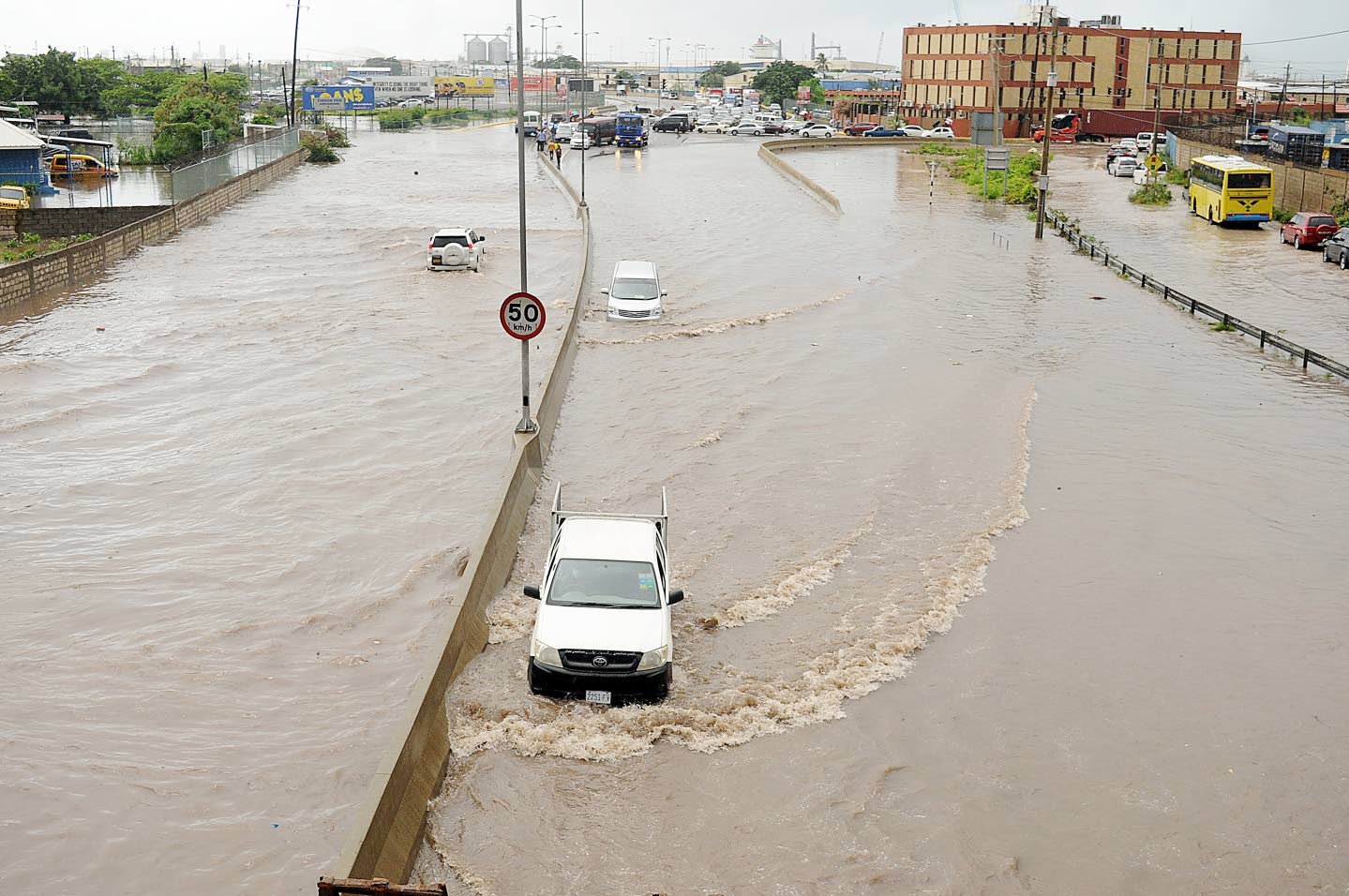
This file photo shows heavy flooding on Marcus Garvey Drive in St Andrew after heavy rain. Episodes of flooding are common on the road whenever the Corporate Area is lashed by torrential showers. (Photo: Garfield Robinson)


