



Targets hit, but
...Vaz admits hiccups in rural school bus roll-out despite strong ridership numbers
ONE month into operation and the Government’s Rural School Bus Programme has exceeded expectations in ridership, Transport Minister Daryl Vaz reported on Friday.
At the same time he admitted that the first phase has not been without challenges, including reports of students falling ill on buses, minor accidents, and logistical adjustments to routes and schedules.
Vaz gave the update during a press conference at which he said that an average of 16,600 students travel on the buses daily, surpassing the ministry’s target of 15,000 for the first 60 buses.
However, he acknowledged that the ministry’s initial assessment had highlighted several issues, which are being actively addressed as the programme expands across rural Jamaica.
He noted that some of the challenges reported include instances of disorderly behaviour on the buses, as well as students falling ill during transit.
“I want to say it’s not limited to the spats between the students. We have had medical incidents on the buses where students have passed out, students have started to have bleeding through their nose, different things that have come up and, luckily, we have been able to coordinate with the driver and the JUTC (Jamaica Urban Transit Company) and get the police or the medical assistance that’s required. And, thankfully, we have not had any major incident that has resulted in any death or injury,” Vaz said.
He explained that although the idea of assigning wardens to monitor students on the buses had been proposed, a solution was reached following consultations with the ministries of education and finance.
“…It was agreed that there would be no need for wardens, that we would incorporate the arrangement between the police and the schools to have school resource officers… and what it really means in essence is that there will be law enforcement monitors on the buses to make sure that the incidents that we have experienced so far… can be taken care of by the relevant body rather than having the school bus driver [attend to these matters],” he said.
Vaz also confirmed that there had been several “fender benders” involving the new buses, though he stressed that none resulted in serious injury or damage.
Managing director of JUTC, Owen Ellington, reported during the press conference that 21 incidents were logged during the first month of operation,
“Of that 21, just over half are accidents involving a third-party vehicle and in all the instances there are minor scratches, most of them having to do with challenges with passing — vehicles passing each other on the very narrow roads on which some of our buses operate. So, the damage to vehicles are almost always fenders, mirrors and such the like, but no head-on collision. In no instance of reported accidents was there any report of injury to a student on the bus,” he said.
To prevent more serious mishaps Ellington reiterated that the JUTC has implemented strict disciplinary measures and invested in onboard monitoring technology to track driver behaviour in real time — including speeding, harsh braking, or inattentiveness.
Another persistent issue mentioned has been the condition of rural roads. Vaz acknowledged that narrow, winding, and poorly maintained roads have complicated route planning and created safety risks.
“There are some of the interior roads that are challenging because of the width and the windiness, et cetera. So we have to find special points for turnaround and, in some cases, the condition of the roads make it almost impossible for the buses to travel safely through that,” he said.
As a result, he announced that the transport ministry is now collaborating with the National Works Agency (NWA) and municipal corporations to identify and prioritise road repairs in affected areas so as to address this issue.
In addition to infrastructure setbacks, the programme has had to adjust its schedule after discovering that several routes were operating too early in the morning.
“Departure times, in some cases, have been shifted by 30 to 45 minutes later for key corridors like Mandeville, St Elizabeth, Hanover, St Andrew, to reduce early dead runs. The first trip, if it was too early, then basically the kids were not getting there in time, and therefore the bus was leaving without capacity,” Vaz explained.
He also announced that the demand for seats has already exceeded supply in several parishes, raising concerns about overcrowding.
“The buses are very, very popular, which you would expect because, obviously, it is the safest mode of transportation. But the reality is that the demand for the buses, especially in certain routes and certain areas, are more than what the seats can carry as we speak,” Vaz said.
He noted that the Government is balancing this challenge by expanding the fleet and improving scheduling efficiency, hinting at further adjustments to routes and pickup locations to prevent overcrowding and ensure punctuality.
Despite the early setbacks, Vaz insisted that the problems are not unexpected for a project of this scale.
“We are learning more every day as we go along,” he said, promising that the lessons from the first phase will guide the design of the next.
“This minister and this Government is not bringing in any school bus that is not fit for purpose. We will assess these 110 buses. We will make sure that whatever shortcomings there are, we will make sure that in the new procurement… we improve, save and accept,” he declared.
The Rural School Bus Programme, launched on September 8, currently operates 60 buses across 12 dispatch points, serving 250 schools islandwide. The remaining 44 buses from the Government’s initial 110-bus commitment are expected to be rolled out by the end of the current school term.
Once fully implemented the initiative is expected to deliver safe and affordable transportation for students across all 14 parishes, with preparations already in progress to procure additional buses for the second and third phases of expansion over the next two academic years.
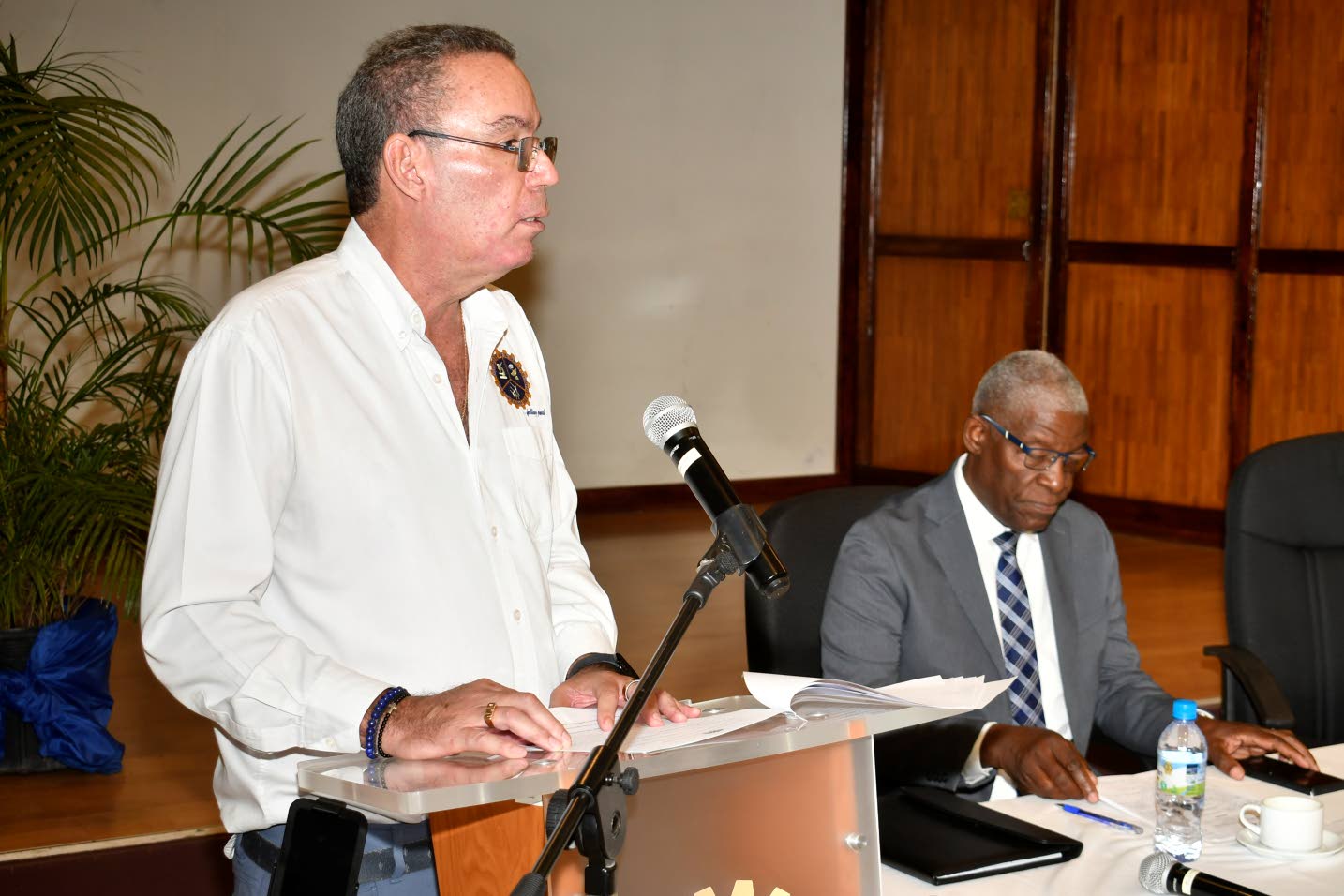
Transport Minister Daryl Vaz speaking at a press conference on Friday as he gives an update on the Rural School Bus Programme. Seated is managing director at the Jamaica Urban Transit Company Owen Ellington. (Photo: Karl Mclarty)


