



Chinese firm brings modular cabin homes to Jamaica
LONG before prefabricated homes became a modern trend, Jamaican great-grandparents were already building houses on ‘cellars’ — raised wooden frames that could be lifted and moved when life demanded it. That tradition has all but disappeared, but a Chinese construction firm is bringing back the idea in high-tech form with modular cabin houses.
China International Construction Company (CICC) Assembly Limited, led locally by Director and General Manager Changbin Lu, has been operating in Jamaica since 2019. The company says its prefabricated cabin houses combine technology, efficiency and comfort to suit local conditions. It hopes the product will offer Jamaicans a modern alternative to concrete housing, while expanding local options for affordable, sustainable homes.
“In 2019, we listened to Prime Minister Andrew Holness share his childhood experience during a speech — growing up in a cramped house with many family members, facing shortages of water and electricity, and living with poor infrastructure. Against this backdrop of his efforts to improve people’s living conditions and build more affordable housing, I recognised Jamaica’s favourable business environment and believed that my team’s professional capabilities could contribute to the country’s construction industry,” Lu told the Jamaica Observer during a recent visit to the company’s Ferry Pen site.
He speaks limited English, but had his views shared through Kevin Chen, his assistant and translator during the interview.
CICC has worked on several commercial and high-end residential projects in Kingston, Spanish Town, St Catherine; Ocho Rios and Runaway Bay in St Ann; a few of which have been developments for big businesses like Carerras, Sagicor and the National Commercial Bank.
Its decision to expand into modular homes grew from the idea of pairing modern technology with environmental awareness, Lu explained.
“With the continuous advancement of China’s spacecraft technology, astronauts have sent back stunning images of our home, planet Earth, and there has been a longing for freedom and outdoor activities among people. We want to fulfil the desire of individuals to ‘travel with their homes’,” he said.
At the company’s model site in Ferry Pen, just off the Mandela Highway in Kingston, four distinct cabin models sit gleaming under the sun — each with its own personality and purpose.
The G5, roughly 260 square feet, is the most versatile of the lot, doubling as a compact home or a private office. Inside, the layout is sleek and functional — concealed lighting, soft-touch controls and a built-in work nook that faces a broad window panel.
Next to it, the G8 looks more like something out of a science fiction movie. With its half-moon glass façade, the design draws inspiration from space capsules. Step inside and the effect is immediate — natural light floods the room through panoramic glass, reflecting off metallic finishes and hidden LED strips that give the cabin a glow.
The S5, a one-bedroom unit of about 300 square feet, feels warm and intimate. It opens onto a small patio framed by floor-to-ceiling glass, with an airy bedroom that flows into a minimalist living space. Smart-home technology controls air conditioning, projection screens, and lighting, giving owners fingertip command over every feature.
The largest model, the S9, spans around 400 square feet and adds a second bedroom and extended patio — a layout that suits small families or holiday rental investors. All cabins share the same key attributes: energy-efficient systems, dry-wet separated bathrooms, and 270-degree glass windows that bring the outdoors in.
“The space capsules are equipped with a whole-house intelligent control system, covering air conditioning, projectors, and bathroom facilities,” Lu explained. “They can be delivered as fully furnished units, they feature bathrooms with a dry-wet separation design and 270-degree panoramic floor-to-ceiling windows. Some models also come with skylights and patios.”
Prices start at $7.8 million and range up to around $9 million, depending on model and finishes.
“Their price is approximately 15–20 per cent lower than that of traditional concrete houses with the same floor area. The turnkey package includes partially pre-installed furniture, basic water and electricity systems, and fully completed interior and exterior decorations,” Chen explained.
So far, the concept has attracted government officials, police officers and potential homeowners, many of whom have visited the site to experience the designs first-hand.
“Many real estate developers and individuals have shown interest in our cabin houses. They have visited our site multiple times, with many expressing strong purchase intentions. Additionally, travel and outdoor enthusiasts, as well as high-income groups seeking a niche lifestyle, have also demonstrated keen interest in these innovative dwellings,” Chen told the Business Observer.
Prefabricated in China, the units are shipped and assembled locally using concrete foundations and high-strength bolts or welding. “The cabin houses mainly adopt a galvanised steel structure frame and aluminum panels, offering thermal insulation, fire resistance, corrosion resistance, and insect-proof treatment,” Lu said.
He added that the products can last for at least around 15 years, and that maintenance is needed.
CICC also emphasises the environmental advantages of modular construction.
“The building process is quite sustainable, using renewable materials like wood and recycled steel. Its carbon footprint is estimated to be 30–40 per cent lower than traditional construction due to modular prefabrication and material efficiency,” the director added.
Tourism, partnerships and the Caribbean Reality
The company’s immediate focus includes opportunities in tourism and public infrastructure. Lu has pinpointed several prospects within Jamaica’s tourism landscape, including partnerships with eco-resorts, Airbnb operators and government-backed projects. He added that CICC intends to pursue these collaborations in the near term and move swiftly toward implementation.
“These are all aligned with the sustainability and unique design of our cabins,” Lue said.
While discussions with the Ministry of Tourism are yet to begin, Lue said CICC intends to explore potential pilot sites. CICC’s long-term plan is to establish a local manufacturing and assembly hub to reduce costs and expand employment.
“Our long-term vision for Jamaica is to deepen market presence, drive localised development, and indeed establish local manufacturing and assembly hubs to reduce costs and boost local employment,” he added.
The company’s hiring model already reflects that approach. He noted that CICC has adopted a localised management approach where Chinese skilled technicians lead local employees, and once the hired Jamaican staff meet the required skill standards, they are promoted to supervisors who then oversee their fellow Jamaican workers.
The company also sees potential for its cabins to support government-led housing solutions or post-disaster recovery. As recent storms like Hurricane Melissa reminded Jamaicans of the need for resilient, quickly deployable housing, CICC believes its modular model could offer both speed and strength.
“We are committed to contributing to Government-led housing solutions,” he said.
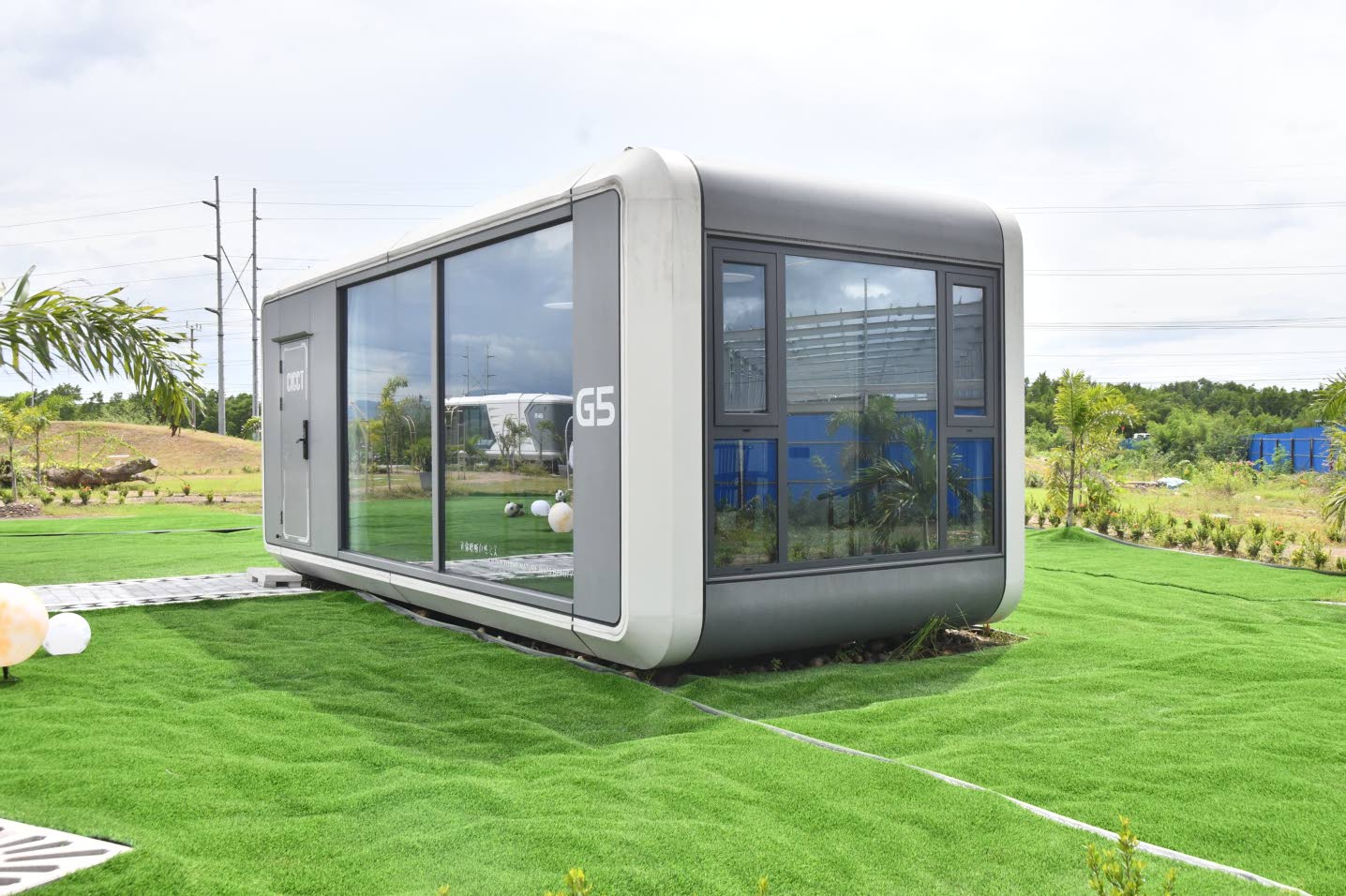
The G5 cabin, priced at approximately $7.8 million, is CICC’s most versatile model. Its a compact 260-square-foot unit that can double as a modern home or office space. (Photo: Naphtali Junior)
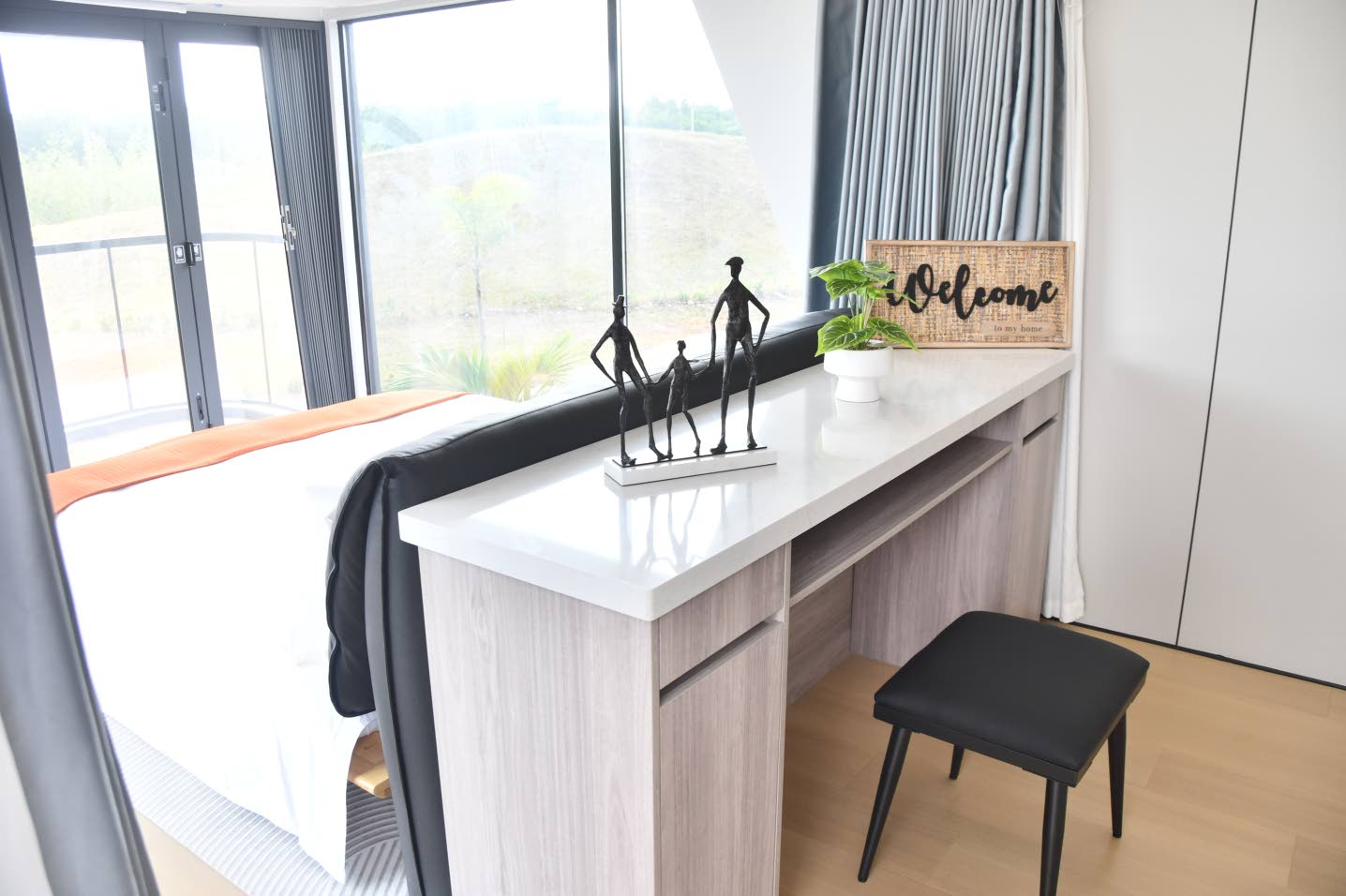
The interior of CICC’s G8 cabin (Photo: Naphtali Junior)
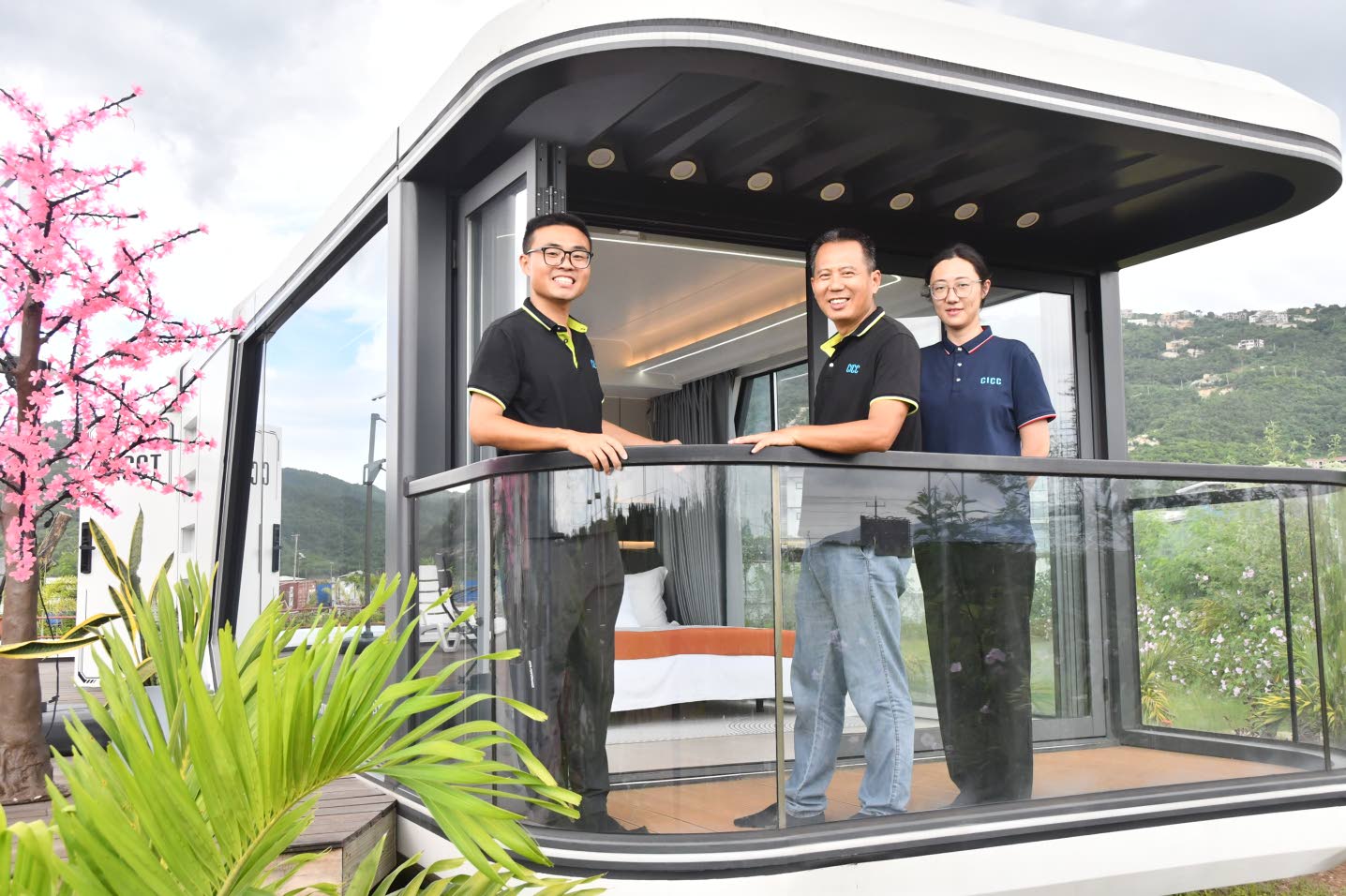
CICC team members Kevin Chen translator and assistant; Director and General Manager Changbin Lu; and Administrative Assistant Monica Zhang on the balcony of the S9 two-bedroom cabin at the company’s Ferry Pen site. (Photo: Naphtali Junior)
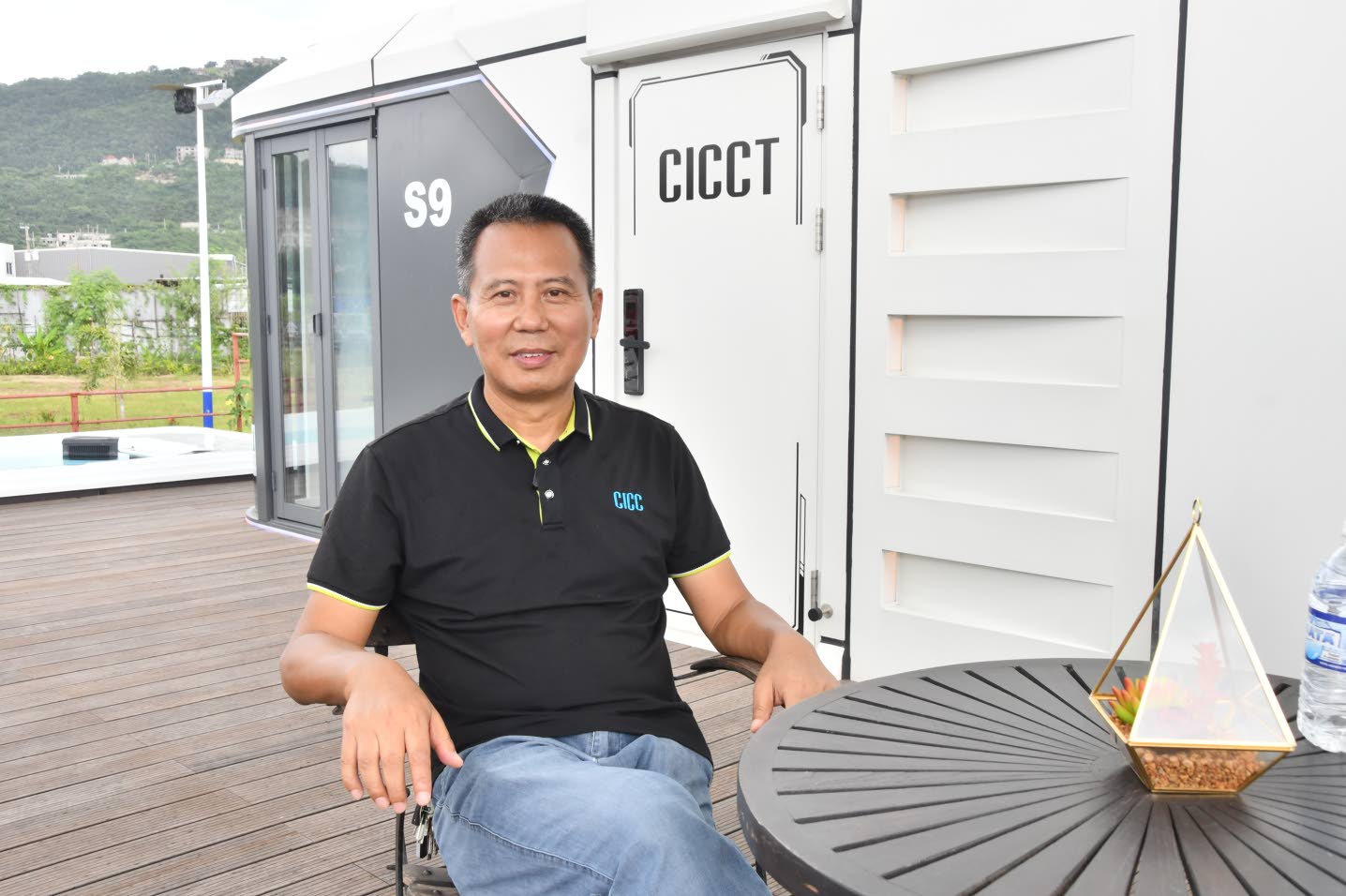
CICC’s Director and General Manager Changbin Lu says his decision to venture into cabin housing in Jamaica was driven by the island’s need for affordable, adaptable homes and his belief that modern technology could help meet that demand. (Photo: Naphtali Junior)


