Starving and trapped
Scientist condemns illegal capture of desperate birds after Hurricane Melissa
Jamaicans capturing native birds that have been venturing into areas near humans for food since the passage of Hurricane Melissa have earned the ire of conservation biologist at The University of the West Indies Damion Whyte.
He pointed to evidence, posted on social media, of individuals offering birds captured after the hurricane for sale as pets and issued a reminder that doing so is a breach of the Wildlife Protection Act.
“It is illegal to catch these birds and to sell them,” Whyte stated in a social media post. “I don’t feel sorry for you if the law catches up on you… because these birds are going through a lot — no water and can’t find food — and all you are thinking of is to put them in cages.”
The former Birdlife Jamaica president explained that the wild birds have been going into spaces near humans — something that they don’t normally do — for food and water.
Whyte, who has been going into hurricane-affected areas helping with getting relief supplies to victims of the storm, said he has seen a lot of birds in people’s yards feeding from fallen fruits.
“I saw a lot of them in Stewart Town coming near to humans for food. In the forest areas the hurricane stripped trees of leaves and fruits. Some people’s yards still have trees, so the birds come into the yards looking for fallen fruits,” Whyte told the Jamaica Observer.
That, he explained, makes them vulnerable to predators, including cats, other birds, mongooses, and humans.
“I’ve seen it myself, a Jamaican parakeet eating grass, and they would normally never come close to me. What hurts me is to hear that after the storm, when people see some of these birds injured, the first thing that comes in their mind is to cage them, not even feed them properly, and then they die,” Whyte said.
He pointed to a post on the social media site TikTok with a male voice boasting of capturing four parrots.
The video shows the parrots in two cages with the man claiming that he was driving when he saw them with their wings wet and rescued them. He shows a bag with what he said are sunflower seeds, and points to a ripe plantain which, he said, he has been feeding the birds.
“So unno know how it go, tek care a mi and mi wi tek care a dem, dat a code. And if unno want any a dem, jus link mi,” the man says in the post.
Whyte also told the Observer that after the hurricane people have posted on social media that they have been selling parrots for $24,000 up to $28,000 each.
“I’ve seen a post where somebody complained that someone caught about 20 of these birds with the intent to sell and more than half of them died,” lamented the wildlife conservation advocate whose social media handle is roostersworld.
He encouraged the public to report anyone engaged in this activity to the National Environment and Planning Agency (NEPA), the police, or reach out to him at roostersworldja or e-mail dl_whyte@yahoo.com.
“Let the birds be,” he appealed. “I hope the authorities take action against the people, especially those on social media who are showing how they catch the birds. I hope the authorities deal with them,” Whyte said, adding that NEPA officers have enough on their hands dealing with relief work to be focusing on human predators at this time.
Offering tips as to how people can ensure that the birds are able to feed, Whyte advised that fallen fruits be placed in sections of homeowners’ property where cats and mongooses can’t get to them.
He also encouraged people who have bird feeders to avoid filling them with syrup or brown sugar. “Use granulated sugar; one part per four parts of water; boil it to make it safe for the birds and allow it to cool before filling the feeders, and clean the feeders every four days. If the mixture gets milky, throw it away.”
Last week, NEPA issued a release providing similar guidance for people who may encounter affected wildlife and are uncertain about how best to help.
Additionally, the agency said, “If you observe injured birds on the ground, contact NEPA for assistance. Do not capture or cage native birds. Allow them to recover naturally in their habitats.”
The agency also reminded that it is illegal to capture, keep, or offer for sale native birds and encouraged anyone aware of this activity to report it to NEPA.
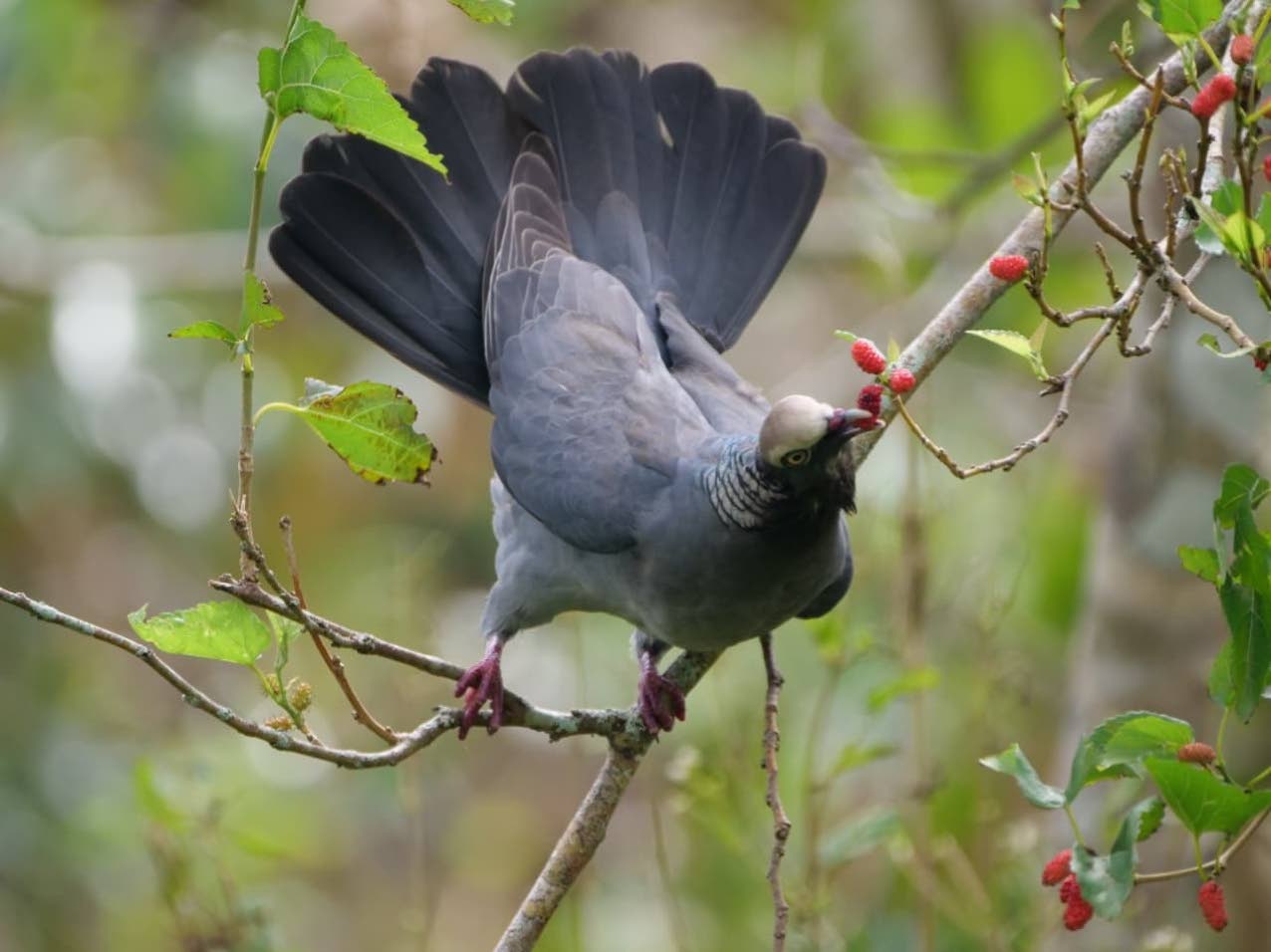
This white-crowned pigeon is captured in George’s Valley, Manchester, eating mulberries after the passage of Hurricane Melissa. (Photo: Britton Wright)
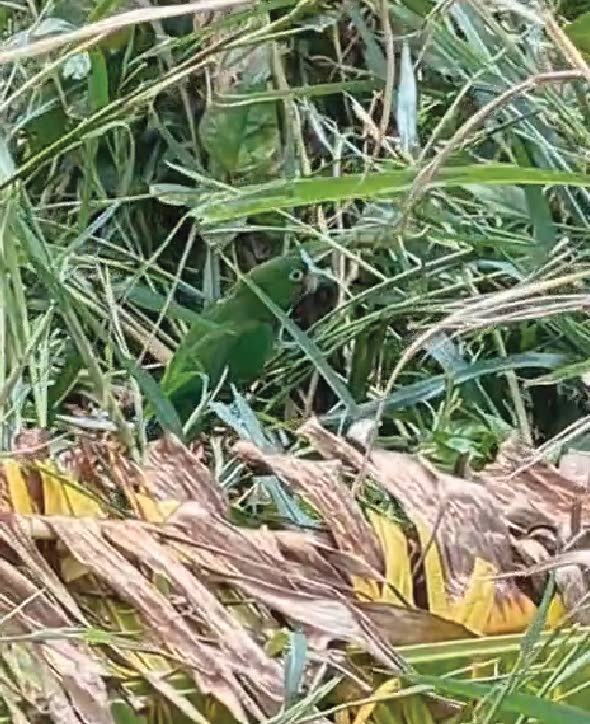
In this video grab a parrot is seen foraging for food in grass in Aberdeen, St Elizabeth, after Hurricane Melissa.Video captuted by Damion Whyte