NCB holds dividend steady amid hurricane fallout, Fitch downgrade threat
NCB Financial Group (NCBFG) maintained its pattern of flat $0.50 quarterly dividends despite a 71 per cent rise in full-year profit, with management signalling the move is to preserve capital. The conglomerate is confronting the escalating fallout from Hurricane Melissa alongside a new warning from Fitch Ratings, which has placed the group and its main banking subsidiary on Rating Watch Negative (RWN), signalling a potential credit rating downgrade in the coming months.
The financial conglomerate’s board, which met last Thursday, declared an interim dividend of $0.50 per stock unit payable on December 12. This will be the third quarterly dividend of $0.50 paid in the 2025 financial year, following payouts in June and September, after the board skipped a payment in February.
The pattern of flat payouts was put directly to executives during an investor briefing on Friday, with one investor questioning the static payout in the face of sharply climbing earnings.
“Reported earnings are up 71 per cent. Why are dividends, therefore, flat to declining?” the shareholder asked.
In response, Chief Financial Officer Malcolm Saddler defended the board’s position, emphasising the need to balance rewarding shareholders with safeguarding the group’s long-term financial resilience.
“There has to be an assessment in terms of the balance between soundness of the business and paying out dividends,” Saddler said, characterising the current $0.50 per quarter dividend as a “conservative approach” while the group assesses the financial fallout from Hurricane Melissa.
He simultaneously sought to manage investor expectations for the future, revealing the board’s aspiration to “eventually pay $1 per share each quarter, or $4 annually”. Achieving this, he noted, is aligned with the group’s long-stated goal of a 50 per cent payout ratio.
The decision to maintain a conservative dividend is also informed by recent history. The company had suspended its dividend payments for three years in the wake of the COVID-19 pandemic, only resuming them in late 2023. The current pattern of payouts, therefore, represents a carefully managed return to shareholder distributions, with the board prioritising the rebuilding of a reliable track record.
Underlying Earnings Tell a Different Story
A deeper analysis of the reported profits reveals the prudence behind the conservative dividend call. For the year ended September 30, 2025, NCBFG reported consolidated net profit of $36.9 billion. However, a one-off gain of $15.1 billion from the sale of its Netherlands-based insurance brokerage, Thoma, accounted for 41 per cent of that total.
Stripping out this non-recurring disposal, the group’s adjusted net profit falls to $21.8 billion. This figure is only marginally higher than the $21.6 billion earned from ongoing operations in the prior year, revealing that core earnings saw minimal growth and providing little justification for a larger dividend.
Fitch Sounds Alarm on Economic Impact
The RWN designation from Fitch means the agency believes there is a high probability of downgrading NCBFG, its main banking subsidiary National Commercial Bank Jamaica Limited (NCBJ), and several key funding programmes in the near future.
The current ratings for both entities are formally on RWN. NCBFG holds a Long-Term Issuer Default Rating (IDR) of ‘B+’, while NCBJ, Jamaica’s largest bank, holds a higher Long-Term IDR of ‘BB-’. This difference reflects NCBFG’s structural subordination to its operating subsidiary.
Triggered specifically by Hurricane Melissa, this formal alert begins a short-term review of the storm’s financial impact. A downgrade is likely unless the institutions demonstrate resilience.
The RWN reflects profound concerns that extend beyond immediate storm damage. For NCBJ, which holds nearly 40 per cent of the Jamaican financial system’s assets, the core challenge lies in the hurricane’s devastation of key economic sectors — tourism and agribusiness—and critical infrastructure. This damages the entire operating environment, threatening the bank’s ability to generate new business and increasing loan default risk. Fitch has explicitly questioned NCBJ’s ability to maintain its credit quality, profitability, and capital buffers.
The rating action also casts uncertainty on the Jamaican Government’s capacity to support the bank, a previous pillar of its rating. Fitch noted the severe national impact may force a reallocation of resources, “prioritising national reconstruction over potential financial support for the bank, if needed.”
The negative watch for the parent company, NCBFG, is a direct consequence of its dependence on NCBJ, which constitutes 53 per cent of the group’s consolidated assets. A bank downgrade would almost certainly trigger one for the holding company. NCBFG faces additional pressure from its own substantial “double leverage,” which already places its credit risk higher than the bank’s.
The future flow programmes, Jamaica Merchant Voucher Receivables Limited and Jamaica Diversified Payment Rights Company, while structurally robust, are not immune. Their high ‘BBB-’ investment-grade ratings are permitted specifically because of NCBJ’s creditworthiness and systemic importance. A downgrade of the bank would therefore lower the ratings of these programmes, potentially increasing the cost of this critical source of US-dollar funding for NCBFG.
Hurricane Impact: Insurance and Banking
The hurricane has introduced a new layer of caution across both banking and insurance activities. Guardian Group, the insurance arm, has already received 350 claims valued at approximately US$60 million. Ian Chinapoo, chief executive officer of NCBFG’s insurance arm, Guardian Group, said the total claims exposure in the impacted areas of Jamaica is approximately US$170 million. He was quick to add, however, that the group’s robust reinsurance contracts are expected to cover the vast majority, with the net financial impact on NCBFG likely limited to its deductible of about US$12.5 million.
“Our reinsurance contracts are in place and active, and we expect to be able to meet all of our claims in full,” Chinapoo said. “Our target is to process and settle approximately at least 50 per cent of those, if not more, by the end of December.”
On the banking side, the economic impact is still being assessed. Bruce Bowen, head of NCBJ, said around 20 per cent of the loan portfolio is located in affected areas, though that exposure is spread across multiple parishes and industries. While acknowledging uncertainties around inflation, interest rates and physical damage, Bowen said the bank’s capital strength and liquidity provide a significant buffer.
“What gives me a lot of comfort is protection — capital,” he said. “We have more regulatory capital than any financial institution in Jamaica, and liquidity — built up to some of the highest levels it has ever been. At this point in time, while I do not have a specific range, I do not anticipate any excessive stress on capital or liquidity.”
Strategic Buffers and a Contrasting Outlook
Bowen also said he does not expect the government to provide any bailout or sector-wide relief, describing the financial system as stable and supported by the Bank of Jamaica’s established liquidity management frameworks.
The group’s capital and liquidity positions were reinforced earlier this year through a US$225-million international bond issue. NCBFG Chief Executive Officer Robert Almeida said the proceeds were used to refinance existing regional debt, extend maturities and reduce concentration risks within the Caribbean investor base. “We achieved a couple of objectives,” Almeida said. “We extended the term… and brought in money from outside of the region. That increases the liquidity within the region and reduces the amount of concentration or saturation risk with NCB.”
Almeida noted that the refinancing, completed before Hurricane Melissa, proved timely. “It would have been a lot harder if we had not done that,” he said. “It was the preparation that went into making sure our capital is strong and our liquidity is strong.”
Fitch’s negative watch diverges completely from another major rating agency’s stance. Just a month before Hurricane Melissa, S&P Global Ratings had revised its outlook on NCBFG and NCBJ to Positive, citing Jamaica’s improved sovereign rating and the group’s resilient performance. The situation demonstrates how a single catastrophic event can rapidly reshape the credit landscape.
Despite weaker adjusted earnings, the group’s operating performance shows signs of sustainable improvement. Operating income rose 20 per cent to $144.3 billion, while the cost-to-income ratio improved sharply from 73.56 per cent to 64.29 per cent, driven by higher revenues and disciplined expense management. Almeida said the next phase of the group’s strategy — described as “Phase Two” — will focus on accelerating efficiency gains, particularly through technology, data and artificial intelligence.
“There is no big silver bullet,” he said. “It is continuous improvement — doing everything a little bit better every day — and if we do that 365 days of the year, the transformation is huge. We have migrated our systems to the cloud. That has given us stability and a platform to make tremendous efficiency improvements.”
NCB’s flat dividend, despite a record profit, confirms that management prioritises financial resilience over short-term payouts. For shareholders, the message is clear: the 2025 profit surge was a one-time event, not a sign of sustained operational strength. For Jamaica, it shows the country’s largest financial institution is entering a period of economic uncertainty with its buffers firmly in place

NCBFG CEO Robert Almeida highlights the group’s strengthened capital position following its recent bond refinancing.

Guardian Group CEO Ian Chinapoo says reinsurance will cover most hurricane-related claims.
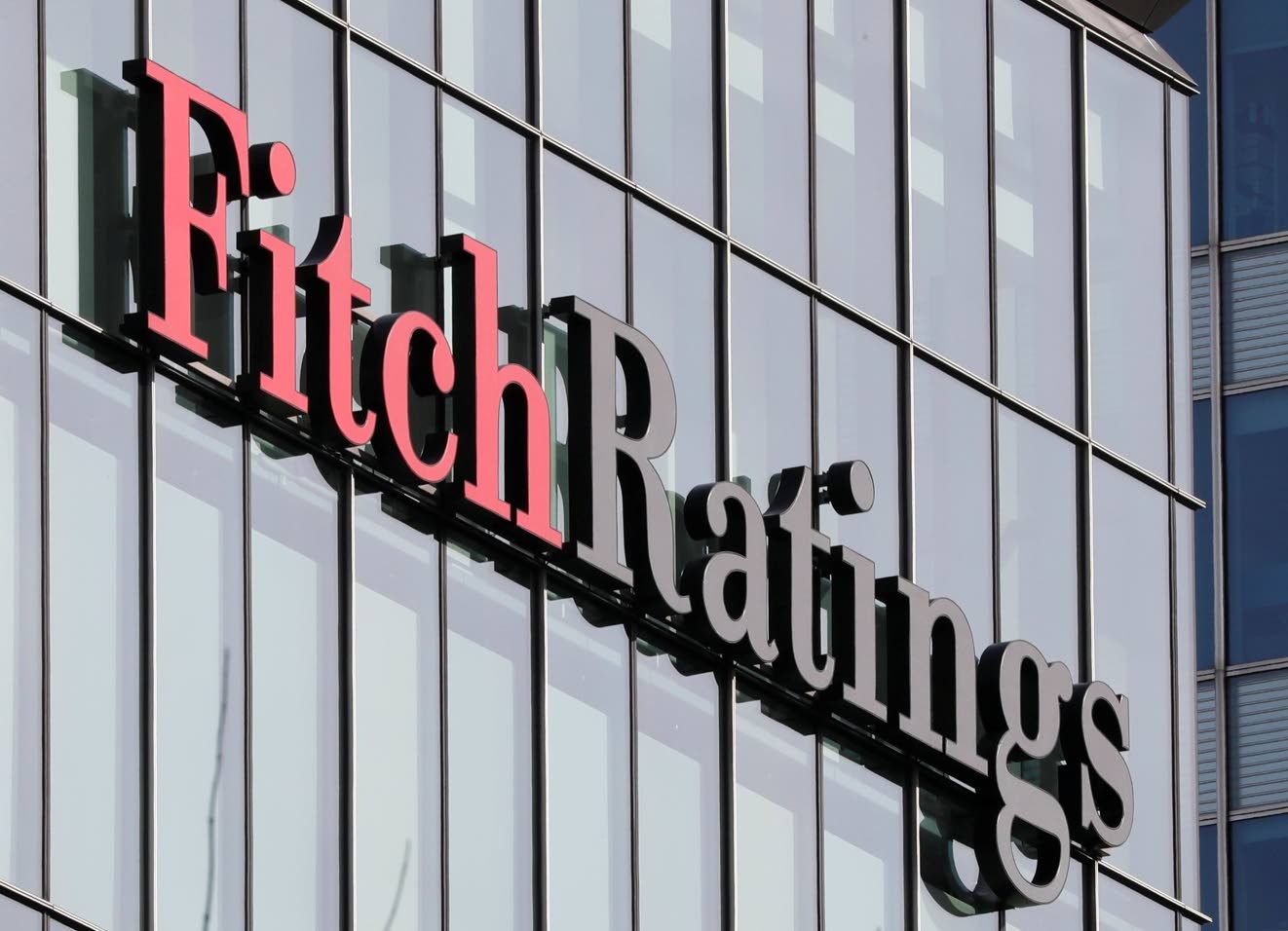
Fitch Ratings headquarters after the agency placed NCBFG and NCBJ on Rating Watch Negative.
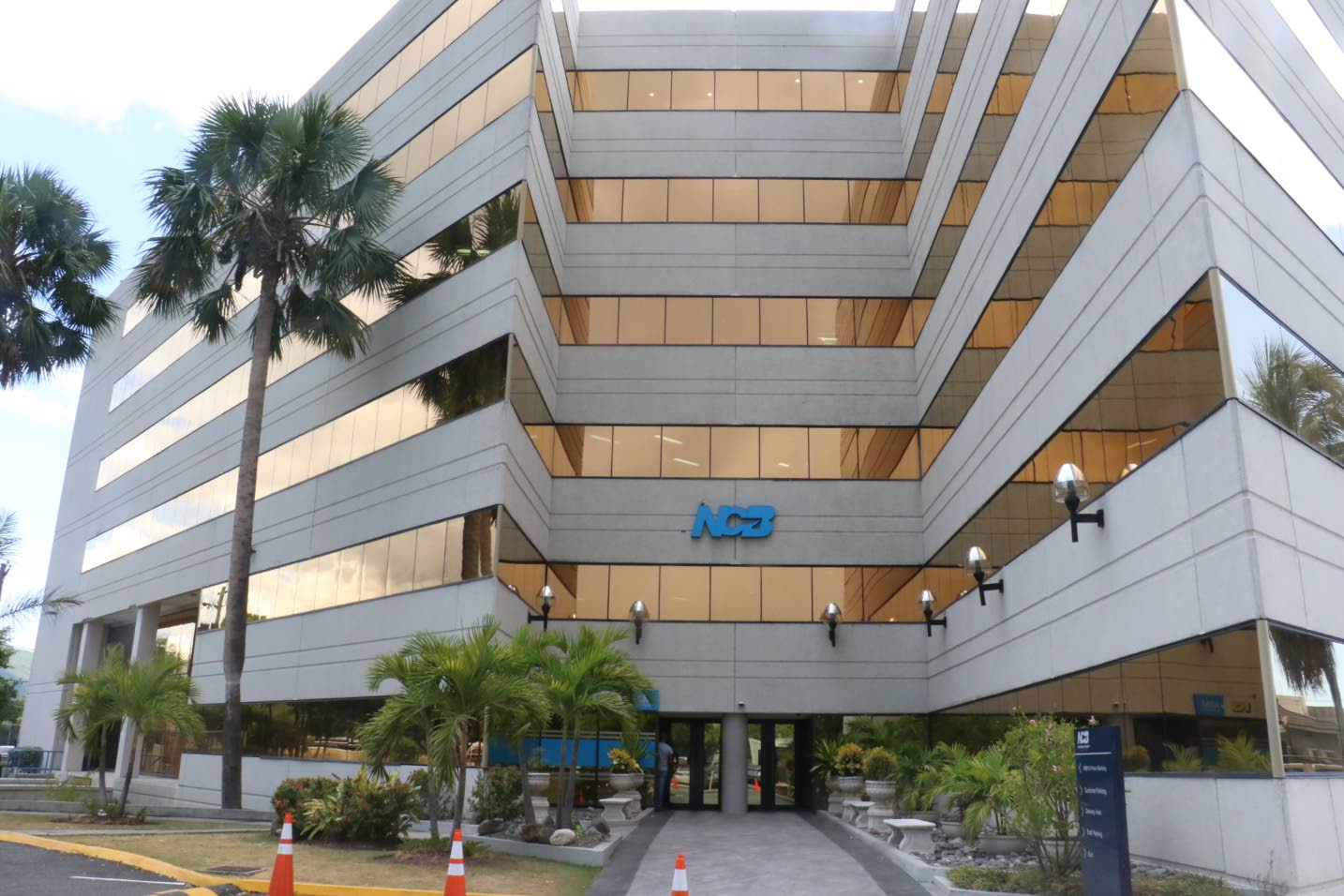
NCB Financial Group continues to navigate dividend pressures and a negative ratings watch.