



Fruits of farm work
Jamaican seasonal workers turn gains from Canada, US jobs into lasting success
FOR some farm workers, the Seasonal Agricultural Workers’ Programme has offered more than just employment overseas. It has provided a pathway to support their families, educate their children, build homes, and transfer skills gained abroad by establishing businesses locally.
Edward Gayle, a resident of St Elizabeth, said he first joined the programme in 2018 and has since improved his livelihood through its economic benefits. He shared that after building a strong relationship with his employers in Canada, he’s returned to the same farm each season. Sheldon Miller of Clarendon also praised the opportunities the programme provides, proudly sharing that he was able to start a business using the funds earned and skills learnt.
For St Elizabeth resident Oakley Rowe, more than 13 years on the programme has enabled him to build a home for his family — one sturdy enough to withstand Hurricane Melissa. He now has his sights set on constructing a rental property.
Jamaica’s Seasonal Agricultural Workers’ Programme is managed by the Ministry of Labour and Social Security. For more than 60 years, it has facilitated temporary employment opportunities for Jamaicans in Canada and the United States, primarily in the agricultural sector. The first batch of 182 workers for 2026 left the island last week, on Tuesday and Wednesday.
Gayle, who was among the farm workers who left the island last Wednesday, shared that when he first enrolled in the programme in 2018 he was sceptical about its benefits, but is now grateful to be a returning worker.
“I was hearing a lot of negative things about the farm work programme at that time, but after I went, I experienced different things. The employees were very different from what we were hearing. They were welcoming and respectful to their workers, and that’s one of the reasons I’ve been travelling to the same farm [in Ontario, Canada] since 2018,” he told the Jamaica Observer shortly after a send-off ceremony last Tuesday.
He shared that he started out by planting peppers on the farm, but now he plants strawberries and enjoys every moment of the process, especially the financial fruits of his labour.
“When I started, I only had [a] one-room [house]. Now I have expanded my house, I can send my kids to school easier than before, and support my family. It makes things a lot easier now. It’s very good, and we have a good relationship with our employer,” he said.
Gayle added that the programme helped him fund his two children’s education, with one now in primary school and the other in high school.
A vegetable and livestock farmer back home in south St Elizabeth, he said he also uses the skills he learnt to pour into his business. While his home was not impacted by Hurricane Melissa, he shared that he lost a few crops, and he plans to use the funds raised from his current farm work trip to rebuild stronger.
“I’m planning to expand on my chicken coop. I’m planning to build a stronger structure that can withstand hurricane because in order for me to save the [160] chickens I had [during the passage of Hurricane Melissa], I had to move them into my house — so that’s the reason why they were saved — but other people were not that lucky with their chicken coop because they probably did not have enough space to move them,” said Gayle.
He added: “What happened with Melissa really opened my eyes to say, ‘Okay, I’m going to use this money to not just build more chicken coops but stronger structures from concrete that can withstand hurricanes if we do have another hurricane’. ”
A farmer and expert in construction, Rowe also boasted about the benefits of the programme, which has allowed him to build a four-bedroom house for his family.
“It’s good, and you can see your way through. If you need something in life, you can achieve it there,” he said about the programme, adding that the money earned depends on the hours worked, but in the end, it is worthwhile.
“Sometimes you don’t have many hours, and sometimes for the week you probably make 40 hours, 45 hours…Sometimes when you make money, and they take tax and that stuff, sometimes you end up with all US$700 or US$800 for the week, so that is good. You can take care of your family and do other stuff,” he told the Sunday Observer.
Rowe shared that every year he goes overseas with a plan, and this year is no different, as he’s seeking to explore other avenues of building wealth.
“Right now, I am starting another house to rent in the future,” he said, adding that he will return overseas as many times as possible to continue reaping the benefits.
Meanwhile, Miller also emphasised the importance of having a plan when the farm work season ends. He explained that with the money earned from the programme since 2015, he’s started a small grocery store in his community, sent his children to school, and went into coconut and orange farming.
“I got the experience and I came back, and I liked it. So I [went] again because I liked the money and I want to make some more money,” he said, laughing.
“We have to do a little work. We cannot just come and sit down because the money that you earn overseas and work, by the time you come back, it spend out. Once you are building a house or have kids to send to school, it a guh run out on you some way, somehow, so you have to do your own little thing,” he encouraged.
He added: “You have to continue to try and build yourself up more, because you can only get better.”
Of the 182 workers, 97 departed on Tuesday and 85 left the island last Wednesday, travelling to several Canadian provinces, including Ontario, Nova Scotia, Prince Edward Island, and Newfoundland, where they will be engaged in greenhouse agriculture and the cultivation of fruits and vegetables over the next eight months.
Notably, 90 per cent of the group are returning workers, which the ministry said is a testament to the trust and high regard Jamaican workers continue to earn among Canadian employers.
As Jamaica approaches the 60th anniversary of the programme, Minister of Labour and Social Security Pearnel Charles Jr reaffirmed the Government’s commitment to preserving the integrity of the programme while modernising it for the future.
He urged the workers to uphold the proud legacy established since the programme’s inception in 1966, to prioritise health and safety, support one another, and represent Jamaica with excellence.
![MILLER...I got the experience and I came back, and I liked it so I [went] again](/jamaicaobserver/news/wp-content/uploads/sites/4/2026/01/image_1-199.jpg)
MILLER…I got the experience and I came back, and I liked it so I [went] again
![GAYLE...when I started, I only had a one room [house]. Now I have expanded my house](/jamaicaobserver/news/wp-content/uploads/sites/4/2026/01/image_2-116.jpg)
GAYLE…when I started, I only had a one room [house]. Now I have expanded my house
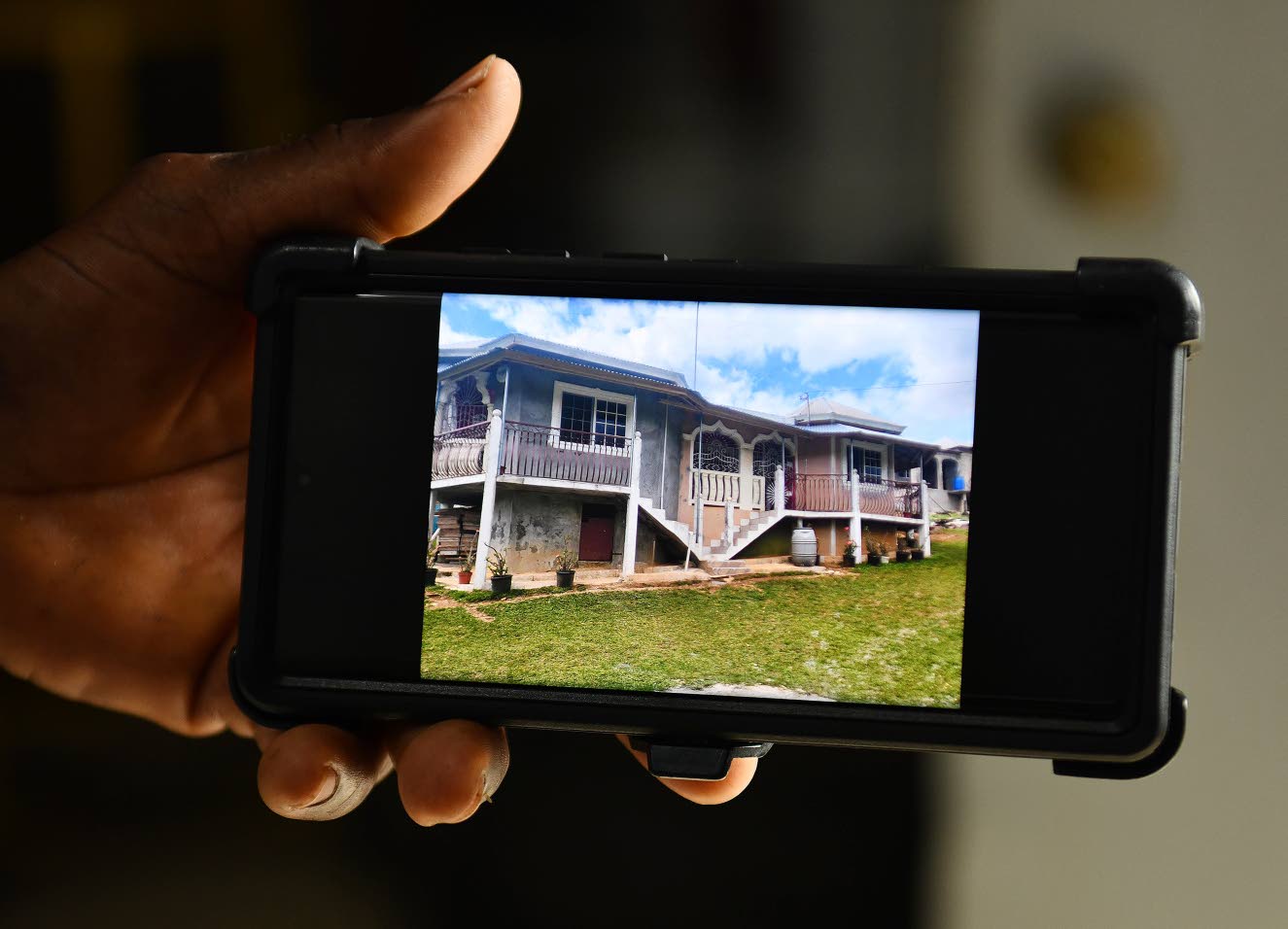
Oakley Rowe shares a photo of the house he built with funds gained from the Seasonal Agricultural Workers Programme. (Photos: Naphtali Junior)

Oakley Rowe, a resident of St Elizabeth, first went on the Seasonal Agriculture Workers Programme in 2013 and continues to benefit from its economic gains.


