



Boost for helmet safety, enforcement in Jamaica
ROAD safety stakeholders have long been concerned about the widespread availability of uncertified and substandard motorcycle helmets in Jamaica.
While the Road Traffic Act mandates helmet use and outlines prominent acceptable global standards, some requirements of the Act that related to helmet construction, certification, and compliance were not previously operationalised.
Establishing a Jamaican standard will play a critical role in filling these gaps, for importers, retailers, consumers, and even enforcement bodies seeking to apply the law consistently, a release from the National Helmet Wearing Coalition has said.
The recent publication of the Jamaican Helmet Standard on the World Trade Organization website establishes a clear national reference for helmet compliance and in making it publicly accessible, Jamaica is laying the foundation for improved clarity across the entire safety and enforcement ecosystem, the release said.
“The standard will help to operationalise several areas of the Act by clearly defining what constitutes an approved helmet. This clarity supports both enforcement and importation procedures, and ensures that substandard helmets can be withdrawn from sale or detained at the ports,” Dr Wendell Richards, a regulatory expert with more than 20 years’ experience regulating consumer products at the National Compliance and Regulatory Authority (NCRA), is quoted in the release.
The Jamaican Helmet Standard strengthens the country’s enforcement framework by clearly defining the characteristics of a compliant helmet.
“The standard provides a framework where quality helmets can enter the country and, by extension, be sold in the marketplace. With a clearly defined specification, agencies such as the Jamaica Customs Agency, Jamaica Constabulary Force, Island Traffic Authority, and NCRA will now be better equipped to ensure that only compliant helmets reach Jamaican consumers,” he added.
Developed by the Bureau of Standards Jamaica’s (BSJ) Motorcycle Technical Committee, and currently in the approval process by the Ministry of Industry, Investment and Commerce, the standard recognises five internationally accepted helmet safety certifications: the European helmet standard, the United States Department of Transportation standard, the British helmet standard, the Japanese helmet standard, and the Snell Memorial Foundation standard. This alignment with global benchmarks ensures Jamaica’s safety requirements are internationally credible while ensuring that motorcycle drivers can easily access safe and certified helmets, the release said.
According to Sydoney Preddie, lead, youth and education programmes at JN Foundation, the process was driven by the coalition’s research findings and a shared commitment to strengthening Jamaica’s helmet safety framework.
“Our baseline research highlighted gaps in how certain provisions of the Road Traffic Regulations were being operationalised, particularly around identifying certified helmets and verifying compliance in the absence of local or regional testing facilities.
“Based on those findings, the coalition approached the Bureau of Standards Jamaica and the National Compliance and Regulatory Authority in early 2024 to begin discussions on how these challenges could be addressed through the development of a national helmet standard,” Preddie explained.
She noted that the formal development of the standard began shortly thereafter, through the BSJ’s Motorcycle Technical Committee, which brought together regulators, technical experts, industry representatives, and road safety advocates.
Preddie added that the coalition also facilitated the engagement of Dr Terry Smith, a technical expert with more than 20 years of experience in helmet and vehicle standards, whose involvement was supported by the FIA Foundation.
“Dr Smith’s guidance was instrumental in supporting the committee’s work and ensuring the standard aligns with international best practice while remaining appropriate for Jamaica’s legal and operational context,” she said.
Describing the process as a strong example of effective multi-sector collaboration, Preddie emphasised its importance to the coalition’s objectives.
“This collaboration is critical to strengthening enforcement, improving consumer confidence, and ultimately ensuring that affordable, certified helmets are available and accessible to all Jamaicans,” she said.
Speaking to the inclusion of the standard on the WTO platform, Dr Richards explained that the WTO notification will help manufacturers, retailers and importers to understand Jamaica’s requirements, which should reduce the number of non-compliant products entering the market. As it allows for international review, with any clarifications routed through the BSJ’s Regional and International Trade Branch, the approach strengthens the policy environment and ensures that Jamaica remains aligned with global best practices.
The release said Guyana provides evidence that this approach can work in the Caribbean region. After implementing a similar helmet standard in 2004, the country recorded a reduction in motorcycle-related fatalities, a success Jamaica hopes to replicate, it said.
As Jamaica advances its efforts to strengthen helmet safety, one of the most transformative future steps will be the establishment of a local or regional motorcycle helmet testing facility. According to Dr Richards, a laboratory of this kind would significantly enhance Jamaica’s ability to independently verify the integrity of helmets entering the market – an important step to mitigate sub-standard products, which are often targeted to countries with inadequate controls.
“Independent testing protects consumers, supports enforcement with credible data, and ensures only quality helmets are available to the public,” Dr Richards pointed out.
He also noted that this initiative would involve multiple arms of the standardisation and regulatory system.
“The Regional and International Trade Branch of the Standards Division at the BSJ would continue to serve as the national enquiry point for technical barriers to trade and international coordination. Meanwhile, the NCRA would take the lead on regulatory oversight, using test results to guide inspections at ports of entry and in the marketplace,” he said.
A regional testing facility, he added, could also strengthen cooperation across the Caribbean and Latin America, as the region, though plagued with high motorcycle fatalities, is not home to a testing facility.
“A regional helmet testing laboratory in Jamaica would also help harmonise regulatory practices across the LAC (Latin America and the Caribbean) region. It positions Jamaica as a leader in road safety compliance,” Dr Richards asserted.
As work advances on operationalising the regulations and exploring the establishment of a national or regional testing facility, the standard forms a critical foundation, bringing Jamaica closer to a marketplace where only safe, certified helmets enter circulation and where riders and pillion, passengers can trust that their protective gear meets the highest safety expectations, the release said.

PREDDIE…our baseline research highlighted gaps in how certain provisions of the Road Traffic Regulations were being operationalised
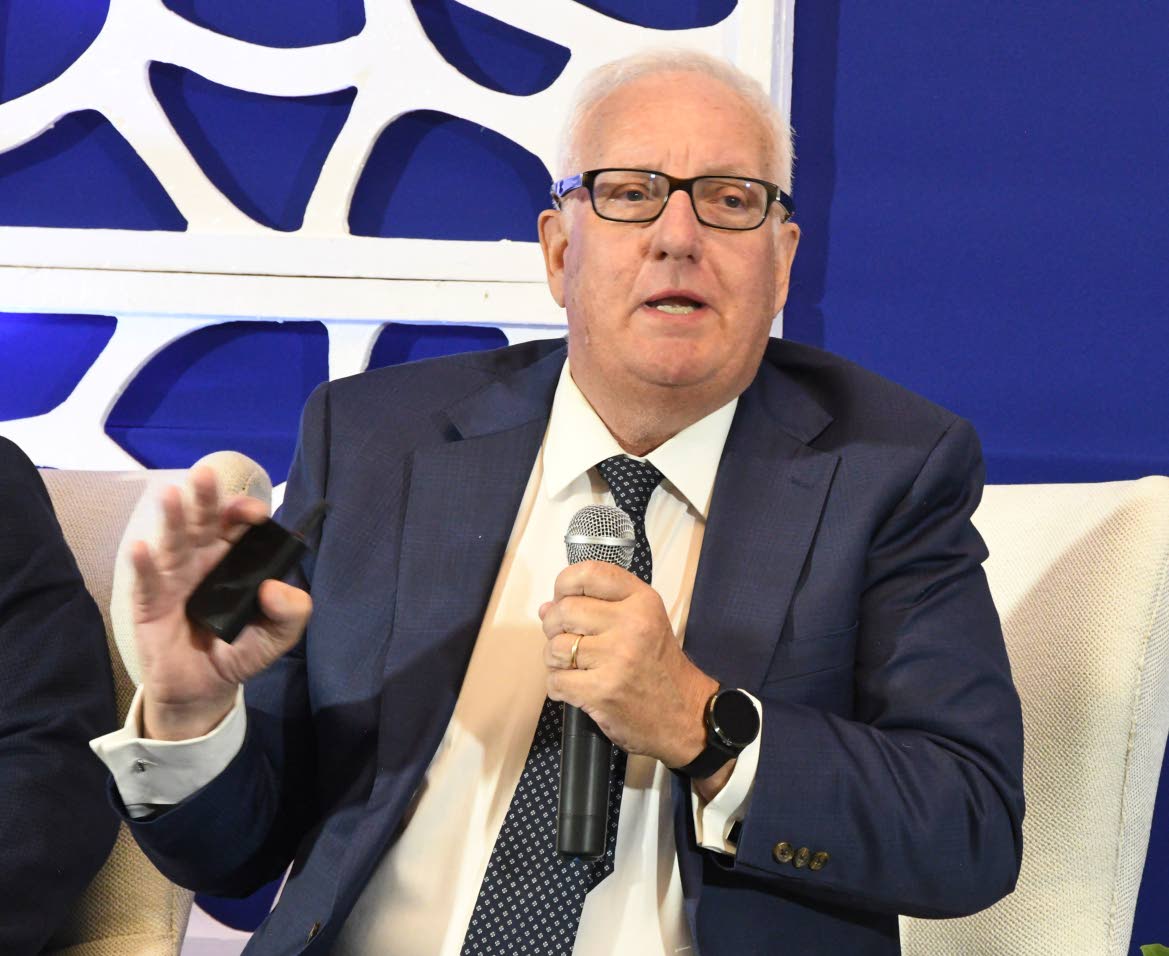
Helmet safety expert and principal scientist at Galeatus, LLC, Dr Terry Smith. Photo: Joseph Wellington


