



No pressure on NEPA
...agency head says legislation, not political directives, guides its decisions
A suggestion that the National Environment and Planning Agency (NEPA) could be influenced by the leadership of its parent ministry has been politely but decisively rejected by the agency’s Chief Executive Officer Leonard Francis.
He gave the unequivocal response when the possibility was put to him during this week’s Jamaica Observer Monday Exchange.
“I have never, and I’ll keep on repeating it, but people don’t believe me — I have never been instructed, or directed by a prime minister, or a minister of government,” Francis said. “I am guided by the various policies and the process. I believe in abiding by the law and abiding by best practices.”
The question was thrown to the NEPA boss in light of a call by Opposition spokesman on the environment Omar Newell for the Government to immediately transfer NEPA from the Ministry of Economic Growth and Job Creation to the Ministry of Environment.
Citing the possibility of a conflict, Newell noted in a statement last month that the same portfolio responsible for promoting major infrastructure expansion and economic growth also oversees the island’s principal environmental regulator.
“Environmental regulation must not only be independent, it must be seen to be independent. When the authority approving large-scale developments sits within the same portfolio driving those developments, the perception of conflict becomes unavoidable,” Newell said as he argued that the issue is not partisan, but structural.
But Francis insisted that he has never been pressured by the ministry or the political representative to take a decision.
“The reality is this, wherever we are, we are going to be performing professionally and in the interest and [with the] guidance of our legislations, and I hope that that message gets out, because it’s very important to us as an organisation,” he told Observer reporters and editors.
He described the atmosphere at NEPA as “sometimes noisy”, given that the agency comprises professionals in various fields.
“You have persons who are straight environmentalists, who are tree-huggers; you have persons who are planners; you have persons who are straight sustainable development persons; you have engineers, architects; and when we are discussing policies all of those persons come together,” Francis explained.
“The next thing is that, if you really take the time and read your Vision 2030, and read your sustainable development goals, they outline what we need to do and what are the best practices,” he argued.
Vision 2030 is the country’s first long-term strategic development plan covering the 21-year period, 2009-2030, and which seeks to ensure that Jamaica benefits from sustainable and inclusive development.
The plan also incorporates Jamaica’s adoption of the United Nations 2030 agenda for sustainable development and its 17 sustainable development goals. Francis’ point was corroborated by Water, Environment, and Climate Change Minister Matthew Samuda, who pointed out that “every area has to be managed within the legislative and regulatory arrangements”.
“I am fine with a debate with any civil society group, with the Opposition… about the legislative structure and the regulatory structure, but where an agency or a department is addressed is really neither here nor there, because no head of agency, no minister, no board can operate outside of the regulatory frame without getting themselves into serious problems,” Samuda said.

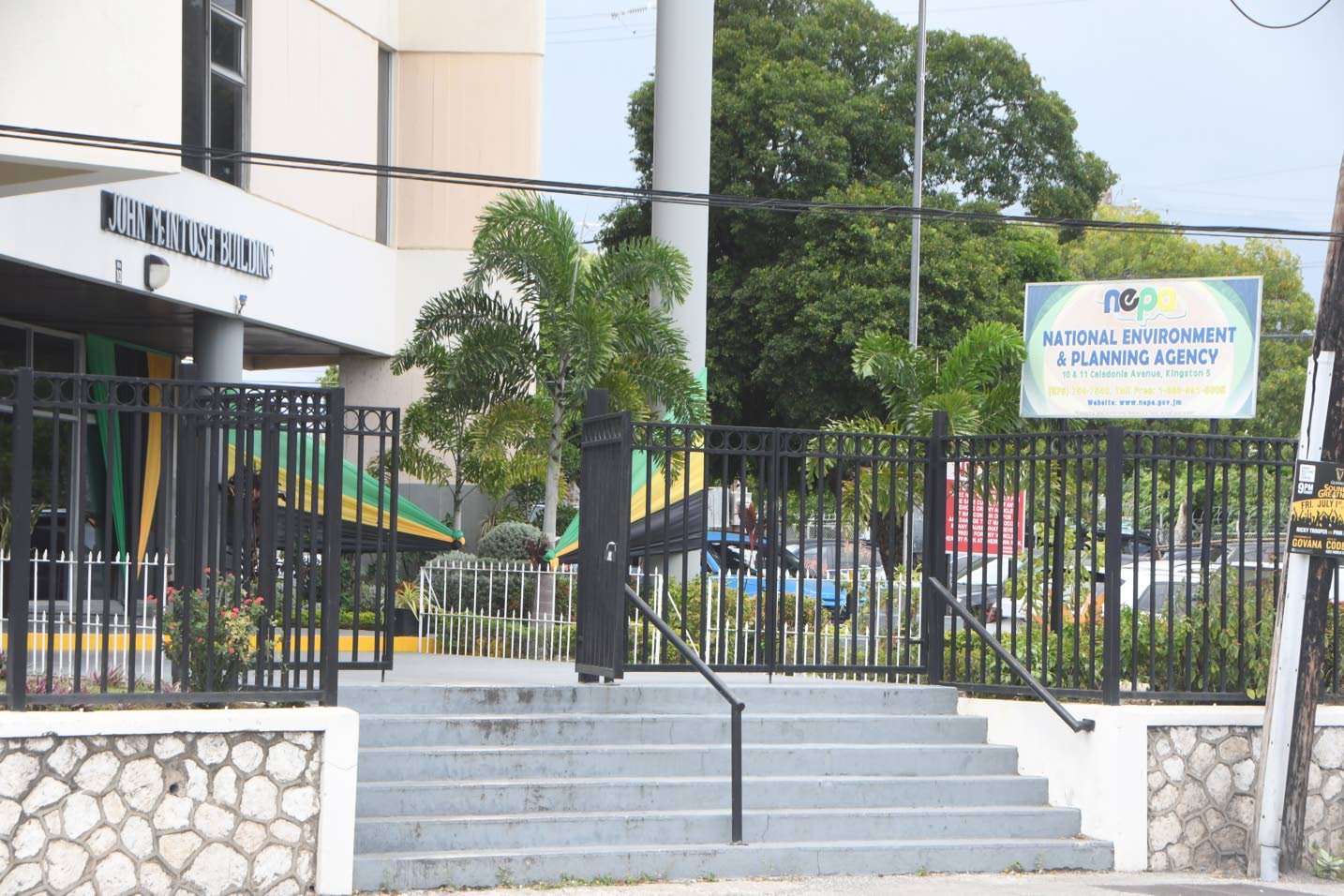
The National Environment and Planning Agency office in Kingston


