



Caricom, Cuba and the Trump Administration
In a recent piece, ‘America is starving Cuba into submission’, I commented on what I perceived to be the pressure tactics by the Donald Trump Administration in the United States to force Cuba into submission with a view to regime change. Anyone who doubts that Trump is deadly serious about this ambition is living on a remote area of Mars. It is true that he has not been as belligerent with Cuba as he was with Venezuela, but he is just as serious about what he wants to happen in Cuba. He is now venturing for public consumption the bizarre thought that there may be a “friendly” takeover of Cuba.
There is no doubt that Trump’s interest in the Western Hemisphere has placed the leaders of Caribbean Community (Caricom) in great quandary. They have never had to deal with a president of the likes of Trump. They know, or should know of his transactional impulses; of his vaunted belief in his ability to fix things as the sharpest tool in the box; of his treatment of enemies real or imagined, in exacting retribution if they should dare oppose him.
He brooks no opposition to the monarchical instincts that drive him and what he believes to be right. As small states, there is little that one can do to resist the great giant to the North. To do so is tantamount to a flea kicking an elephant. He presides over the number one economy in the world and the most sophisticated army and weapons of mass destruction ever devised by man. He has shown that he is not averse to use the vast powers of the presidency to advance his agenda. The tariffs, which have now been ruled unconstitutional by the Supreme Court, is a case in point.
So how do they treat with him? Do you climb the high moral ground and assert the standards of sovereignty which is your right as a sovereign nation — your size notwithstanding? Do you outrightly criticise him as I am sure some of my detractors will aver after reading this piece. Do you choose your words carefully and walk around on egg shells so you do not puncture his ego by the things you say or, worse, do? Do you go the way of the middle road and try to be as diplomatic as you can, straddling your own need to assert moral proprietorship over your words and actions while at the same time bringing no offence to the great king in the White House? The road to diplomatic pragmatism is indeed riven with a lot of potholes. Prepare or a bumpy ride.
At the recent Caricom heads of government summit in St Kitts and Nevis we got more than a glimpse of the attitude of some Caribbean leaders in tiptoeing or navigating around this emerging problem in the Western Hemisphere. Immediate past head of Caricom, the Jamaican Prime Minister Dr Andrew Holness, gave a parting speech which did not seem to ruffle too many feathers. There are those who would have wanted him to come down on one side or another in engaging what they see as American bellicosity in the region in general, and the plight of the Cuban people in particular. He did neither, but gave what, in the view of this writer, could be considered a measured, well-reasoned, and diplomatic response to this thorny issue.
It is a speech that recognised the changing dynamics of geopolitical power which will have profound consequences for the Caribbean. Most importantly, it recognised, without directly stating it, the unhinged nature of the present United States attitudes and actions in the region which are a radical departure from what has been. We have not seen in the past 50 years the level of the mercurial and hard-fisted approach by our great neighbour in the North as we are seeing now. The emphasis on hard power — and the willingness to use the military to enforce these ends — is something that is anathema to what has traditionally been America’s soft power in the region.
It is this soft power that has endeared America to the Caribbean people. Now we see this being threatened in the worst ways possible.
Prime Minister Holness understands this as he does the proclivities and the penchant for grandiosity of the man who is the central focus of all this. Those who think that he can be the flea that kick the foot of the elephant in this regard do not understand what they are dealing with.
I am heartened that Holness seems to have a personal relationship with Secretary of State Marco Rubio, who is the fulcrum of America’s machinations against Cuba. It is important that Holness does not lose this leverage. In diplomat speak he has to give something to gain something, and it is better to have a seat at the table of influence than being sidelined or perhaps ending up on the menu. His detractors fail to understand the pragmatism and strategic significance of this approach. But they do not have a country to run. And it is not abdicating the high moral ground either.
The prime minister’s insistence that ways must be found to help the Cuban people is spot on. This column has argued before for the necessity of humanitarian aid to be provided to the beleaguered nation which has been a source of help to Caribbean nations. There can be no prevarication when it comes to this, no ceding of the moral ground to those who think that might is right and who believe in their own invincibility.
From his leveraged position with the Trump Administration, Holness, though no longer the head of Caricom, must do whatever he can to influence help for the Cuban people, notwithstanding his concern for human rights and the importance of the people exercising their rights in free and democratic elections, as I do.
The present leaders of Cuba must realise that whatever might have been the contours of the Cuban Revolution under the Castro brothers, things have radically changed, and they must wake up to these changing realities. They must loosen the grip of the stranglehold of repression to which they have subjected the people for too long. One can be sure that there is no member of the Cuban ruling council whose home is suffering blackouts and whose families go to bed hungry. It is immoral for any one group or person to believe that they can exercise this kind of dominance over people’s lives. Divine omnipotence, properly understood, does not even demand this.
One significant change, if they have not noticed, is that there is a man sitting in the White House who is cerebrally and volitionally committed to regime change. For better or worse, and as night follows day, I predict there will be regime change in Cuba by the next year. This is what my prophetic intelligence is telling me based on my readings of America’s engagement in the region. Cuban leaders must understand that this will not be as the failed Bay of Pigs invasion, but a matter that has as its epicentre the might of the US military.
The present regime will not be fighting against guerilla forces in the hills, but will be confronting this giant as Maduro saw in Venezuela. This scares the daylights out of me just to write this, yet one has to be true to one’s own readings of the situation. My hope is that the Cuban people will not have to suffer inordinately from American pugilism, and that everything will be done to ensure that they get all the help they can in this hour of peril from their Caribbean brothers and sisters.
Dr Raulston Nembhard is a priest, social commentator and author of the books Finding Peace in the Midst of Life’s Storms; The Self-esteem Guide to a Better Life; and Beyond Petulance: Republican Politics and the Future of America. Check out his podcast Mango Tree Dialogues on his YouTube channel. Send comments to the Jamaica Observer or stead6655@aol.com.
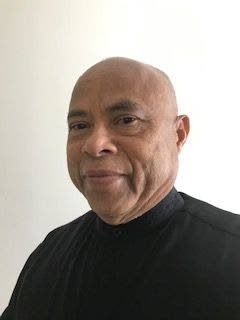
BY Raulston Nembhard


