



Mutual respect
Hotelier stresses the importance of traditional media as he accepts award from journalists in west
MONTEGO BAY, St James — CEO of S Hotel Jamaica, Christopher Issa has expressed concern about the challenges traditional media face amid the rise of social media and online news, but reminded practitioners of long-established companies that they remain the country’s most trusted source of credible information.
“While digital platforms deliver news faster, there is also so much noise that people are still searching for credible sources. Even if there is a shift from print to digital, I encourage you to continue doing what you do. In an age of misinformation and sensationalism, the country needs your steady hand and accurate reporting so we can know what is truly happening,” the hotelier urged.
He was speaking during a breakfast hosted on Sunday by Western Jamaica Media Association (WJMA) at Hotel 39 in Montego Bay. During the event Issa was honoured for providing a media centre inside the S Club of his S Hotel Montego Bay in the immediate aftermath of Hurricane Melissa, when large swathes of western Jamaica were plunged into darkness and cut off from Internet connectivity.
Reflecting on that period, Issa said he was humbled by the recognition and insisted journalists were the ones deserving of praise.
“I am deeply honoured to be recognised by you today. I am also humbled because, in my book, it was really the least we could have done to assist you and the country in a time of need,” he said.
“I truly believe that you are the ones who should be honoured here today for the work you did during the hurricane,” Issa added.
He reminded that S Hotel launched its S for Shelters initiative shortly after the Category 5 storm, and noted that it has since delivered 63 shelters across western Jamaica, even though accessing affected communities proved difficult.
“The biggest challenge we faced was actually getting the shelters to the locations where they were needed. We had to equip our team with chainsaws and other tools to remove fallen electrical poles and trees. It was only when I followed one of the deliveries that I began to realise the journey you must have had getting to various locations to provide your reports,” Issa told journalists.
At the time, he explained, the hotel was fully occupied and had not anticipated the storm’s impact on western Jamaica.
“As things turned out, we were very fortunate. We did not sustain any damage, and we had Internet access and our generator, which allowed us to power a media centre as well,” he said.
Issa recounted that the media centre developed organically as journalists sought electricity and connectivity.
“Our café became an unofficial media centre as journalists would stop by to charge devices or have a cup of coffee. So when [WJMA President] Janet [Silvera] called and asked if we could do something on a larger scale to assist the Western [Jamaica] Media Association, I said certainly. I understood the importance of the messages you were reporting and carrying back, and how people here and abroad wanted news about their loved ones,” he added.
Silvera said the gesture was “monumental” and credited it with directly reviving the WJMA.
“Hurricane Melissa was one of those defining moments. As the storm tore through western Jamaica it left more than damaged buildings in its wake. It disrupted communication, displaced families, crippled infrastructure, and placed enormous pressure on those tasked with informing the public,” she said.
“There were reporters sitting in their cars at 2:00 am along the roadside outside the [Montego Bay] Convention Centre, engines running, laptops glowing, desperately searching for Internet access, filing stories before batteries died and signals disappeared. Some even fell asleep in their vehicles, only to wake up and continue reporting,” Silvera added.
She said Issa’s intervention made a huge difference.
“He opened the doors of the S Hotel. He provided a press centre with reliable Internet, workspace, meals, security — and something equally important: dignity,” Silvera said.
“For days, the S Hotel became more than a hospitality venue. It became a command centre for truth,” she added.
According to Silvera, the shared experience forged unprecedented unity among media practitioners.
“We earned each other’s friendship. We earned each other’s trust. And in many ways, that media centre did more for us than simply provide Internet access — it strengthened and resurrected our association,” she said.
Issa was also impressed by the fellowship among journalists from competing media houses.
“I visited the media centre while it was operational and I saw the camaraderie Janet spoke about. I was heartened to see it because, in business, we operate in a very competitive world; and I know there is competition in the media as well but to see everyone pull together in a time of distress was truly inspiring,” Issa said.
WJMA Vice-President Garwin Davis described the decision to honour Issa as a “no-brainer”, recalling that other entities had declined or required payment at a time when the association had no funds.
“Within three minutes of making the call, Janet came back and said, ‘Mr Issa said yes,’ ” Davis recounted, noting that the hotelier was at the time also grappling with challenges in the tourism sector, including closed airports and anxious guests.
“Without journalists getting information out during that time the situation would have been far worse,” Davis said. “It was a gesture of monumental proportions. It was huge. We will never forget it,” he added.
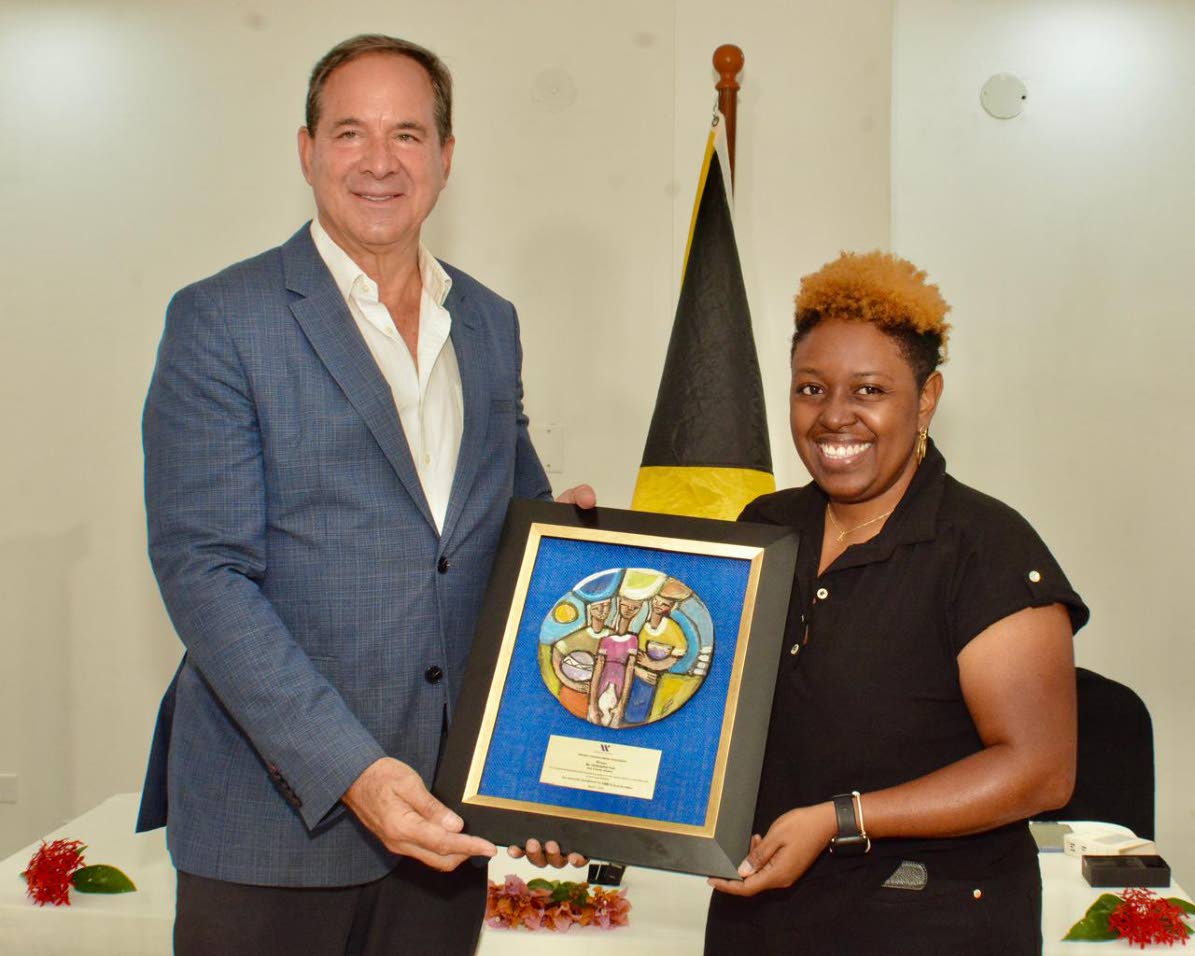
Public relations officer at the WJMA Ashley Anguin presents a plaque to CEO of S Hotel Jamaica Christopher Issa in appreciation of the media centre he hosted at his hotel in the aftermath of Hurricane Melissa. (Photo: Philp Lemonte)
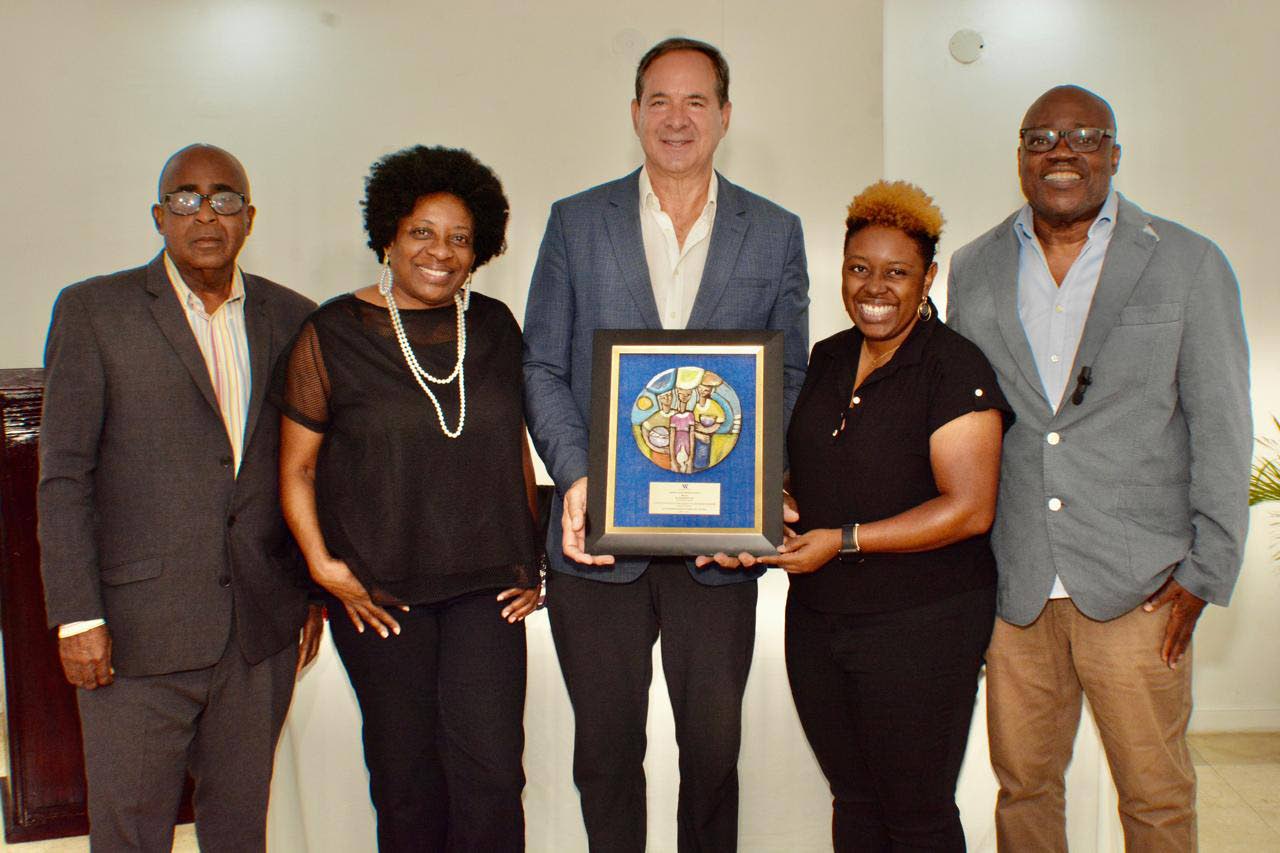
CEO of S Hotel Jamaica Christopher Issa (centre) with executive members of the WJMA (from left) Horace Hines, Janet Silvera, Ashley Anguin, and Garwin Davis, in Montego Bay on Sunday.(Photo: Philp Lemonte)


