



The digital dollar Jamaica built but won’t use
Bank of Jamaica (BOJ) Governor Richard Byles did not sugar-coat it on February 25, 2026. Standing at the BOJ’s quarterly briefing, he accused commercial banks of holding back the entire country for three straight years. “We have been ready, able to do Jam-Dex throughout the economy for three years…and we’ve been waiting on these deposit-taking institutions,” he said, voice edged with rare public irritation.
The central bank has offered to pay half the cost of upgrading every point-of-sale (POS) terminal so merchants can accept Jam-Dex alongside cards. The infrastructure has been live and battle-tested since 2023, yet here we are.
The Jamaica Bankers Association answered the next morning in
The Gleaner. High implementation costs and low customer demand are the real brakes, they explained. Integrating Jam-Dex into core banking systems eats serious money that could go instead to keeping automated teller machines (ATM) stocked with cash, speeding up online and mobile banking, or meeting the November 2025 deadline for the ISO 20022 messaging switch. “Banks must absorb considerable costs to integrate JAM-DEX with their core systems and supporting technology infrastructure,” the JBA statement read. “These expenditures must be weighed against other technology investments that deliver more immediate and measurable value to consumers.” Two large banks with massive client bases already rolled it out and saw “very limited customer uptake” — exactly the pattern other countries have hit with their central bank digital currencies. The business case, they said, simply does not compete with channels Jamaicans already trust and use every day.
Both sides are partly right, but the deadlock is costing the country real money and real time. Jam-Dex is not some experimental app, it is the Jamaican dollar, issued one-to-one by the BOJ, and is fully backed legal tender since June 2022. You load it into a free wallet from Lynk at NCB, JN Pay at JN Bank, Sagicor, or the next providers coming; send by scanning a QR or typing a number; receive instantly, any hour, any day; zero fees on person-to-person moves; redeem for physical cash at any branch or smart ATM; and no traditional bank account is required. Every transaction leaves a clean, private record that later helps the unbanked prove they can handle credit. It removes the hidden tax of cash — the armed escorts, the counting rooms, the notes that disappear between market and bank.
Central bank numbers released that same week paint the picture in sharp relief. Jam-Dex still equals only 0.1 per cent of total currency in circulation — roughly $320 million against more than $320 billion in notes and coins at the end of 2025. But the growth underneath is ferocious: Transaction values jumped 550 per cent in 2025 over 2024 and volumes rose 267 per cent. Even the first half of last year showed 30 per cent increases in both volume and value of peer-to-peer transfers quarter on quarter. By late 2024 hundreds of thousands of wallets were registered. Rural users in one study gave it a 68 per cent satisfaction rating because it cut out long trips to the nearest ATM or branch. The product works. The early adopters like it. The missing piece is everyday use at scale.
Jamaicans have not embraced it yet for reasons that are practical, not mystical. Cash still feels safe and familiar in a high-crime environment. Financial literacy remains low — the last global survey put adult understanding of inflation, interest, and risk at just 33 per cent, while the 2022 youth survey scored practical money skills near 50 per cent. Many older or lower-income Jamaicans still want to count notes in their hand. Smartphone ownership is widespread, but comfort with new wallets is not uniform. Merchants drag their feet because customers do. Customers do because merchants do. And banks, quite rationally from their balance-sheet view, see little upside in pushing a zero-fee product that undercuts their own revenue streams.
The latest evidence of this national hesitation sits on every Jamaica Urban Transit Company (JUTC) bus. In March 2025 JUTC rolled out its SmartFare system with great fanfare at Half-Way-Tree Transport Centre: tap-on, tap-off cards; modernised fare collection; reduced cash handling; safer for drivers; activation drives across parishes; and cashless operations on rural school buses from February 1 this year. All sensible improvements. Yet the obvious question hangs unanswered: Why build an entire new proprietary card system when Jam-Dex wallets already sit on phones, cost the authority nothing extra to accept, are settled instantly and directly with the central bank, and require only a simple QR reader or software update that the BOJ is already offering to subsidise?
SmartFare still demands physical cards manufactured, distributed, topped up, and replaced when lost or stolen. Jam-Dex needs none of that for the hundreds of thousands who already have basic phones. Had JUTC integrated Jam-Dex from day one, drivers would never touch cash, revenue would hit accounts in real time, unbanked riders could board without buying another piece of plastic, and every bus ride would have doubled as free nationwide advertising for the national digital currency. The decision to go ‘card-first’ instead of ‘wallet-first’ is exactly the kind of silo thinking that keeps Jam-Dex stuck at 0.1 per cent.
The central bank has done everything asked of it and more. It ran the pilot in 2021, opened to the public in 2022, built full interoperability, protected privacy, guaranteed every cent, offered sign-up bonuses that pulled in the first 100,000 users, gave merchants $25,000 grants, and pledged to split POS upgrade costs. Two more wallet providers are expected before the end of 2026. The rails are not just laid — they are electrified.
The Government must stop treating Jam-Dex like a central-bank science project and start treating it like the national infrastructure it is. Start by routing every public payment straight into Jam-Dex wallets by default — pensions, National Insurance Scheme (NIS), Programme of Advancement Through Health and Education (PATH), civil service salaries, student grants, farm subsidies, tax refunds, etc. Opt out only in writing. The small 2022 pilot that paid seasonal workers $600,000 instantly across parishes proved the model: zero lost cheques, zero fraud, money available the same second. Scale that to the hundreds of millions paid out monthly and demand appears overnight.
The Government should also fix the JUTC mistake immediately by mandating that every bus accepts Jam-Dex alongside SmartFare cards within six months. The hardware upgrade is cheap and half-subsidised already. Passengers can choose a card or wallet, and the authority saves on card production forever. Riders in deep rural parishes or without bank cards can board without hassle, and data on actual ridership will improve route planning. Every bus will become a moving billboard for digital Jamaica.
Jamaica brought in US$3.15 billion from January to November 2025 — money that still arrives mostly as cash or expensive transfers. Let overseas families push straight into Jam-Dex wallets at near-zero cost and give recipients a small loading bonus for the first 12 months. At the airports, hand arriving tourists a QR code for instant Jam-Dex credit to spend at hotels, craft markets and attractions — a $1,000 welcome that costs the Government pennies but keeps spending inside the formal system.
For merchants, move beyond the old $25,000 grant. Offer 24-month tax credits worth one per cent of Jam-Dex turnover. Require every large retailer, pharmacy, fuel station, and government contractor to accept it by end of 2026 or lose State business. Publish a live public dashboard by parish so citizens can see who is on board and who is not. Extend the BOJ POS subsidy into a full national programme funded from the budget.
Pair all of this with relentless, practical education. Expand the BOJ’s
Common Cents series into schools, churches, workplaces and radio call-in shows with actual wallet-set-up sessions using real phones. Make the primary school digital money game compulsory. Focus first on women and rural households who already report the highest satisfaction.
Finally, give banks clear deadlines and real incentives: Full core-system integration by December 2026 or face graduated increases in reserve requirements. At the same time, create a Jam-Dex small and medium-sized enterprise working-capital window using any Catastrophe Bond payouts or cash-handling savings the Government realises. Registered businesses get fast, low-cost credit disbursed and repaid automatically through their wallets, building the history that eventually opens bigger bank doors.
The prize is not abstract. Cash-handling costs in economies like Jamaica’s run between 0.5 and one per cent of gross domestic product (GDP) – US$115 million to US$230 million flushed away every year on security, transport, counting, and theft. Shift even 10 per cent of transactions to Jam-Dex and those savings alone dwarf the entire roll-out cost. Theft falls, commerce accelerates, the 640,000 unbanked gain a formal footprint, monetary policy transmits faster, and Jamaica stops importing so many physical notes.
The banks have spoken their truth about costs and priorities. No one disputes the technical lift or the slow initial uptake. But the central bank has built a secure, inclusive, zero-fee digital Jamaican dollar that is already growing at triple-digit rates wherever it touches real life. The 550 per cent surge in 2025 is proof Jamaicans will use it once the friction disappears.
Government now holds every lever – legislation, procurement muscle, public-sector scale, education channels, and the ability to create overnight demand. Default the payments. Wire the buses. Educate without pause. Incentivise merchants with teeth. Set deadlines that matter. Do these straightforward, practical things with the same focus Jamaica showed during the pandemic and Jam-Dex will move from experimental curiosity to everyday backbone inside three years. The technology is ready. The data is screaming. The only remaining obstacle is the will to implement at national scale. Jamaica has waited long enough. The time is now.
Janiel McEwan is an economic consultant. Send comments to the Jamaica Observer or janielmcewan17@gmail.com.
Pull quote
The Government must stop treating Jam-Dex like a central-bank science project and start treating it like the national infrastructure it is. Start by routing every public payment straight into Jam-Dex wallets by default — pensions, National Insurance Scheme (NIS), Programme of Advancement Through Health and Education (PATH), civil service salaries, student grants, farm subsidies, tax refunds, etc. Opt out only in writing. The small 2022 pilot that paid seasonal workers $600,000 instantly across parishes proved the model: zero lost cheques, zero fraud, money available the same second. Scale that to the hundreds of millions paid out monthly and demand appears overnight
Janiel McEwan

JAM-DEX is Jamaica’s central bank-backed digital currency..

The SmartFare card is used on Jamaica Urban Transit Company buses.l

Smartphone ownership is widespread, but comfort with digital wallets is not uniform.Photo: AFP
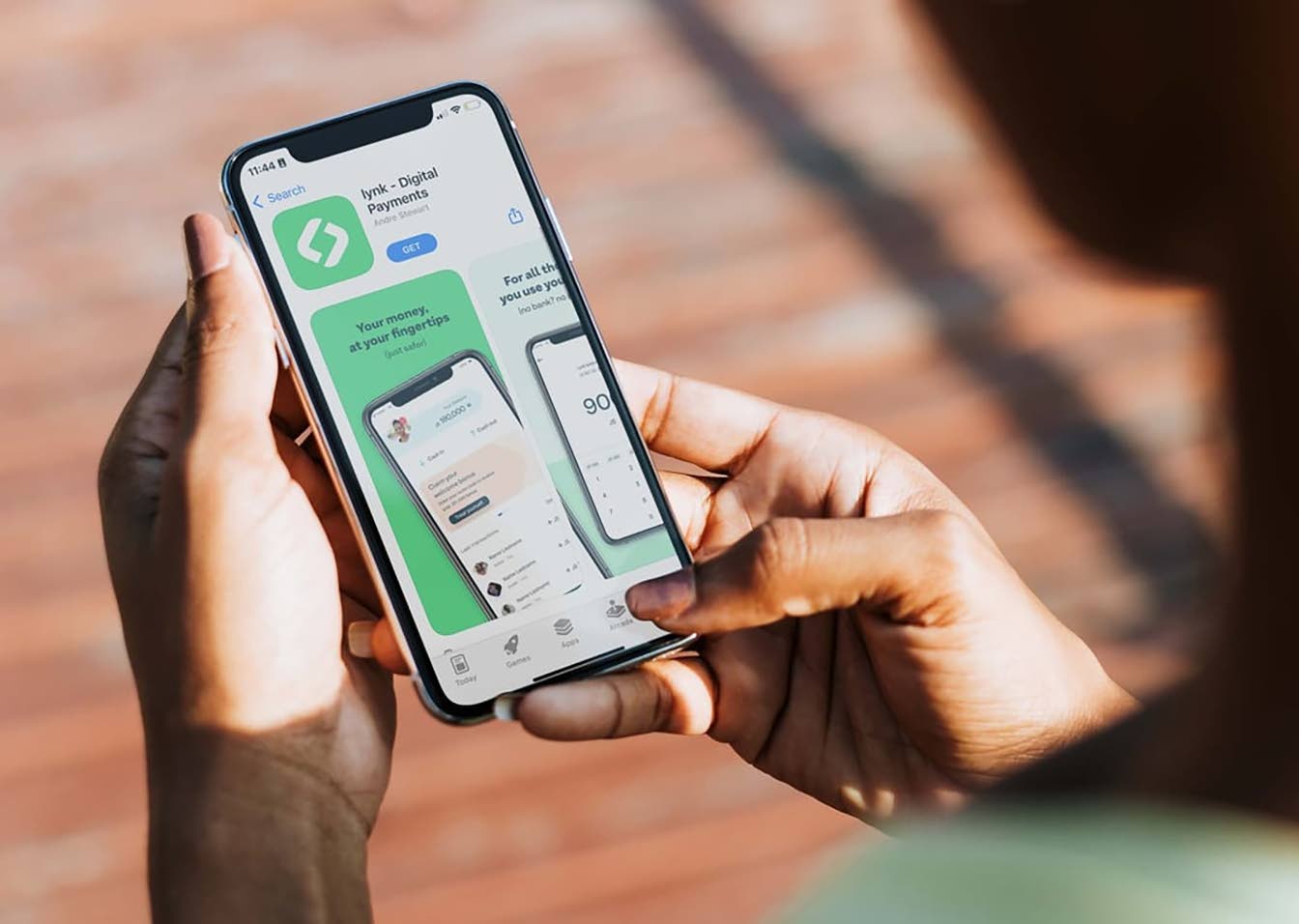
Lynk is one of the digital wallets in which Jam-Dex can be loaded.


