



Cop cleared of ganja charges considering lawsuit against JCF
A detective sergeant and her fiancé were on Monday freed of drug charges, ending what she described as a four-year torture that started when she began speaking openly against certain happenings in the Jamaica Constabulary Force (JCF).
Detective Sergeant Tamika Taylor and her fiancé Royan Harris were acquitted on charges of ganja possession, dealing in ganja, and cultivating ganja stemming from an incident in 2021.
One of the main grounds on which the acquittal was reached in the Morant Bay Parish Court in St Thomas was that an expert from a government laboratory testified that there were no systems in place between 2015 and 2024 to test the seized substance to determine exactly what it was.
While Harris was arrested and charged in March 2021, Taylor was arrested a year later and is convinced that this was done as “part of a plot to stifle her career as a cop”.
According to Taylor, her fiancé played the role of a caretaker at a Rastafarian camp in St Thomas where cannabis was being grown for sacramental purposes.
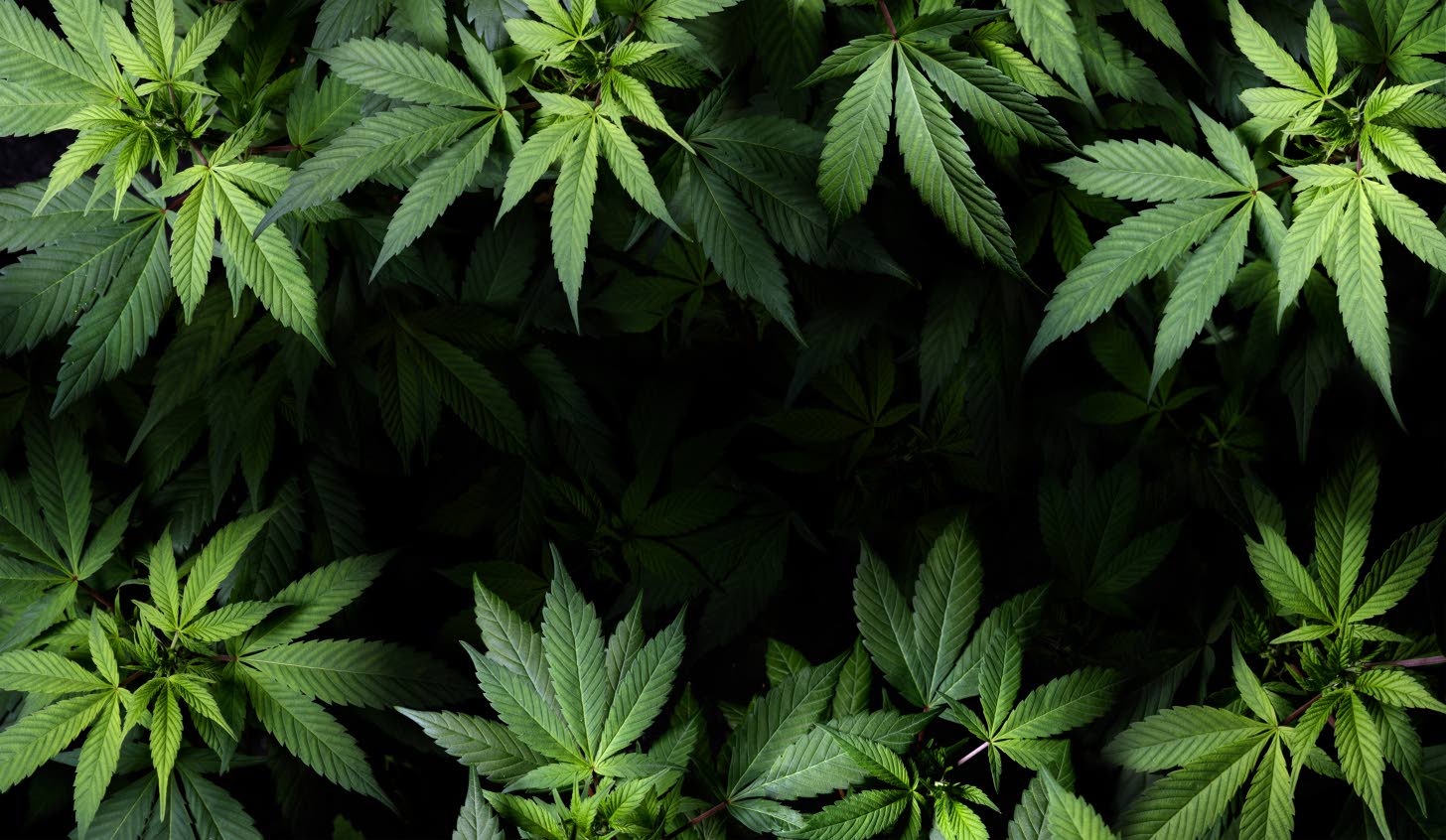
The police allegedly discovered more than 900 cannabis plants at the property in Dumfries, St Thomas, most of which Taylor said were destroyed by the cops during their operation.
Taylor pointed out that Harris was charged by the police even after a priest from the Rastafarian camp went to the police station to claim the cannabis.
“When the inspector saw that the priest was there, he sent the priest outside. The priest was saying that the farm belonged to him. In any investigation they would want to get the big fish and not the small fry. If you are interested in prosecuting anyone then you prosecute the big fish. They sent the man outside and told my fiancé that they are no longer going to question him, they were going to charge him straight,” Taylor told the
Jamaica Observer.
“If they [had] questioned him, they would have to record all the questions and answers, and in those answers he would indicate that the priest is who owns the property and whose cultivation it was on behalf of the church. He [the priest] was there to claim it and they did not want that on record,” Taylor said.
She noted that the police reported that Harris ran on the day in question and “that is why they never got to arrest and charge him same time”.
However, Taylor said that her fiancé did not attempt to flee from the police but was merely going for the priest to have him account for the cannabis.
She claimed the decision to charge her came long after nothing questionable could be found on her record.
According to Taylor, she was on a promotion programme in the JCF and was expecting to be promoted, but after passing all the necessary tests she was denied the elevation.
“All other persons on the programme were promoted except me, and they had nothing adverse or anything at all to say why they were not promoting me. I went as high as the commissioner and the commissioner indicated that he was going to cause the necessaries to be done for me to be promoted. There was another promotion after that and my name was still not on the list. I got angry and said I would go to the media if I was not promoted.
“They conducted the operation two months later in February. I believe their intention at the time was just to carry out destruction and put it in their intelligence system to say that they destroyed ganja, whether at my fiancé’s house or my house. Whatever they put on the record, that would be enough to stop my promotion whenever I am making enquiries as to why I was not promoted. That was why they were forced to charge me one year after my fiancé was charged,” Taylor said.
“When I went to narcotics for questioning, I told them I did not live at the address. I told them what my address was and they have my record and file to know that my address was in the same community, but that was not my address. What the police did was went around and had my co-workers fabricate things against me to try to justify that I live at the address and they went ahead and charged me,” Taylor alleged.
“On every occasion my fiancé went to court they said they were waiting on a co-accused. It took them a year, and I was charged the February, on my father’s birthday,” she lamented.
Now that Taylor has been freed of the charges, she is entitled to return to her job. However, it is highly unlikely she will decide to go back as she is still hurt about her suspension without pay for the four years.
She said that at the appropriate time she will be seeking compensation for her loss.
“I love policing, and that is why I chose it, but I saw where my own co-workers literally fabricated a case against me. On the day that they did the operation, they seized my firearm, and when I told them that I am a detective sergeant who has worked in the St Thomas division for a number of years investigating major crimes including several murders and [they] are about to seize my firearm for no particular reason, I was told that they preferred to err on the side of caution,” she said.
“I have been an impeccable police officer over the years. They had me sitting in a criminal dock for four years and being looked at by my own co-workers as a low-down, dirty criminal. My reputation has been completely tarnished. For four years I have not received a salary. Once I was sent on suspension, people assumed that I did something wrong. A spotless reputation has been tarnished and that cannot be mended,” lamented Taylor.
Marcus Goffe, the attorney representing the couple, shared that they beat charges following a no case submission he made in court. He told the
Observer that several important and noteworthy things came out in the trial.
“The judge said that the evidence of possession was very weak in regards to Detective Sergeant Taylor. That is interesting, because this particular female officer made several serious allegations concerning discrimination and sexual harassment in the JCF. She has always said and maintained that it was the JCF that decided to go after her because of her publicising what she was going through sexually in the force and they stifled her career,” Goffe charged.
He said that during his cross-examination of an expert from the government forensic laboratory it was revealed that the government forensic lab did not have the ability, at the time of the case, to differentiate whether cannabis seized is hemp or ganja as defined under law.
“In 2015, the Dangerous Drugs Amendment Act changed the definition of ganja, which meant that hemp was essentially decriminalised and only cannabis that has THC content of 1.0 per cent or higher qualifies as ganja. Otherwise, if it is below that, it is hemp. In order to prosecute persons successfully in terms of evidence for ganja offences, then the law is supposed to have provided the forensic authorities and the police with the means to differentiate ganja from hemp.
“The forensic lab is saying that the law was changed in 2015, but it was not until 2024 that the lab had the ability to carry out the testing of cannabis to see if it is the legal hemp or the illegal ganja,” Goffe said.
The attorney added: “On that basis, her fiancé was acquitted. This, for me, is an important legal issue because it highlights that for nine years we have acknowledged and confirmed on oath in court that there has been this inability and incapacity on the part of the State to identify whether people are in possession of ganja as opposed to hemp.
“That means that there likely have been a large number of cases which have been unjustly prosecuted and resulting in unjust convictions of persons for ganja offences when the State has not been able to discharge its evidential burden to prove that it is really ganja the person had in their possession as opposed to the lower THC cannabis plant.”
According to Goffe, this is a legal issue which he intends to explore further as he believes it will have some serious implications for the rights of ganja users and also for those who have been convicted for ganja offences between 2015 and 2024.
x


