



Consultation controversy
Insurance association blasts FSC over poor communication on fee hike
Claiming there have been serious flaws in the consultation process, the Insurance Association of Jamaica (IAJ) is pushing back against proposed fee increases they are set to face from the Financial Services Commission (FSC).
According to the IAJ, critical financial information was not shared during the talks, leaving the insurance industry unable to properly assess or respond to the changes before they were presented to Parliament’s Regulations Committee.
This stands in contrast to assertions by executive director of FSC Lieutenant Colonel Keron Burrell that there had been sustained engagement and positive consultation with representatives from the insurance industry.
Speaking with the Jamaica Observer on Friday executive director at the IAJ Everton McFarlane insisted that the industry was not in a position to properly evaluate the proposed increases.
“Our position was that we would not support this increase in its current form and we actually requested some information that would allow us to better understand the rationale for the increase so we could respond in a more informed way. Because at the time, the accounts of the FSC were lagging [and] we were not able to understand the extent to which costs would have gone up. So how can we assess the reasonableness and the fairness of any proposed increase?” McFarlane said.
He argued that without access to detailed financial data, the industry was effectively left in the dark and unable to properly interrogate the FSC’s justification for the proposed changes.
“There was insufficient communication, and we have already indicated to the FSC that we are not satisfied with that process and we thought we would have been given an opportunity to rectify that… We know the impact of this increase, and we are cognisant that the FSC has to be funded, but fairness calls for some balance to be made, not for increases to be imposed because there is the power of the pen. So, we would have expected further dialogue and closer dialogue and forthcoming as far as we are aware,” he said.
McFarlane pointed to what he described as “gaps” in publicly available financial information of the FSC and suggested that transparency issues compounded the industry’s concerns.
“Unfortunately, and we have been asking for this…there is no published annual report with financial accounts by the FSC on their website since the fiscal year 2021, that’s the last published report,” he said.The issue of consultation was raised on Thursday during deliberations in the parliamentary committee as Member of Parliament for Kingston Central Donovan Williams questioned whether the industry would push back publicly against the increases.
“So, if I’m to understand you correctly, in a nutshell, it would be your opinion, based on your experience and your positioning, that you’re not getting any pushback in relation to these fees… meaning, when we leave here today, we don’t see a headline that says ‘insurance industry laments increasing fees’,” said Williams.
In response, Burrell acknowledged the sensitivity of the issue and the likelihood of public reaction, while defending the FSC’s approach.
“I am aware how headlines can go so I cannot say that won’t happen and I will also be fair, there is never a good time to increase fees, it has not increased for 18 years and I think a big part of it is that we have listened, when we have had hurricanes like Beryl [2024] and so on, we listened and we pushed back,” said Burrell on Thursday.
He maintained that the regulator had engaged extensively with the industry over time, citing ongoing discussions and consultations across multiple events.
Beyond consultation, the IAJ is also challenging the basis for the proposed increases, arguing that growth in the insurance sector should have naturally translated into higher revenues for the regulator under the existing fee structure.
During Thursday’s meeting Burrell told the committee that when the FSC was established in 2008 the size of the insurance industry was approximately $170 billion in terms of assets, but over the next 18 years it has increased to upwards of $728 billion.
For McFarlane, that should have triggered an automatic increase in how much the FSC is pulling in.
“The fact of the matter is that the growth of the sector also produces resources that are required to regulate it based on the assets, and, at the very least, asset growth on average,would have tended to keep pace with inflation, if not outpace inflation, and so, the fee increases tied to that would also reflect similar growth,” argued McFarlane.
He told the Observer that the issue is not a lack of revenue flowing to the regulator, but rather how those funds have been managed over time.
McFarlane is adamant that with a large portion of the FSC’s income tied to the size of the industry’s assets, revenues would have naturally increased as the sector expanded, meaning the current shortfall cannot be blamed solely on outdated fee rates.
He also rejected claims that the industry has become significantly more complex to regulate, maintaining that most insurance products remain fundamentally similar and are already governed by strict capital and investment rules, with the sector itself well-capitalised and highly liquid.
The IAJ head also raised concerns about the scale and timing of the increases, warning that proposed hikes, some potentially exceeding 100 per cent, could place a heavy burden on companies, particularly as the sector continues to recover from recent severe weather impacts.
McFarlane said the association is therefore calling for further dialogue, greater transparency, and possibly a delay or phased approach to implementation as “any fee increase must be fair and properly explained”.
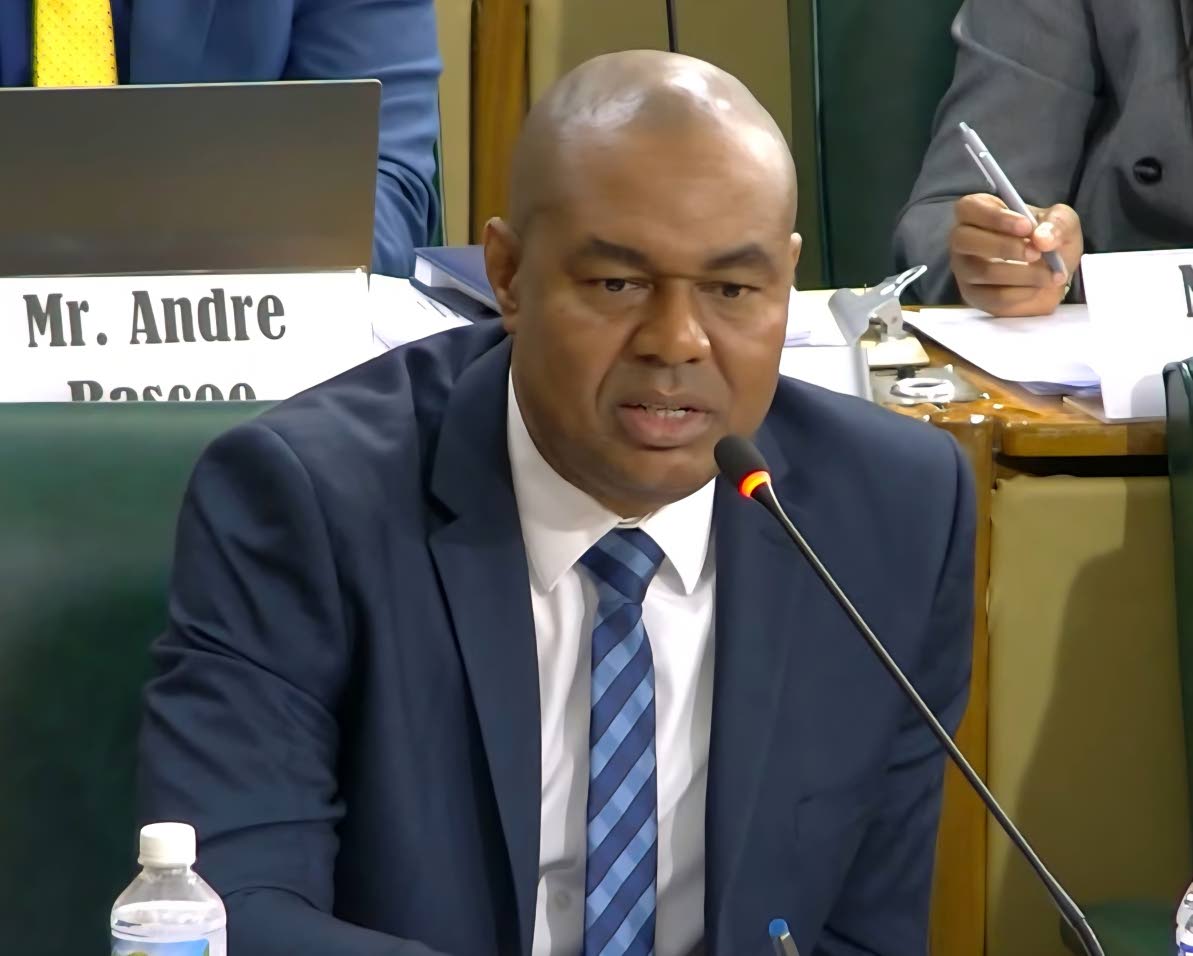
Executive director of the Financial Services Commission (FSC), Lieutenant Colonel Keron Burrell addressing Parliament’s Regulations Committee on Thursday.


