



‘An act of evil’
Dr Sapphire Longmore examines the hidden drivers of incest, family abuse
TAKING a deep dive into individuals who commit incest, consultant psychiatrist at the University Hospital of the West Indies (UHWI) Dr Sapphire Longmore said a lack of moral basis, sexual deviant tendencies, and traumatic experiences are just some of the factors that may contribute to such behaviour.
She further described incest — sex between family members — as an act of evil, pointing to the lingering impact of post-colonial structures that have contributed to generational trauma, as well as unresolved childhood experiences which can manifest in harmful ways if left unaddressed.
The discussion surrounding incest in Jamaica resurfaced following a recent report that a former Member of Parliament (MP) had been charged with the crime. The allegations are that the former MP took a 13-year-old female relative to run errands in January of this year. Following that, he reportedly brought her to his home where he had sex with her.
A report was made to the police by the child, and he was arrested and charged. The name of the accused has been withheld to protect the identity of the child.
Dr Longmore stated that, in cases in which an adult engages in incest with a child, the behaviour may be linked to unresolved childhood trauma that can contribute to sexual dysfunction, aligning with patterns seen in paedophilic behaviour in some instances.
“There is also significant moral degradation reflected in terms of the individual targeting their own child and their own family member in terms of committing an act of abuse of this nature. Recognising that to commit such an act, it is usually related to sexual deviance, reflection of power, control, and even sometimes there can be some motivation around revenge in some way for some other non-directly related incident, according with respect to the child, unfortunately. But it is, quite frankly, an act of evil,” she told the Jamaica Observer.
“Why I say that is that to victimise a child in that way is to break the parental bond and or the familial bond at its most core level. It is breaching trust, a sense of security, and familial belonging. It is a betrayal of those things at the most basal level, and the consequences of it are long-standing to the point at which, unfortunately, the perpetrator may also have been a victim of the same themselves, and so it could also be the continuity of a cycle,” she continued.
She further reasoned that Jamaica’s cultural context, coming from a post-colonial past when individuals were treated as property and slave masters forced inbreeding, resulted in some sense of cultural acceptance for acts of incest to continue. She noted that the issue exists across Caribbean countries and is not just limited to Jamaica.
Dr Longmore also noted that unhealed childhood trauma also plays a factor in why a person would commit incest.
“You have the childhood development stage of trust versus mistrust, and usually with trauma, well, I should say that trauma happening at almost any level, if it goes unhealed or unaddressed, it is going to manifest in different ways. It can manifest in very obvious ways, or it can be repressed or suppressed, or it can come out in very subtle ways. Unfortunately, the cyclic replication of the behaviour is another way that it can come out,” said the consultant psychiatrist.
She explained that if a person was victimised and they did not go through the therapeutic processes of dealing with that victimisation, hurt people become angry people. If they themselves were victimised and almost made to believe that it was a normal act within the spheres of the relationship with the perpetrator, they may then, even though growing up they realise that, ‘Okay, it wasn’t right,’ and so forth given the same circumstances, they actually repeat the behaviour because it subconsciously was accepted by them as a normal act”.
Dr Longmore, however, noted that it is not always the case that an individual was a victim, and so they became a perpetrator. She said an individual can also have sexually deviant tendencies, such as fantasies or urges that deviate significantly from established cultural, societal, or subcultural norms that influence them to commit incest.
“Paedophiles have an affinity for children or for babies even, unfortunately. It is wrapped up in a power dynamic, it is wrapped up in something that might be lacking in their own development, or just the sadistic pleasure of hurting someone else, so you kind of have a psychopathological dimension to it,” Dr Longmore explained.
She stated that, in the case of victims, while years of medical training and research show that medication and therapy can help them to deal with traumatic experiences, when trauma and abuse hit at one’s sense of self-worth and esteem, it strikes at the spiritual identity of the individual.
“The only way that you can truly heal them is to heal them at that spiritual level for them to recognise that they are valued, that they are loved unconditionally, that they are unique in their purpose, and that they have a unique belonging in this vast existence that we all belong to. What abuse does, especially abuse of this nature, is that it attacks that exact sense of value and that sense of self, and so to fix that, that is where we have to try to reinstitute the spiritual aspect,” said Dr Longmore.
“It is not to say that other methods don’t work, but they take a heck of a long time, and they’re not guaranteed, and sometimes they carry their own effects. That’s why the holistic approach is necessary, and that very specific attention is needed to heal the sense of self and value of the individual is really very critical,” she stressed.
Incest is a long-standing issue in Jamaica, but recent data from the Jamaica Constabulary Force (JCF) indicates a steady decline in cases from 33 reports in 2019 to eight cases reported in 2024 up to November 18.
An Observer article in 2020 titled ‘Those incest “hot spot” parishes’ further indicated that data from the JCF for the year 2016 showed 30 cases of incest. A year later, 29 cases were reported, and 23 cases were reported in 2018. While the number of reports has decreased, researchers warn that the figures do not indicate incidents no longer happen, as it could be that matters are simply not being reported.
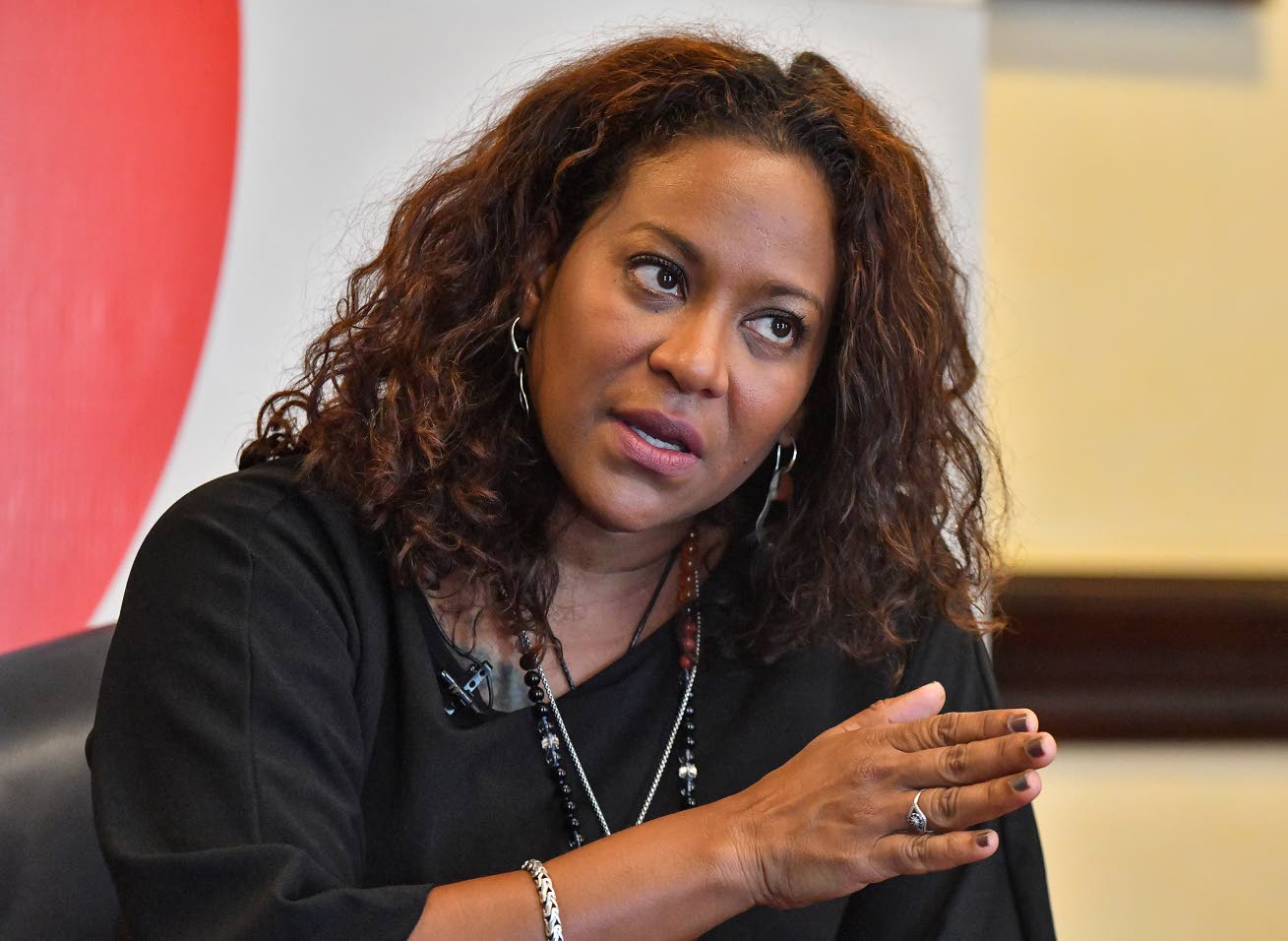
LONGMORE..it is wrapped up in a power dynamic, it is wrapped up in something that might be lacking in their own development, or just the sadistic pleasure of hurting someone else (Photo: Naphtali Junior)


