



Marijuata turns culture into commerce
AHEAD of 4/20, a day synonymous with cannabis culture, Marijuata is in the spotlight as more than just a beverage, positioning itself as part of a broader effort to convert Jamaica’s cultural identity into commercially viable products.
Founded by social entrepreneur and trained microbiologist Dr Henley Morgan, the herbal water is the result of more than 16 years of research and development and was launched in 2025 through the Agency for Inner-City Renewal (AIR), based in Trench Town. Now stepping to the forefront is his daughter Alyssa Morgan, chief technical officer, who said the product is rooted in both personal experience and a wider social mission. She explained that her father made a bold move from upper St Andrew to Trench Town at a time when residential addresses could influence access to employment, shaping their view on inequality and opportunity. Marijuata formed part of an attempt to demonstrate how business can be used to solve problems rather than create them.
“It’s one where you can do well by doing good,” she told the Jamaica Observer.
The idea was further shaped by a broader gap in the market. Morgan pointed to comments from former politician Lisa Hanna, who noted that Jamaica lacks a national water brand while the nation has other global brands.
“She [Lisa Hanna] said something [to the effect] that Jamaica has no national water brand; we have for alcohol and other things, and my dad read it, and that left an impression on his mind,” Morgan revealed.
That observation reinforced a larger concern: Despite its identity as the “land of wood and water”, Jamaica has not fully capitalised on its natural resources, with others often extracting and profiting from them. The push to create a national water brand became a natural extension of that thinking but the reasoning behind Marijuata goes far beyond cannabis itself — the product was a part of a wider test of whether culture can be translated into a viable business. Drawing on her father’s background, Morgan noted that the decision to centre the product around cannabis was deliberate.
“Cannabis is iconic to Jamaica; no matter which way you want to take it, cannabis is tied to Jamaica in one way or the other,” she said.
The path to bringing the product to market, however, was not without resistance. Morgan said there was both social and internal tension, particularly within the church community, given that her father is a pastor well known in the area and would be associated with a product linked to marijuana.
“Being Christians, we also believe there is nothing inherently bad about plants that God created,” she told the
Sunday Finance.
That process ultimately shaped the direction of the product. Rather than focusing on the psychoactive elements typically associated with cannabis, the team moved to develop a formulation that removed those components while retaining the plant’s natural profile. The approach also addressed broader social stigma tied to cannabis use, even as it drew criticism from some advocates who questioned the absence of cannabidiol (CBD). In developing the product the team first had to determine how to create a regulated offering, distinguishing it from traditional flavoured waters.
The team aimed to position Marijuata not as flavoured water but as “water with flavour”, designed to retain the natural profile of the plant without dilution.
“If you taste it, it’s really authentic to the taste of the plant,” she said. “It’s not like one of those that are really watered down.”
With no cannabidiol (CBD) or tetrahydrocannabinol (THC), the flavour profile reflects the plant’s natural characteristics while remaining accessible to a wider audience. The drink is intended to stand on its own while also offering versatility for consumers who may choose to incorporate it into other beverages. Developing the product also required navigating the complexities of working with a traditionally regulated substance, aligning scientific research with compliance requirements. The team has since secured intellectual property rights as part of its effort to formalise and protect the product. The broader ambition for the business, however, is for Jamaica to better capitalise on its natural resources, particularly water, which Morgan believes remains underutilised despite the country’s global identity.
For now, a key segment of the target market is consumers who are curious about cannabis but hesitant because of its psychoactive effects.
“A big part of our target audience is those who are cannabis-curious but, due to the psychoactivity, have never touched it,” she explained.
The product also appeals to those interested in plant-based benefits without the associated high. Since its launch, the company has secured funding support from the Development Bank of Jamaica and has taken a measured approach to growth, partnering with local businesses including Master Mac and 22 Jerk. Marijuata can also be found through its social media channels, with doorstep delivery within Kingston. Its pace of expansion is intentional, with a focus on education and building consumer understanding, supported by a series of planned pop-up campaigns over the coming months. While the long-term vision includes establishing a national water brand and exploring export opportunities, the immediate focus remains on strengthening its presence locally.
“We believe in building industry a yaad,” she said.
In keeping with that approach, the brand maintains a regular presence at the Kingston Night Market, using the space as both a sales channel and a platform for consumer engagement.
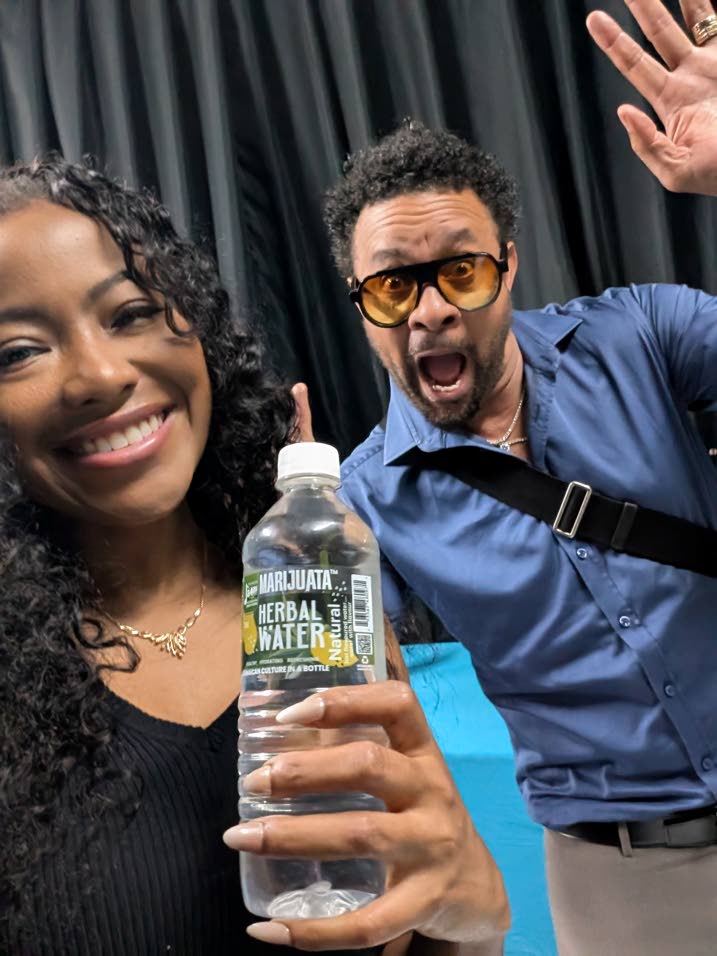
Chief Technical Officer Alyssa Morgan and musician Shaggy.
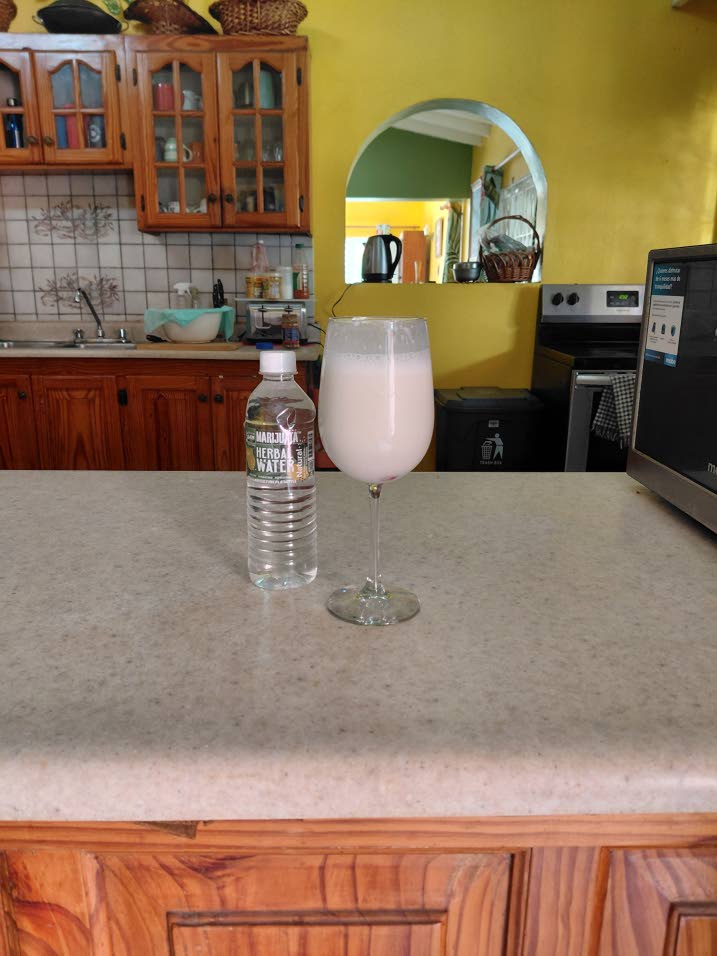
Marijuata’s versatility on display as the drink can be used as a base for a punch.
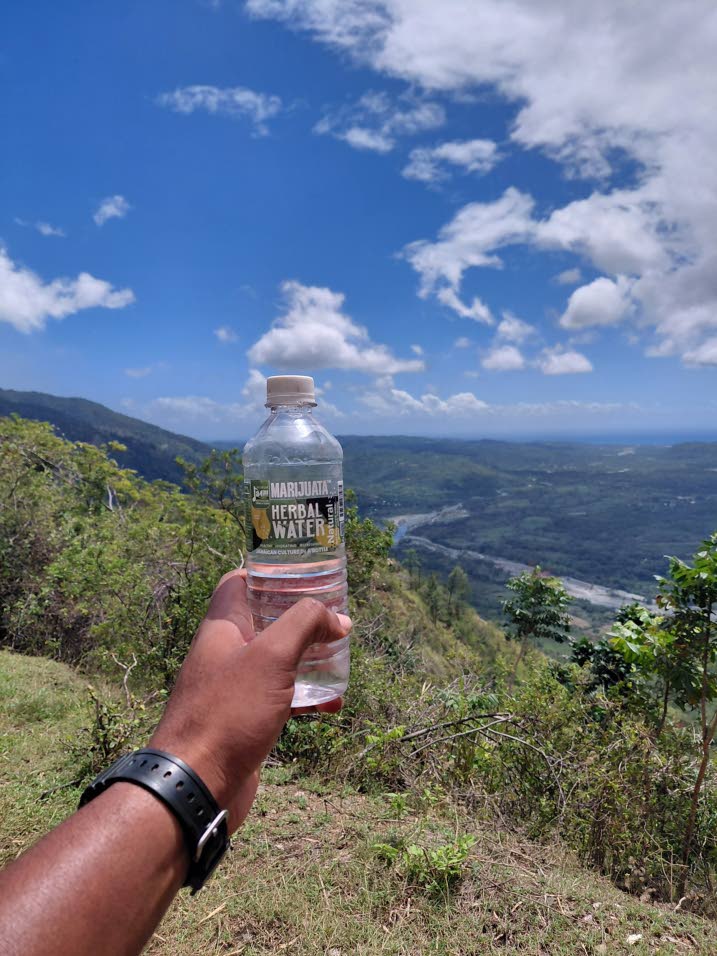
Marijuata, Jamaica’s first marijuana culturally themed bottled water. OR ? “culturally themed marijuana bottled water” ?
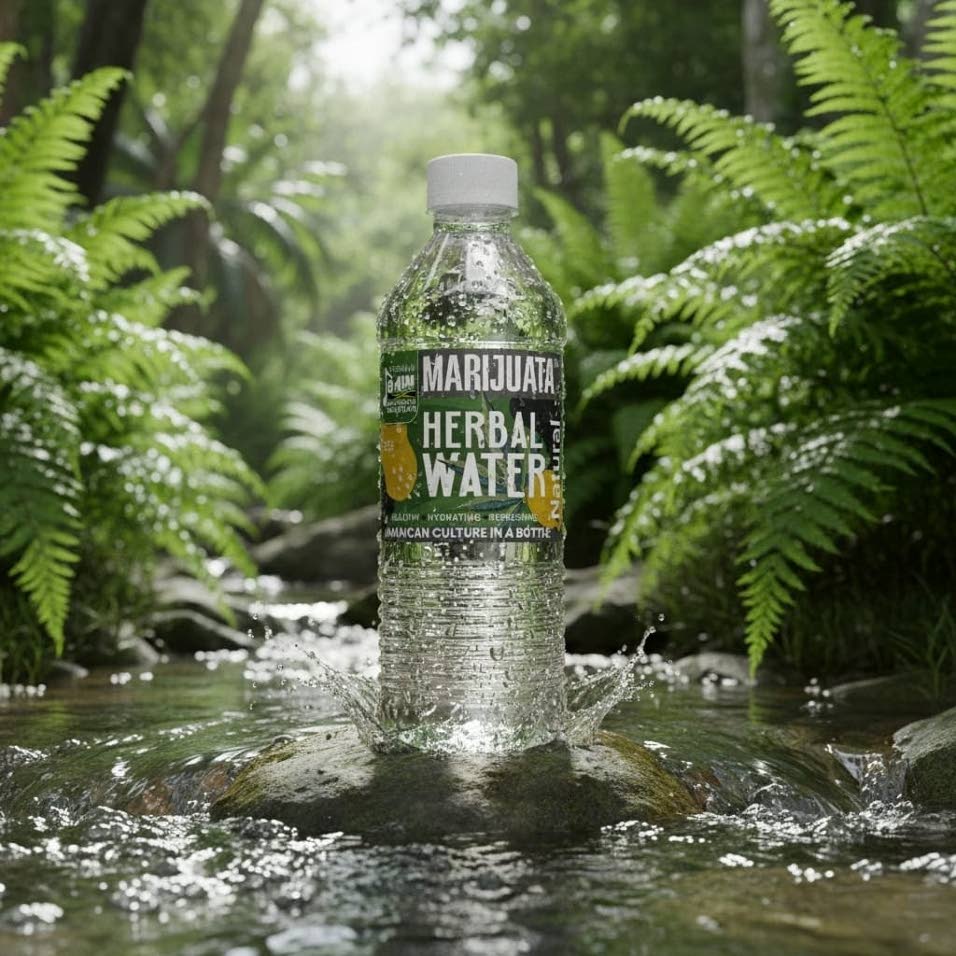
Marijuata Herbal Water, a product developed over 16 years, reflects the company’s push to convert Jamaica’s natural resources and cultural identity into a commercially viable brand.

Bulk cases of Marijuata Herbal Water on display during a promotional offer.
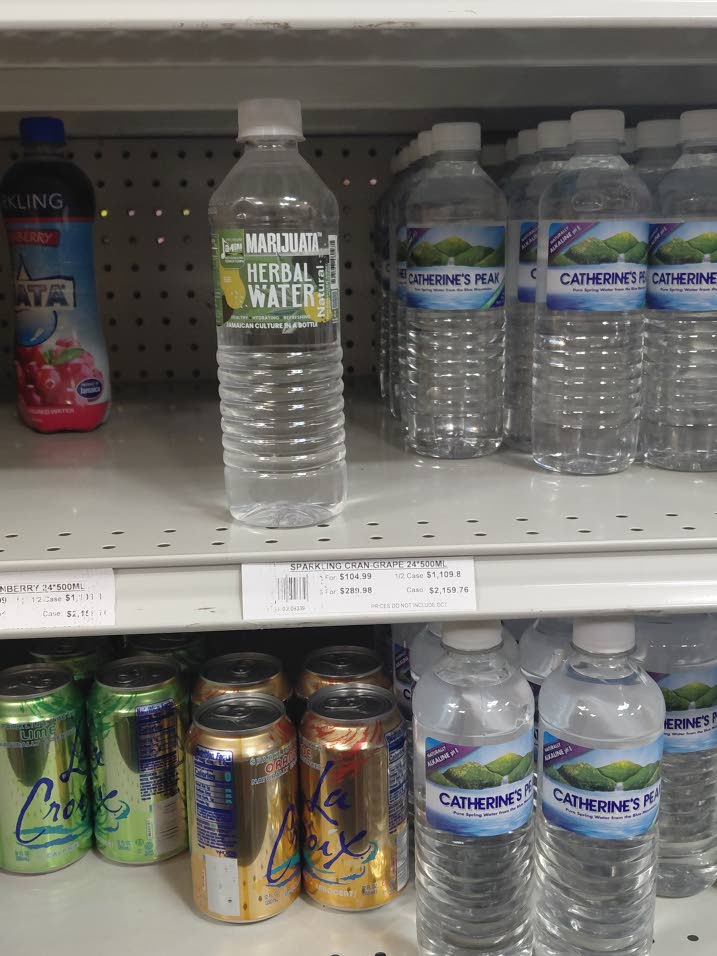
Marijuata Herbal Water on a retail shelf alongside established beverage brands, as the company works to build presence in the local market.

Founder of Marijuata Dr Henley Morgan (centre) along with his daughter Alyssa Morgan, chief technical officer, and his son Adriel Morgan.


