



Jamaica’s frustrating adoption system
Imagine, at a time when the authorities are worried about Jamaica’s population growth and our brain drain, there are 4,500 children in Jamaica’s State care system, many of whom may be eligible for adoption by the 150 applicants who are on the Adoption Board’s waiting list.
According to a Caribbean Policy Research Institute (CaPRI) investigation, “It is frequently asserted that almost none of these children are legally available for adoption. However, the trajectories of the few who do reach adoption suggest otherwise: Based on cases reviewed by the Adoption Board, there appear to be many children in State care whose circumstances could meet the criteria for adoption, but whose cases never progress to that stage.”
At its presentation entitled ‘Home Advantage: Reforming Jamaica’s adoption system’ earlier this year, one adoptive parent, Gavin Goffe, said that he and his wife waited for six years before they brought their baby home. My husband and I were lucky, because our applications were made years before, when the dedicated Mrs Holmes was at the Adoption Board. Even then, some of the individuals in the approval chain stalled the process for no good reason.
“The second adoption went more quickly, but we had to wait the usual six weeks for the birth mother to sign the release. The baby was kept at the Primrose Children’s Home, which was in a disgraceful condition. The place crawled with insects, and our baby boy became ill. When we finally took him home, the wonderful Dr Joy Williams helped us to restore him to perfect health. Soon afterwards, the Primrose Children’s Home closed. I shudder to think what would have happened to our son if Mrs Holmes were not so efficient.”
CaPRI notes, “The Adoption Board, which holds statutory authority, exists in name, while the Child Protection and Family Services Agency (CPFSA) carry out adoption functions without explicit legal authority or oversight. Administrative practice further entrenches delay…The result is a system in which children who could be adopted remain in State care for years, sometimes for their entire childhood.”
It continues, “Both the CCPA and CPFSA policy prioritise reunifying children with their birth families, even where it is unlikely or unsafe; adoption is deferred until other options have been fully exhausted…keeping children in prolonged uncertainty, often in a facility.”
One of the CaPRI recommendations is accession to the Hague Convention on Intercountry Adoption. It also calls for open adoptions, whereby children can meet their biological families, as this contributes to their psychological well-being.
Prime Minister Dr Andrew Holness has been emphasising greater productivity; this is certainly needed for our adoption system. We have heard various slogans about no child being left behind. These children languishing in State care should not be deprived of the fulfilling life that they deserve.
CCRP’s 16th Anniversary
As we reflect on the 16-year existence of CCRP (Caribbean Community of Retired Persons), we can count some wins and those still in waiting. We use only the acronym now because we have opened membership to people 40 years and over. In 2010, after our company PROComm celebrated its 30th anniversary, we decided to create a legacy project in gratitude for our milestone. We considered our mentors — my mother, Beth Jacobs, Eileen Kalbrener, Wycliffe Bennett, Merrick Needham, Fred Wilmot, all wise seniors, and decided that we would dedicate the project to Jamaica’s older folks.
Now we are at over 12,000 members islandwide, with three regional chapters and a Caring Committee comprising our parish representatives. Our current board actively supports our advocacy and outreach activities; they are Honorary Chair Professor Denise Eldemire Shearer (I am executive chair), Honorary Director Sir Kenneth Hall; directors Vilma McDonald, Patricia Reid-Waugh, Marlene Street Forrest, Dr Owen James, Dennis Jones, Warren McDonald, and Donovan Wignal; Emerita Aloun Ndombet Assamba; and Emeritus Peter Mais.
Since 2017, we have been advocating for legislation for the protection of the elderly. Last year, Senator Floyd Morris moved the motion in the Senate for this legislation, which was seconded by Senator Sherene Golding Campbell. Golding Campbell chaired the Senate committee, efficiently organising hearings from various stakeholders. We anxiously await the final passing of this Bill.
Our outreach to the needy elderly was accelerated with the passing of Hurricane Beryl and Hurricane Melissa. We have been able to assist them in collaboration with parish representatives Joan Martin (St Elizabeth), Charmaine Allen (Westmoreland), Dr Norma Taylor (St James), and Rosalee Lewis (Trelawny), as well as the National Council for Senior Citizens, Food For the Poor Jamaica, and Breds Foundation. Fund-raising enabled us to donate $1.5 million last year for care packages and roof repairs.
Since 2012, we have held our CCRP Living Legacy Awards presentations, honouring seniors who have served beyond the call of duty in their respective fields of endeavour. We take great care in preparing their citations to celebrate their achievements and protect their legacy.
Farewell, great ones
We recently said farewell to two outstanding gentlemen: musical icon Ernie Smith and business leader Dr Dhiru Tanna. Their contributions are testimony to Jamaica’s wealth of legends: a lyricist and musician who enriched our soundtracks for decades and an economist whose excellence has inspired generations.
From the humour of Duppy Gunman to the political commentary of Jah Kingdom Gone to Waste and Didn’t Know We Were Poor, as well as the deeply religious All for Jesus, we saw the complexity of Earnie Smith’s philosophy and his unfailing love for Jamaica. In our collaborations, he was warm and friendly, while his sparkling charisma made him a favourite of Jamaican audiences.
His song Didn’t Know We Were Poor tells of so many humble lives: “Running in the bushes/ Swimming in the river/ Eating everything right off of the trees/ Funning in the moonlight/Stories on a dark night/ Jokes till we couldn’t keep score/ I’m telling you I missed it/ I said I didn’t know we were poor.”
If you do not know much about economist Dr Dhiru Tanna, it is because he drew no attention to the deep impact he made on Jamaican businesses in management, on boards, and through mentorship. I was fascinated to learn that his relationship with his beloved wife Dr Laura Tanna blossomed at Berkeley University because of their common Ugandan experience, though they had not met there.
They were married in Uganda, but fled the Idi Amin dictatorship, first to the California and then, at the invitation of Professor Marshall Hall, to Jamaica, where Dhiru worked at the Ministry of Public Utilities and Transport under Eric Bell’s leadership.
He served on several boards, where his colleagues were struck by his calm leadership and innovative strategies. He was active in the launch of the Lumber Depot in 1998, merging it with his leading bar soap manufacturing business Blue Power in 2010 to form the Blue Power Group, a brilliant success, being the second company listed on Jamaica’s Junior Stock Exchange.
The Tannas exemplified the joyful synergy of a loving marriage. We look forward to Laura’s memoir on their fascinating life together.
Our deepest sympathy to the loved ones of these two great gentlemen.
Jean Lowrie-Chin is an author and executive chair of PROComm, PRODEV, and CCRP. Send comments to lowriechin@aim.com
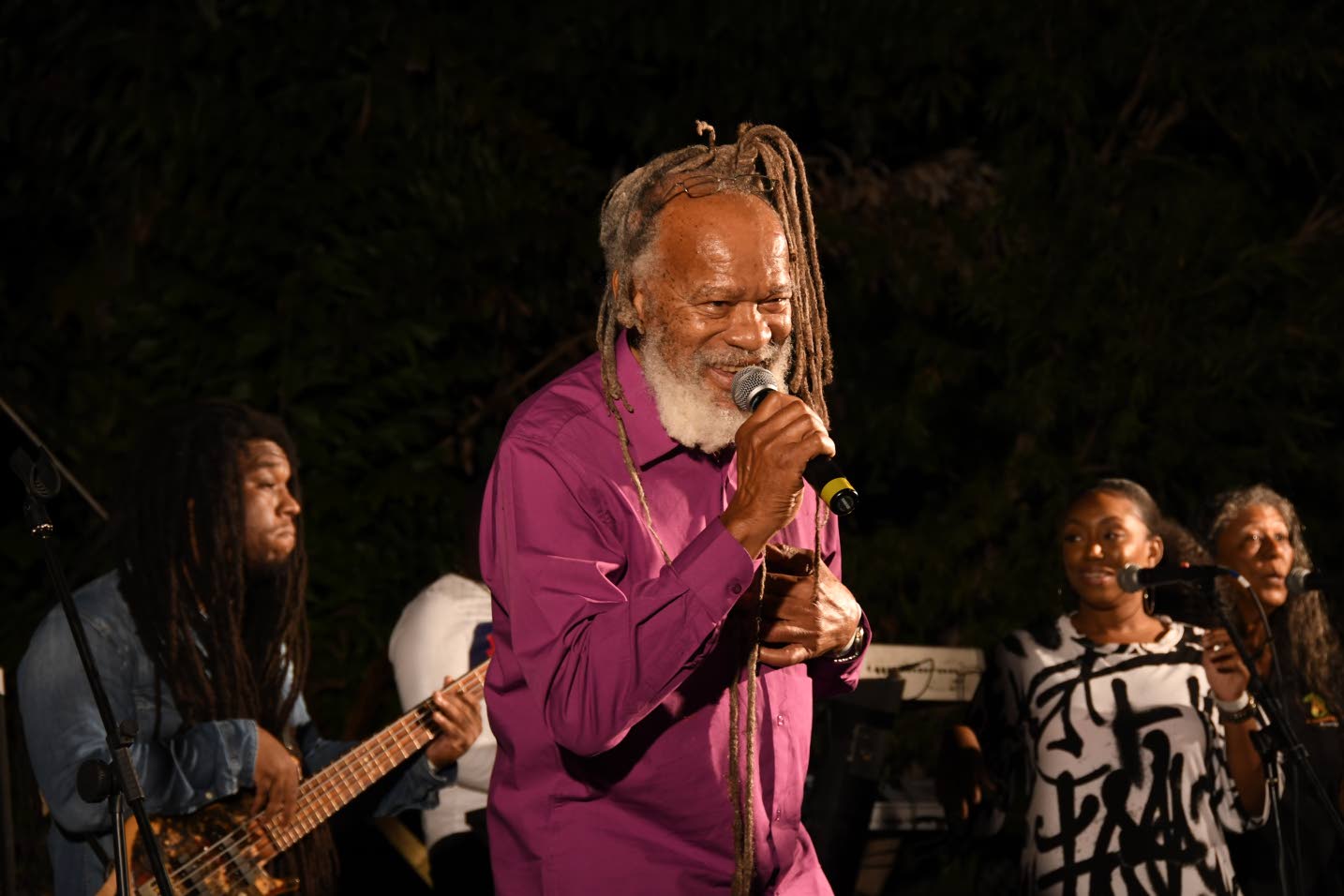
Ernie Smith (Karl Mclarty)

Dhiru Tanna
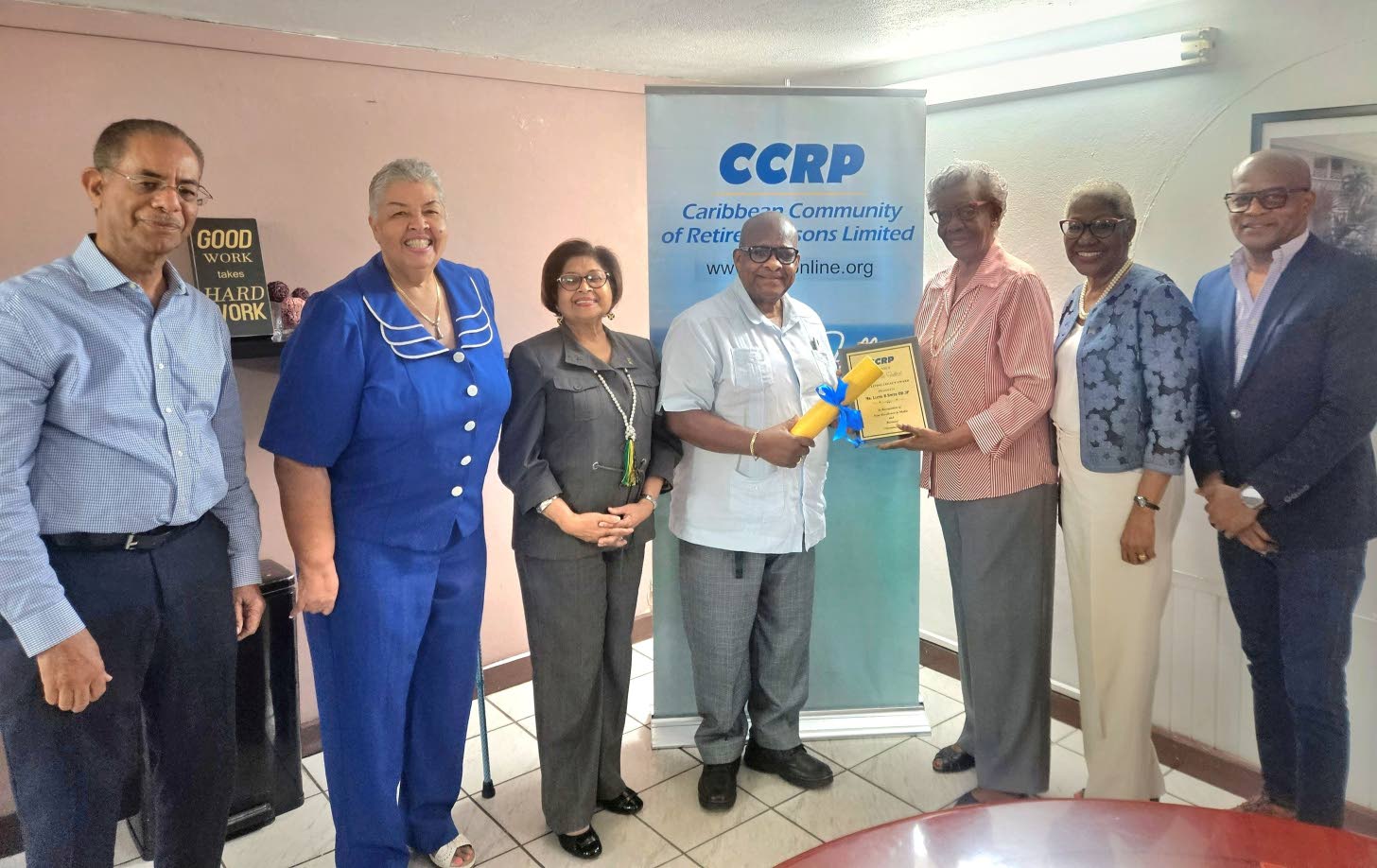
CCRP Living Legacy presentation to Lloyd B Smith (centre). From left are directors Warren McDonald, Emerita Aloun Ndombet Assamba, Jean Lowrie-Chin, Vilma McDonald, General Manager Angela Patterson, and Donovan Wignal.


