



When an apology is not an apology
At a marathon sitting of the House of Representatives last Tuesday, the Parliament, along party lines, passed the National Reconstruction and Resilience Authority (NaRRA) Bill, which will superintend reconstruction efforts in the wake of last October’s devastating Hurricane Melissa.
It is being debated in the Senate, and one can be sure that it will also be passed there. It is very unfortunate and disappointing that such an important and far-reaching legislation is being passed along party lines. Its provisions are gargantuan given the tasks to be undertaken and the enormity of the capital to be deployed. One would have hoped that greater consensus among our legislators would have been arrived at. But, alas, in the tribalised political culture in which we seem to thrive best, one might have had a better outcome if one had aspired to get a piece of real estate on Mars to purchase.
And the marathon debate was not without drama. Probably out of boredom and, as she alleged, being ignored by the Speaker, Juliet Holness, the representative from St Andrew South Western, Dr Angella Brown Burke, decided to grab the mace, one of the remnants of an archaic colonial era, yet important as a symbol of authority and legitimacy in the House. The Speaker rightfully reprimanded the representative and eventually had her removed and banned from any further sitting of the House for the evening.
The people of Jamaica expect their representatives to be very robust in their contributions to the cut and thrust of debate in the House, but this incident revealed the level of incivility into which Parliament has descended for quite some time now.
The Opposition, by cogent contributions, should make the Government uncomfortable in any policy discussion by offering counter-arguments, recommendations, and solutions in policy discussions which may not redound to what the sitting Government wants. By and large, this was the general direction of the criticisms that were being offered by Opposition members with respect to the NaRRA Bill. Some of the presentations were well thought out, but it was clear that the Government had already decided on the direction in which it wanted to go, and no force would prevent it from having its way.
On reflection, whatever her motive, Dr Brown Burke, a seasoned politician in her own right, decided that an apology to the Speaker, the House, and ostensibly the people of Jamaica was in order. She knew she was clearly in the wrong to have grabbed the mace. She probably also believed that her conduct was unbecoming, especially in light of the fact that many young people might have been appalled that she conducted herself in this way. She was perhaps also aware that as a politician she could one day aspire to the high office of being prime minister, following in the footsteps of her formidable and redoubtable predecessor, Portia Simpson Miller.
To me, and, one can be sure, to many others, her apology came across as lame, bland, superficial, and certainly lacking in sincerity. A sincere apology is never followed by the word “but”. It must be clean and never encumbered by any qualification or equivocation. You only need to know that the action for which you are apologising is wrong, that you are deeply sorrowful about it, thus your expression of that sorrow and regret.
There is no need for an explanation of your actions to justify why you did or said what you did. If you are questioned later, then you can offer a thought, but when you offer the apology, it must not be laden with any appeal to justification or rationalised on the basis of another person’s or entity’s actions. It is yours to be owned, not anyone else’s.
A final thought on the NaRRA legislation: I have been trying to understand the Government’s obduracy in going with the Bill in its present form, with certain cosmetic concessions to its detractors. I have come to appreciate the prime minister’s angst not to have the recovery process held hostage by the moribund bureaucracy that has stymied national projects in the past and in the present.
I can appreciate the need for robust decision-making, in terms of procurement and implementation, and to avoid the present archaic system which has been largely responsible for even capital projects that have been budgeted for not being executed on a timely basis, thus causing money to be returned to the national treasury.
The lethargy in implementation which exists in moving projects across different departments of government is time-consuming and mind-boggling. To allow the reconstruction effort to be held hostage to this deathly lethargy could amount to an abdication of responsibility.
So, in my view, NaRRA anticipates a more nimble approach. While a constituted board might work, it certainly will not overcome the inertia that the prime minister is seeking to avoid. It certainly will not overcome the bureaucratic boondoggle that can result, and may itself fall into the same bureaucratic quagmire by seeking to be an end in itself.
The activities of NaRRA will not escape the supervisory and regulatory scrutiny of well-established institutions such as the Public Administration and Appropriations Committee (PAAC), the Integrity Commission, and the Auditor General’s Department. For example, the CEO of NaRRA can be called frequently by the PAAC to give an account of his/her stewardship outside of the reports that have to be sent to the Parliament. These bodies must step up their game, ask the hard questions, and make the Government sweat, even to the point of discomfort and irritation.
The citizens at large must stay alert as the projects are rolled out in their communities, and civil society groups must not be found wanting in insisting on the accountability they crave.
Until we are able to bring transformation to the way we do business, as is being anticipated by the ‘Ministry of Digital Transformation’, and remove the deadening bureaucracy that cause projects to languish for far too long, NaRRA is the best thing available to us right now. It will not last forever, as its mandate is time-bound.
Let us, as citizens, play our part in being alert and being useful scrutineers in seeing to the success of the work to be undertaken.
Dr Raulston Nembhard is a priest, social commentator, and author of the books Finding Peace in the Midst of Life’s Storms; Your Self-esteem Guide to a Better Life; and Beyond Petulance: Republican Politics and the Future of America. He also hosts a podcast — Mango Tree Dialogues — on his YouTube channel. Send comments to the Jamaica Observer or stead6655@aol.com.
The National Reconstruction and Resilience Authority (NaRRA) Act was passed by the House of Representatives on April 29, 2026.
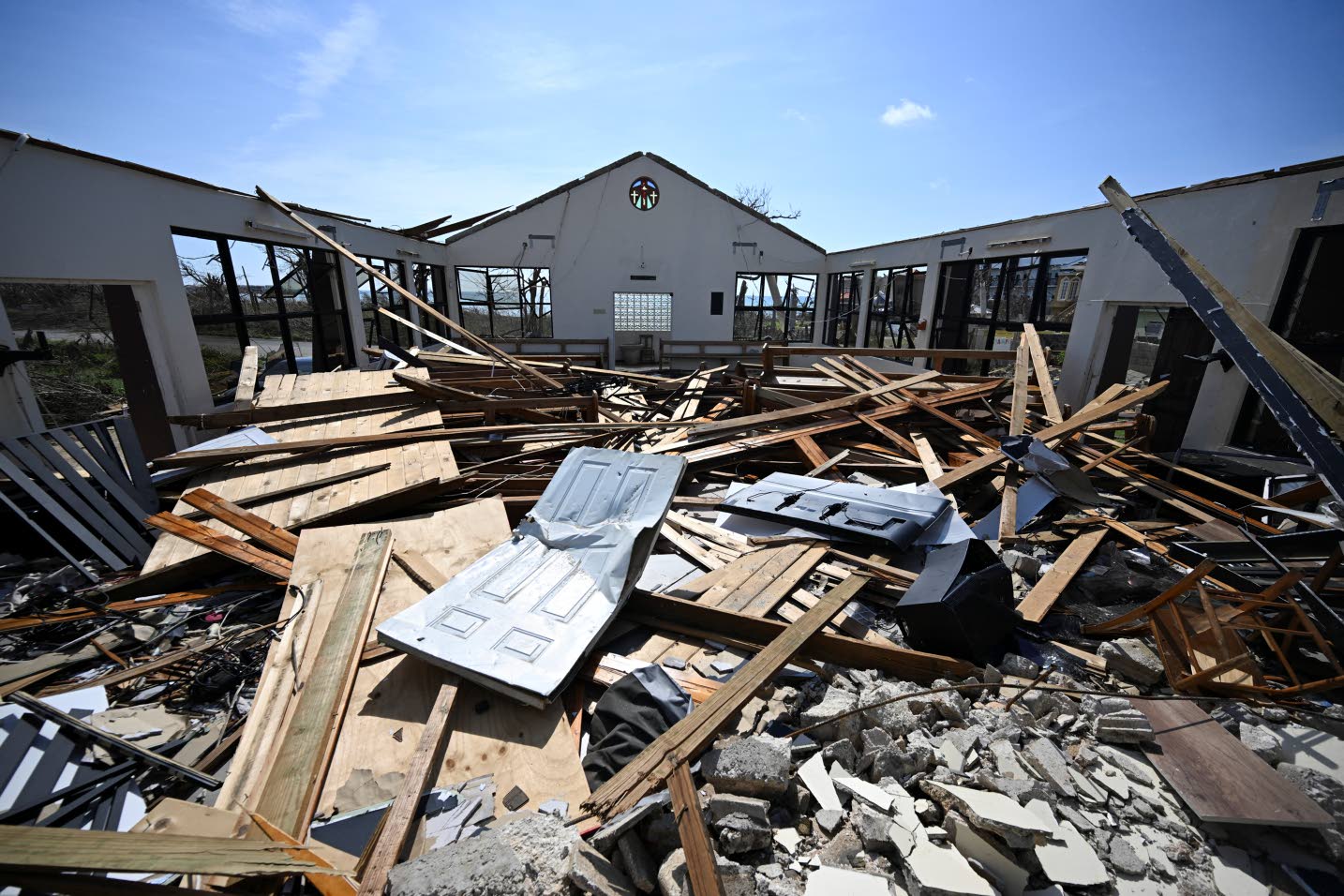
The National Reconstruction and Resilience Authority is designed to manage a fast-tracked reconstuction in the wake of devastation caused by Hurricane Melissa last October. (Photo: AFP)


