



JMEA says Middle East war impacting supplies to tourism sector
MONTEGO BAY, St James — President of the Jamaica Manufacturers and Exporters Association (JMEA) Kathryn Silvera is warning that fallout from the war in the Middle East is putting mounting pressure on local manufacturers struggling to meet long-term supply commitments to Jamaica’s tourism sector.
Speaking with the Jamaica Observer on the sidelines of the Tourism Enhancement Fund’s (TEF’s) Speed Networking Event Montego Bay Convention Centre in St James last Thursday, Silvera said the sharp rise in inflation and input costs is creating significant challenges for manufacturers who are locked into fixed-price contracts with hotels and other tourism stakeholders.
“That is a big effect because the tourism industry — the hotels, for example — they are able to give manufacturers a commitment, in terms of the quantity of product or service that they may need. Now, of course, it may fluctuate because they’re looking in advance, but they give some level of a commitment. And so manufacturers also then give a commitment of price. So if it is in February before the conflict occurred you gave a hotel a price, you normally have to withstand that price for six months to a year, depending on the level of the contract,” Silvera told the Sunday Observer.
“It could be very challenging with… the inflation that is happening,” she added.
Silvera explained that some contracts allow for renegotiation if the Jamaican dollar weakens or prices increase beyond agreed limits. However, she noted that with multiple manufacturers, suppliers, and hotels involved, external factors outside Jamaica’s control can have a major impact on costs and the economy.
She also underscored that while manufacturers initially absorbed rising costs during the early weeks of the Middle East conflict to avoid premature price hikes, the prolonged crisis has now forced them to pass increased expenses on to consumers. She noted that higher fuel, electricity, raw material, and packaging costs, along with increased environmental levy taxes and the new SCT on sweetened non-alcoholic beverages “are being compounded into increased costs”.
The JMEA boss warned that as the conflict drags on, shipping lines facing higher fuel expenses may reduce or cut less profitable routes, resulting in supply chain disruptions and increased prices, similar to what occurred during the COVID-19 pandemic.
“If you’re getting your raw materials from South Africa, for example, it may be a challenge to get it. So our manufacturers are having to carry a lot more inventory of raw materials and packaging. That’s a cash flow cost because your money is tied up in goods in your warehouse that you have not yet produced. But you want to ensure that it’s there so that you don’t run out of stock, because if you are not able to produce then you can’t earn any money either,” she explained.
However she noted that, in the past, Jamaicans and local manufacturers have consistently shown creativity and resilience in overcoming crises such as COVID-19, hurricanes, and global conflicts.
The goal, she said, is foresight.
“It’s going to get more fast-paced as we develop more into AI and all of these things. We just have to make sure that we’re always looking 10, 20 steps ahead. Now we’re always looking to see how we can conserve, how we can save, how we can cut costs and improve while improving our service and our quality,” she stressed.
“We have to diversify. We have to be selling to the end consumer. We have to be selling to the hospitality sector. We have to be exporting. We have to be selling to government, who is the number one procurer in the country. We have to make sure that we’re touching all bases and we’re spreading ourselves so no one industry can be the detriment or the devastation of a company,” Silvera added.
Tourism Minister Edmund Bartlett, who delivered the main address during the event’s opening ceremony, charged suppliers to ensure consistency and reliability in providing goods to Jamaica’s tourism sector. He stressed that the country can no longer operate as a “country of samples”.
Bartlett said tourism requires sufficient, dependable, and competitively priced supplies to meet the demands of hotels and visitors at all times.
He noted that hotels cannot be placed in situations where essential items such as eggs or rice are unavailable because suppliers failed to deliver. The tourism minister emphasised that the Government is committed to supporting and expanding suppliers’ capacity so they can meet growing tourism demands while maintaining pricing arrangements that keep Jamaica competitive in the global marketplace.
“This year, I’m so proud to hear that all 24 entities that we asked to participate started from 9 o’clock this morning, and you are already negotiating arrangements. And yes, that’s what we want to see, but we are committed as a Government to enable an upscaling of your capacity and capacity,” Bartlett assured.
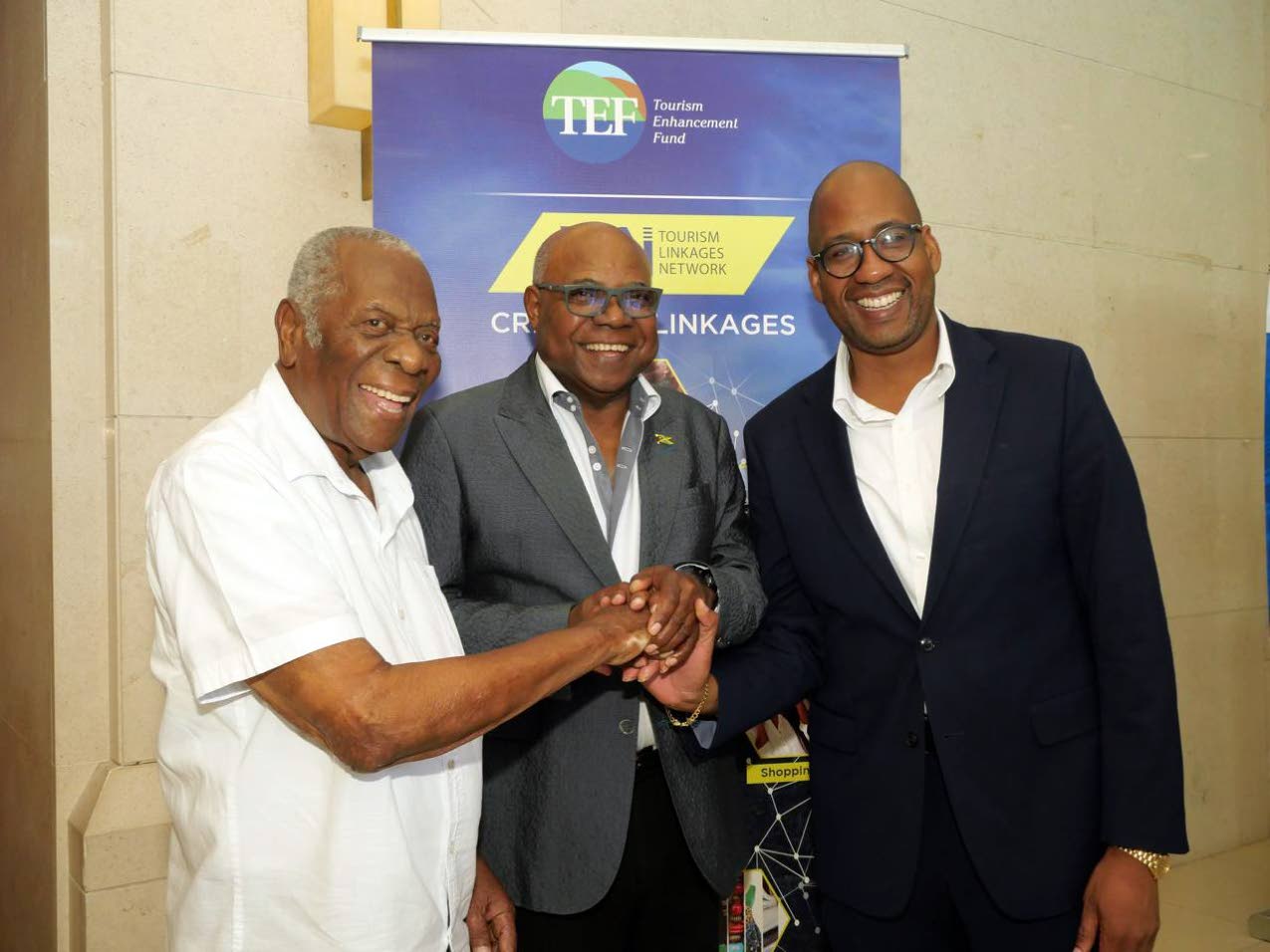
Tourism Minister Edmund Bartlett (centre) with newly appointed chairman of the Tourism Enhancement Fund (TEF) Ryan Parkes (right) and his predecessor, Godfrey Dyer, during TEF’s Speed Networking Event held at Montego Bay Convention Centre in St James on Thursday. (Photo: Philp Lemonte)


