



STEM schools are not enough
Building new schools without fixing the foundations is a strategy built on sand
Approximately two weeks ago the Government of Jamaica announced during the annual budget debate that construction will commence this year on two long-anticipated STEM (science, technology, engineering, and mathematics) schools. This is a welcome signal of intent. In an era defined by rapid technological advancement and the expanding influence of artificial intelligence, any nation that fails to equip its graduates with relevant technical skills risks being left behind. I therefore fully support Prime Minister Andrew Holness’s thrust to prioritise this critical dimension of our education provision. The stakes could not be higher.
Yet the announcement raises a question that deserves serious, candid public engagement: Is the construction of new STEM schools, in and of itself, the answer to achieving the transformative revolution our education system so urgently needs?
A HISTORY OF CATEGORISATION WITHOUT TRANSFORMATION
Jamaica has a long-established tendency to address systemic educational challenges by creating new categories of schools. Over the decades, we have introduced junior secondary schools, comprehensive high schools, technical schools, and traditional high schools — each conceived to plug an identified gap in the national system. More recently, the ‘academy’ model emerged, with institutions such as Steer Town Academy in St Ann; Cedar Grove Academy in Portmore, St Catherine; and Belmont Academy in Westmoreland, each designed to deliver high-quality academic, athletic, and personal development.
The critical questions we must ask, with transparency and rigour, are: Have these schools fulfilled their broad mandates? What measurable outcomes can we point to?
The uncomfortable reality, as observed by educators and policymakers alike, is that many of our technical and vocational institutions continue to struggle for the most basic resources. Laboratories fall below acceptable standards, and qualified teachers in STEM and technical subject areas remain chronically difficult to recruit and retain. Naming a school differently has not, by itself, changed the conditions within it.
Before investing in new construction it is worth examining what we have already built. The Sydney Pagon STEM Academy in St Elizabeth was established several years ago as a pilot for precisely this kind of specialised, technology-focused education. As the Government now contemplates the construction of additional STEM schools, a rigorous, publicly available evaluation of the Sydney Pagon model would be invaluable. What has worked? What has not? What resource gaps have persisted? What teacher development challenges remain unresolved? A nation that does not learn from its own experiments is condemned to repeat its own mistakes.
In an era of constrained public finances, strategic spending is not merely a preference, it is a necessity. The question should not be ‘How do we build more schools?’, but rather, ‘How do we resource, restructure, and rationalise the system we already have to deliver quality education at every level, from early childhood through to tertiary?’
THE FINNISH MIRROR: WHAT HIGH-PERFORMING SYSTEMS ACTUALLY DO
For those seeking an evidence-based model, Finland’s education system offers a compelling and instructive reference point. Consistently ranked among the highest-performing systems in the world, Finland’s success was not built on flashy infrastructure, cutting-edge technology, or an obsession with international rankings. It was built on a deceptively simple but profoundly equitable philosophy: Every school, regardless of its location or the socio-economic background of its student population, receives the same quality of support, resourcing, and attention.
In the Finnish model, there is no such thing as a ‘bad school’. The system does not play favourites. The underlying conviction is that if every student starts from the same line. Every student has a fair chance at the race. Finland achieved its remarkable outcomes not by engineering a magic formula, but by doing something more difficult and more deliberate: Listening carefully to educators, students, parents, and researchers and then acting consistently on what it heard.
The lesson for Jamaica is stark. Our habit of creating tiered, unequally resourced school systems — where your life chances depend substantially on which type of school you can access — is antithetical to both equity and excellence. A child educated in a poorly resourced technical school in rural Jamaica deserves the same quality of instruction as a child in a well-appointed institution in Kingston. Until that principle is embedded in policy and practice, no amount of new construction will close the gap.
NEEDED: A CLEAR, COHERENT NATIONAL PLAN
Rather than directing our immediate energies toward the construction of new schools I would respectfully urge the Government, educators, and civil society to coalesce around the development of a comprehensive, strategic national plan for education — one that articulates clearly how we will restructure and resource the current system to provide a seamless, accountable, and responsive continuum of high-quality education from early childhood through to tertiary level.
Such a plan must address the persistent shortages of qualified STEM teachers with urgency and creativity through competitive compensation, targeted scholarship pipelines, and international recruitment partnerships where necessary.
It must confront the laboratory and infrastructure deficits in our existing technical schools.
It must establish transparent mechanisms for evaluating whether initiatives such as the academies and the Sydney Pagon STEM Academy are delivering on their promises.
And, it must be grounded in research and informed by the lived experience of the educators and students who navigate our classrooms every day.
The advancement of STEM education in Jamaica is not a matter for Government alone. It demands the active, informed engagement of educators at every level, policymakers, parents, business leaders, and communities. I therefore extend a sincere call to teachers, principals, education officers, university academics, and civil society to enter this conversation with the seriousness and urgency it deserves.
New buildings can inspire, and visible investment in education sends an important signal to the nation. But buildings without trained teachers, functional laboratories, relevant curricula, and equitable access to resources are, at best, half-measures. Jamaica’s students deserve more than symbols of progress. They deserve the genuine, sustained, system-wide transformation that will equip them with the technical skills and the social conscience to compete and contribute in an increasingly complex global community.
Let us ensure that when construction begins on those two STEM schools it is the beginning of a revolution — not another chapter in our long history of well-intentioned but insufficiently supported initiatives.
Dr Garth Anderson is principal of Church Teachers’ College, president of the Caribbean Association of Tertiary Institutions, and past president of the Caribbean Union of Teachers. The views expressed are his own.
Dr Garth Anderson
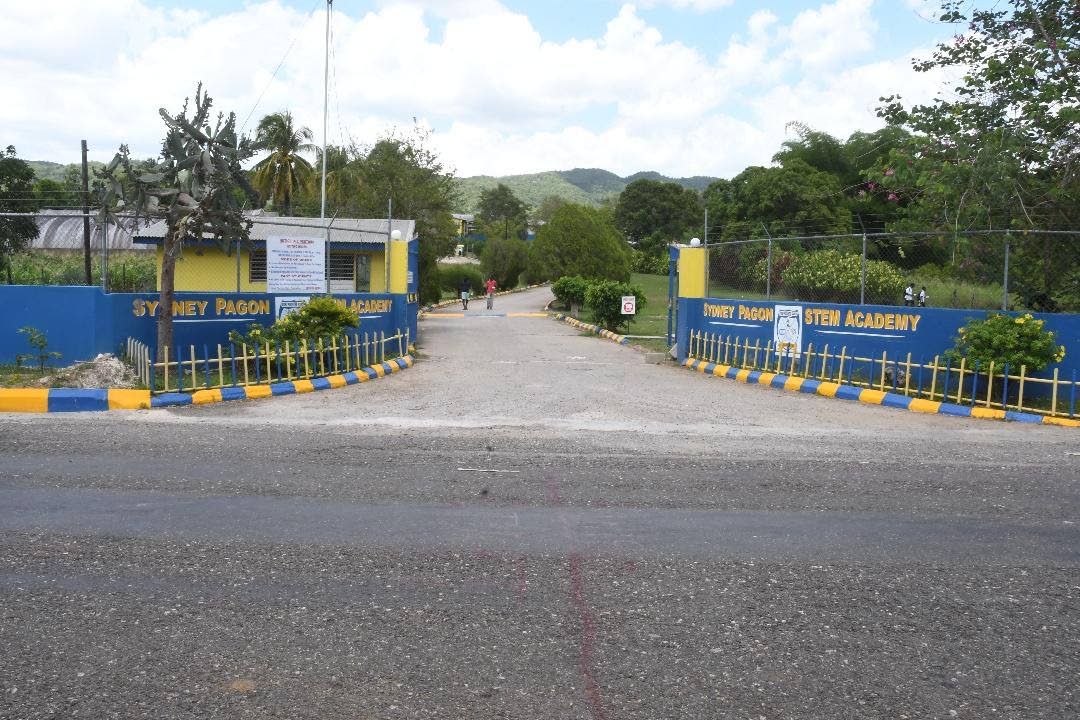
Sydney Pagon STEM Academy in northern St Elizabeth.


