



Walk This Way: The Bridal Party Procession & Recessional
The bridal party procession is no longer just a formality — it is the opening scene of your wedding day. It sets the tone, creates emotion, and offers your first opportunity to immerse guests in your story. Today’s modern couples are moving away from simply asking “Who walks when?” and instead focusing on “How do we want this moment to feel?”
Whether soft and romantic, celebratory and energetic, or bold and cinematic, the key is intention. A timeless procession may feature live strings, a slow and graceful pace, and delicate petal scattering for an ethereal effect. A more energetic approach might incorporate upbeat music and a rhythmic flow that subtly engages guests. For those who want something deeply personal, layering different songs for different groups or adding light choreography can turn the walk into a meaningful reflection of the couple’s journey. And for destination or expansive venues, a dramatic reveal before the aisle — even before the bride begins her walk — can create a breathtaking, cinematic moment.
While creativity leads the experience, structure ensures flow. Traditionally, the procession begins with the officiant (if not already in place), followed by the grandparents, then the parents of the groom, and finally the mother of the bride, who is often the last to be seated. The groom typically takes his place at the altar — either entering from the side or walking in with his best man — followed by the bridal party, who may walk in pairs or individually depending on the desired pace and style. The maid or matron of honour enters just before the younger members of the party, such as the flower girl and ring bearer. Then comes the moment everyone has been waiting for: the bride’s entrance, whether escorted or solo, marking the emotional peak of the procession.
Once at the altar, positioning becomes just as important as the walk itself. Traditionally, the groom and his groomsmen stand on the left side (facing the ceremony), while the bride and her bridesmaids stand on the right, with the officiant centred between the couple. The maid of honour and best man stand closest to the bride and groom respectively, while the rest of the bridal party angles slightly inward to frame the couple. For a more modern aesthetic, some couples opt for a semi-circle or softened formation, particularly in outdoor or destination settings, creating a more intimate and immersive feel.
If the procession builds anticipation, the recessional releases it. This is the couple’s first joyful moment as newly-weds, and it should feel like a celebration. The order is simple yet symbolic:
• The couple exits first, leading the way as newly married partners
• The maid of honour and best man follow
• Bridesmaids and groomsmen exit in pairs
• Parents and then grandparents follow
The energy should shift here — music becomes upbeat, guests rise to their feet, and the atmosphere turns from emotional to celebratory. Thoughtful touches such as a petal toss, bubbles, or even a brief pause halfway down the aisle for a candid “just married” moment can elevate the experience even further.
Ultimately, the procession and recessional are not just transitions within your ceremony — they are defining moments. One welcomes your guests into your story, and the other sends them into celebration with you. When thoughtfully designed, both become unforgettable, setting the stage not only for your vows, but for the entire experience that follows.
Shikima Hinds
Managing Director
Shikima Hinds Events Concierge
Tel. 876-925-4285 or 876-361-0910
e-mail: shikima@shikimahinds.com
www.shikimahinds.com
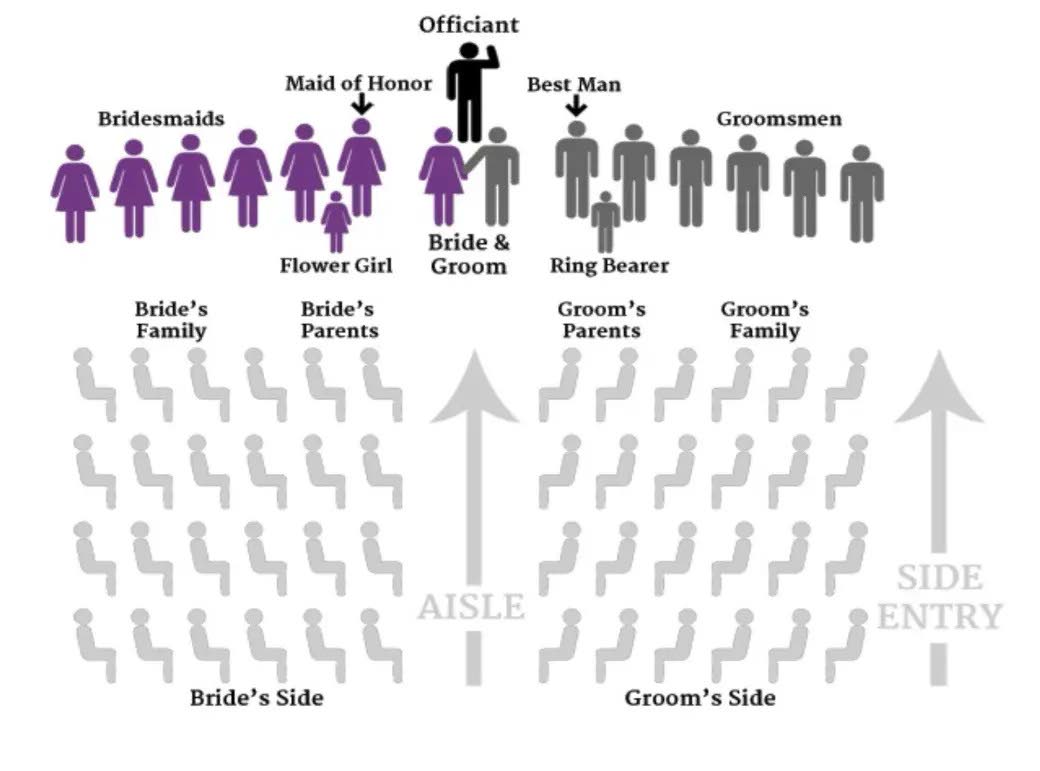
Positioning at the altar is key to a balanced ceremony. Traditionally, the groom’s party stands on the left (facing the crowd) and the bride’s on the right, with the officiant centred between them. The maid of honour and best man should stand nearest to the couple, with the rest of the bridal party angled inward to draw the eye toward the centre.


