



‘International law must matter’
EU ambassador welcomes shared values and continuing partnership between Jamaica and Europe
FOREIGN Affairs and Foreign Trade Minister Senator Kamina Johnson Smith on Saturday extended gratitude to the European Union (EU), on behalf of the Jamaican people, for its continued support during the island’s toughest times, especially following Category 5 Hurricane Melissa last October that devastated the western third of the island.
Saturday was observed as Europe Day 2026, and Johnson Smith joined EU Ambassador Dr Erja Askola in celebration of the occasion at the office of the EU delegation in St Andrew.
“I wish to express appreciation for the EU’s commitment to support the establishment of the National Reconstruction and Resilience Authority (NaRRA), understanding — as other key international partners do — the absolute criticality of centralised coordination and oversight of activity.
“I express appreciation for the EU’s partnership in action. It is important for me to emphasise again the appreciation which the Government feels for the support which the EU brought in the immediate aftermath of Hurricane Melisa,” said Johnson Smith.
In response, the EU ambassador noted that this year’s celebration comes at a time of profound uncertainty, growing disrespect for territorial integrity, and an increasing disregard for international law.
“We see wars, conflicts and political crises. We see economic volatility. We see increasing national disasters and climate shocks. In this challenging context the European Union continues to stand firmly for partnerships based on equality and respect. Small states and developing countries must have a voice. International law must matter, and climate commitments must be honoured,” said Askola.
She added that there are still countries, leaders, and people who remain committed to the values of human dignity, democracy, freedom, rule of law and human rights.
“I am delighted to say that one of these countries is Jamaica — the country that I have had the honour to serve in as EU ambassador for almost two years now. I have been fortunate to find in Jamaica a strong and reliable partner. I believe we have strengthened what every diplomat hopes to build — relationships based on trust, shared convictions, and a firm belief that alliances and partnerships make us stronger.
“I am proud of the work we have carried out with the Government of Jamaica, its institutions, and other stakeholders, regional partners, civil society, the private sector and communities. Last year we saw how Jamaica’s tireless building of diplomatic relations delivered concrete results in adversity and devastation. The international community responded very strongly to the needs of [the] Jamaican people after Hurricane Melissa.
“Now we say how deeply impressed we have been by the strength and resilience of the Jamaican people. Communities came together, institutions mobilised quickly, and the country demonstrated a remarkable capacity to rebound and recover. The European Union member states stood firmly with the people of Jamaica and mobilised more than US$12 million in recovery assistance to help Jamaica restore essential services, recover livelihoods, and to respond to their immediate needs for shelter, food, water, health care and power,” added Askola.
She declared that the EU does not only view Jamaica as a partner in need, but as a partner of potential and solutions.
“We see Jamaica as a key political ally that advocates with us for respect for international law, multilateralism, and higher ambition for climate change. We want to take this partnership to the next level. This is not only through service. We are already acting on this promise together.”
The ambassador noted that last year there were several high-level meetings between Jamaica and EU leaders and politicians.
“This was the first bilateral meeting at the highest level. The European commissioner in charge of humanitarian assistance and disaster relief [Hadja Lahbib] travelled to Jamaica immediately after Hurricane Melissa to discuss the needs on the ground and a European response,” noted Askola.
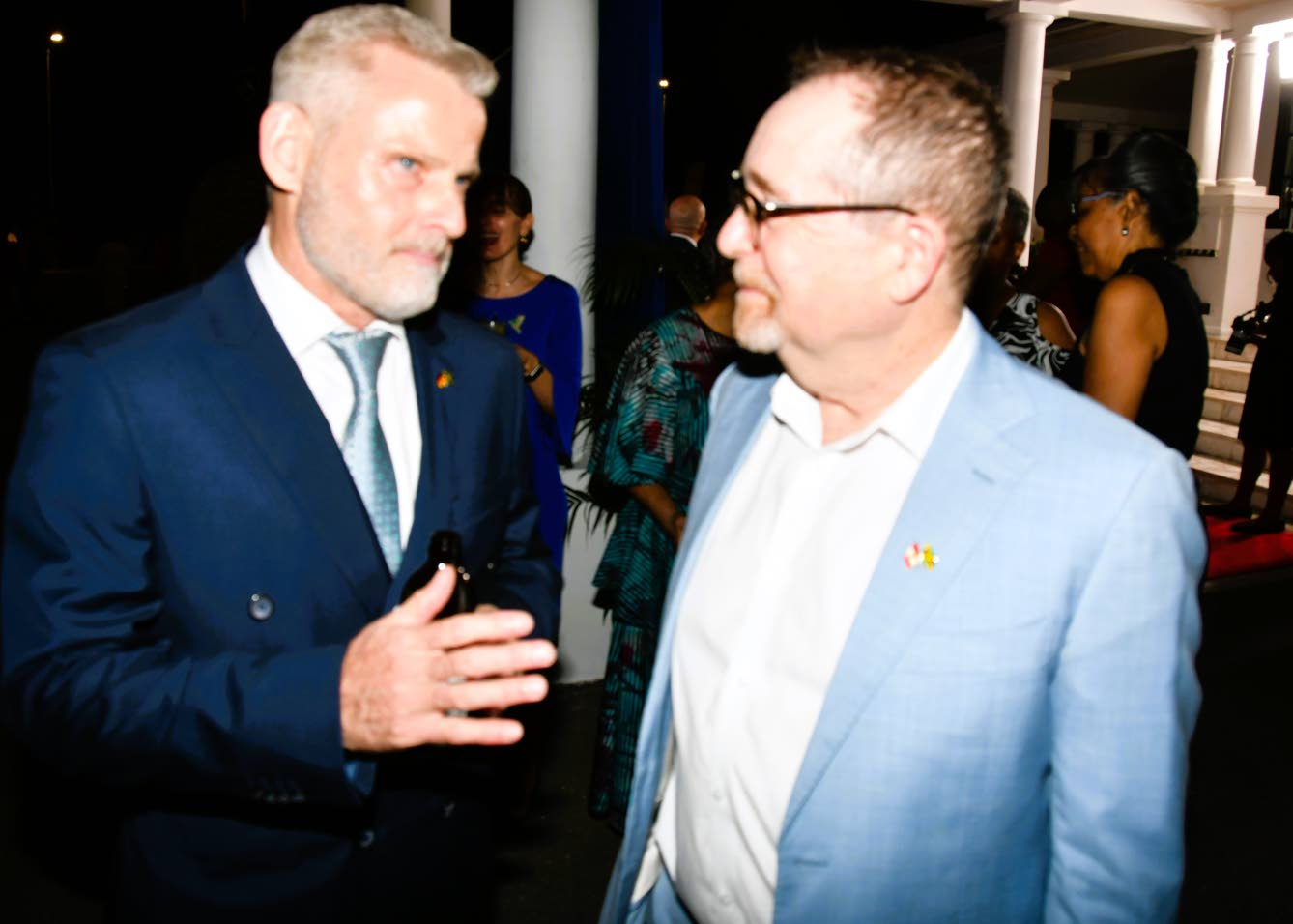
German Ambassador to Jamaica Jan Hendrik van Thiel (left) in discussion with Canadian High Commissioner to Jamaica Mark Berman during EU Day 2026 celebrations on Saturday.


