



‘Most unfortunate’
Malahoo Forte says neither she nor committee clerk received legal opinion tied to Gordon dispute
QUESTIONS over the Ethics Committee’s handling of the exemption controversy involving Member of Parliament for St Andrew East Central Dennis Gordon continued on Wednesday after committee chair Marlene Malahoo Forte disclosed that neither she nor the committee clerk received a legal opinion supporting arguments that the committee lacks jurisdiction to recall Gordon.
Members also continued to engage in an increasingly complex debate over whether the committee had overstepped its authority by attempting to summon Gordon after the House of Representatives had already approved its recommendation on his exemption application.
During Wednesday’s sitting, Malahoo Forte disclosed that despite repeated references to the opinions during discussions over jurisdiction, neither she nor the committee clerk had formally received them.
“I thought it was not proper to get the opinion on the record in the way that the attempt was made. Because there is a proper way to do it, and my view was that it was not done properly, and to date, I still do not have the opinion, I don’t know its content, and I’m advised by the committee clerk that he doesn’t have it either,” Malahoo Forte said.
She also rejected suggestions that she had privately reviewed or relied upon the opinion during the committee’s deliberations.
“Because I heard it said elsewhere that I had it, and I knew what was in it. And I found it most unfortunate,” she added.
The matter later became clearer after Senior Legislative Counsel Tiffany Stewart addressed the committee and outlined how the opinions had been requested and circulated.
“For the purposes of clarity solely and for the avoidance of any form of doubt or misinterpretation, the legal opinion was sought by the leader of opposition business through the Office of the Clerk and not directly from the Legislative Council Department. Additionally, a request was made for a supplemental legal opinion on April 30th through the Office of the Clerk on the same matter and that was provided, I think, on May 1st to the leader of opposition business,” Stewart explained.
The legal opinions relate to arguments advanced by Opposition members that the Ethics Committee no longer has jurisdiction over Gordon because Parliament had already approved the recommendation tied to his exemption application.
That argument was strongly advanced during Wednesday’s sitting by Opposition member Anthony Hylton, who maintained that the matter became functus officio once the House acted on the committee’s recommendation.
He repeatedly stressed that the dispute was not political but deeply technical and constitutional in nature.
As the debate unfolded, Hylton warned that the committee risked venturing beyond its lawful remit unless clear limits were established around its authority and scope of enquiry.
“We need to have the scope properly defined so that we don’t go wandering and thrashing about into matters that properly does not concern this committee… if we don’t have limits, we can find ourselves in deep waters,” he cautioned.
Malahoo Forte, however, maintained that the committee could not ignore questions surrounding the accuracy of information previously provided by Gordon during its consideration of the exemption motion.
“The committee’s recommendation was based on the information provided by the member. The accuracy of that information on which the committee’s recommendation was grounded was subsequently brought into question, and the committee sought to obtain clarification on the information which led to the member being summoned to reappear before the committee,” she explained.
Beyond the jurisdiction dispute itself, Wednesday’s sitting evolved into a wider philosophical debate about how aggressively Parliament should scrutinise matters involving elected officials.
Malahoo Forte suggested that the Ethics Committee may need to fundamentally rethink how exemption motions are handled going forward, arguing that public expectations around accountability have changed significantly.
“Today, the people of Jamaica are demanding more of their parliamentarians with all due respect… And when a member of parliament has a contract with the Government of Jamaica on account of the public service, and issues arise, the people want to know. If you think that because in the past, a member may just be called upon to say this is it, and it is acted on, that may not be the case going forward… I believe we are under a duty to find out what is the extent of the contract and how will any conflict of interest be resolved in the public interest,” Malahoo Forte added.
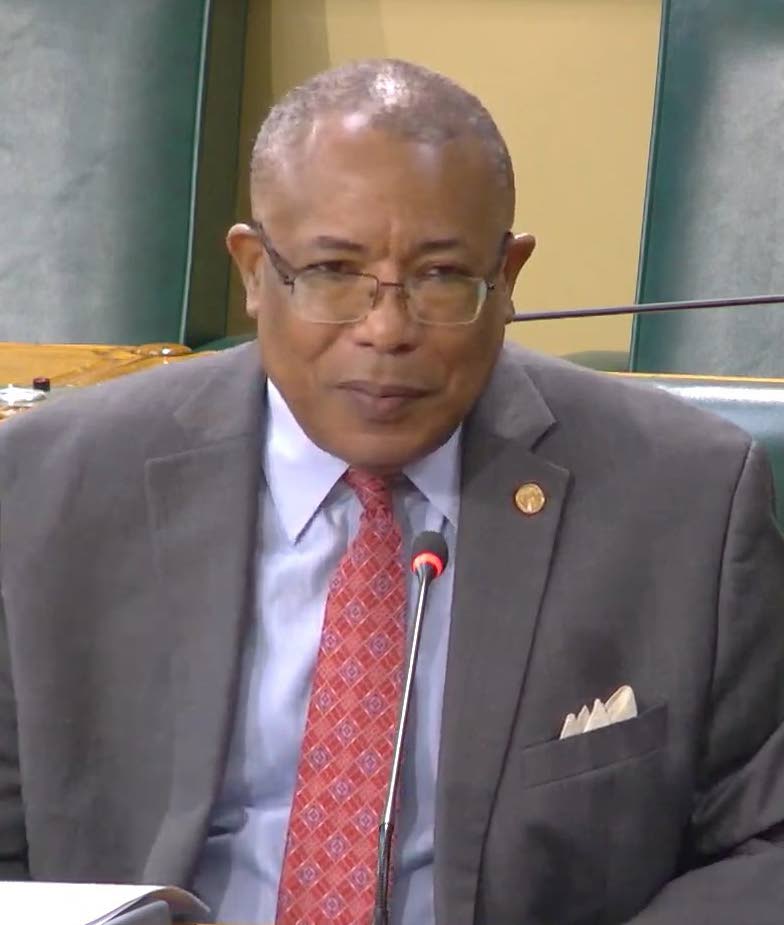
Opposition member Anthony Hylton maintained that the matter became functus officio once the House acted on the committee’s recommendation.


