



JFB raises bush fire readiness level
El Niño expected to affect weather in Caribbean
AS the cyclical El Niño climate phenomenon continues to develop, promising extreme heat, less rainfall, and drought across the Caribbean, the Jamaica Fire Brigade (JFB) says it is ramping up preparations amid fears of a possible spike in bush fires islandwide.
“The El Niño is a major driver of increased bush fire risk in Jamaica, just by those factors, like longer drought periods, likely windy conditions as well at times. These are the main factors that drive the incidence of bush fire. So, yes, it’s indeed an absolute risk that we will have to prepare ourselves for, and we have been preparing for,” Jamaica Fire Brigade Commissioner Stewart Beckford told the Jamaica Observer on Friday.
According to Beckford, the fire brigade has already moved into a heightened state of readiness, strategically deploying resources and strengthening partnerships with agencies such as the municipal corporations and the Jamaica Defence Force (JDF) to improve emergency responses.
Among the measures being implemented is the use of a bushfire warning index developed with the Meteorological Service of Jamaica to predict areas at highest risk for fires.
“It’s a tool that can predict where bush fires are likely to occur, just by looking at historical data. So that assists us greatly in terms of making a determination as to where we are likely to see bush fires popping up. And so we can pre-position, if we have the resources to do, we can pre-position resources in these high-risk areas so we can put in a quick response,” explained Beckford.
He added that the fire brigade has been procuring specialised gear for firefighters tackling bush fires and identifying alternative water sources in drought-prone communities to improve readiness ahead of both El Niño and the Atlantic Hurricane Season, which begins on June 1.
“We have identified in most areas where there are water sources, not just hydrants, but open water sources. Some of these may dry up if we have extended drought periods. So again, we know that there are certain community tanks that are accessible to us if we need that additional supply of water,” Beckford explained.
“We have trained some bush fire investigators or wildland fire investigators, as they are properly titled, to reinvestigate these fires and make a determination as to the cause of them so we can better plan in terms of strategies to combat these. So I think overall the fire brigade is prepared as best as it can within the resources that are at its disposal,” said Beckford.
The commissioner also said that the brigade has been involved in training residents in communities, particularly in farming areas, to act as fire wardens capable of responding to small blazes before they spread beyond control.
“We provided them with some backpacks that they can use to quickly knock something out, and call us in the meantime while they are doing that, because it may very well spread beyond the capacity of what they have in terms of the resources, but at least they can slow the spread of these fires,” he said.
Beckford stressed, however, that suppression efforts alone will not be enough if bush fires increase sharply, urging Jamaicans to act as the “first line of defence”.
“We are entering a period where a single spark can devastate acres of land, threaten properties, and can easily exhaust emergency resources. So we are issuing an urgent appeal to the public to observe certain preventative measures,” he said.
Among those risk-mitigation strategies, Beckford advised citizens to discontinue slash-and-burn practices, especially during the daytime, as well as to avoid burning domestic or commercial garbage.
“We know that there are some areas that are more prone to bush fires. We consider them to be high-risk. So what we recommend for persons living in these areas is… create a defensible space around their homes. We’re asking them to clear at least a 10-metre safety buffer around their homes by removing dead vegetation, for example, dry leaves, and low-hanging tree limbs that can act as a conduit for fire to traverse from that limb to their house,” Beckford advised.
He also pointed to carelessly discarded cigarette butts along major roads, which, he said, has contributed significantly to roadside bush fires over the years.
According to Beckford, bush fires accounted for 51 per cent of all incidents responded to by the fire brigade last year, with 5,710 calls recorded, a 26 per cent increase over 2024.
He further noted that St Catherine recorded the highest number of incidents with 1,424 cases, followed by Kingston and St Andrew.
Although bushfire activity has declined sharply due to increased rainfall earlier in 2026, with only 581 incidents between January and April, compared to 2,418 during the same period last year — a 76 per cent reduction — Beckford emphasised that the fire brigade remains cautious as temperatures continue to climb.
“We’re not going to be lulled into a sense of all security by these numbers and therefore take our hands off the ball, because we have seen since the start of May that it has become increasingly hot,” Beckford said. “So while we welcome the reduction that we have seen so far, we will continue to be in a heightened state of readiness for any eventuality that these bush fires will pose.”
El Niño — a natural climate cycle phase — influences global weather and increases the likelihood of drought and other climate extremes.
It occurs around every two to seven years and is forecast based on sea temperatures.
El Niño generally supports fewer tropical storms and hurricanes in the Atlantic, because it can create strong vertical winds there that can tilt or tear those systems before they strengthen. At the same time, it has the opposite effect in the Pacific, meaning places like Hawaii and Mexico could potentially suffer more impacts from storms.
El Niño is one phase of a natural climate cycle in Pacific Ocean temperatures and trade winds and adds heat to a planet already warmed from burning fossil fuels. The last El Niño helped make 2023 and 2024 the second- and first-hottest years on record, respectively.
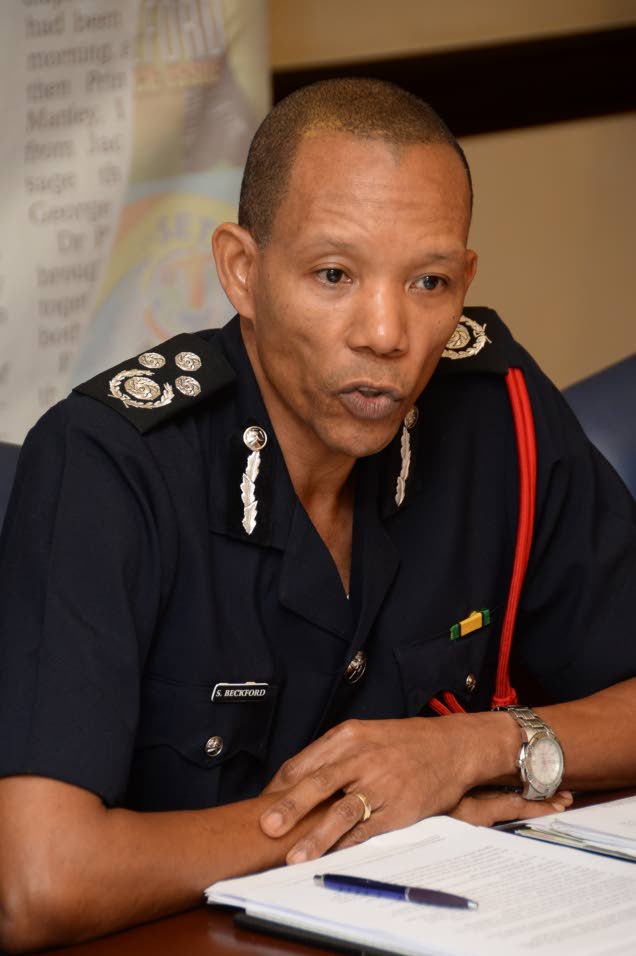
BECKFORD… overall the fire brigade is prepared as best as it can within the resources that are at its disposal


