


JYAN and WMW Jamaica team up to bring youth voices to action on gender-based violence
APPROXIMATELY 50 Jamaican youth from across the island benefited from practical, hands-on advocacy training at the ‘Youth Voices to Action’ forum, held at the Margaret Gartshore Hall at St Andrew High School on August 15. The forum, jointly hosted by the Jamaica Youth Advocacy Network (JYAN) and WMW Jamaica (formerly Women’s Media Watch), focused on deepening youth understanding of gender-based violence (GBV) and strengthening their capacity to advocate for safer, more inclusive communities.
The forum started with messages from organisers and funders, encouraging the youth to engage fully in the day’s proceedings. Primary funder, Global Affairs Canada, was represented by Shehryar Sarwar, head of development cooperation, who reminded the room of the prevalence of GBV as a public health and human rights issue.
“You are the leaders of today,” he told the youth. “Your voices, your experiences, your questions, and your ideas have value right now.”
Ruth Howard, programme manager for WMW Jamaica’s WE-Talk for the Reduction of GBV project, followed with a reminder that young people are the demographic primarily affected by GBV.
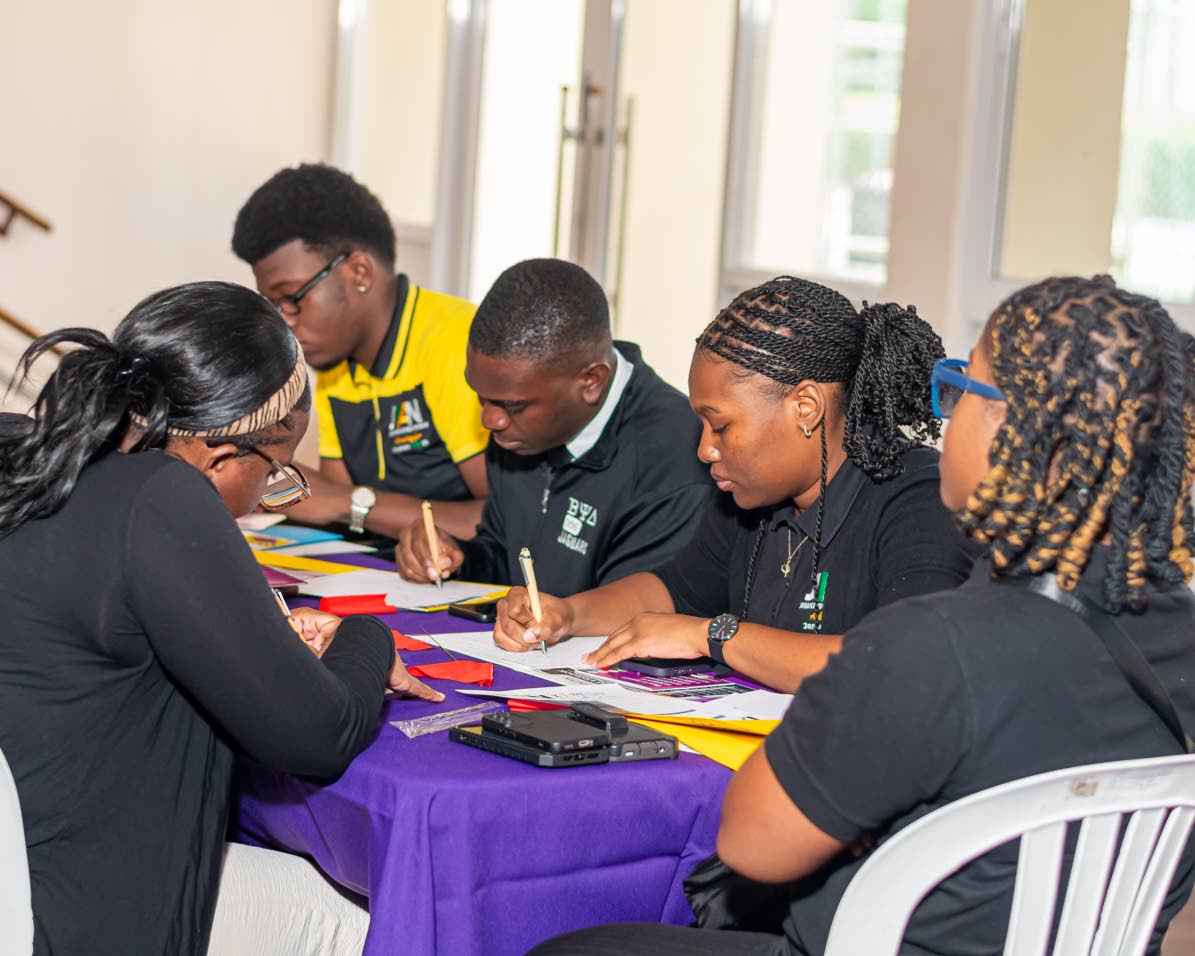
Participants engage in group work during the Advocacy to Action session.
“Persons 18-24 are the primary victims of GBV in Jamaica,” she noted. “That means this is not an issue that is foreign to you or your peer group. It is directly relevant to you.”
JYAN Executive Director Shannique Bowden underscored the need for youth to remain engaged in efforts to end GBV in Jamaica, urging participants to lean in and leave the room with as many practical strategies as they could.
The first half of the day included a panel discussion with stakeholders working in various aspects of GBV prevention, including Janet Howe, senior investigations, inspections and compliance officer at the Office of the Children’s Advocate; Kristal Tucker-Clarke, director of community liaison at the Bureau of Gender Affairs; and Minkyung Angela Kim, junior officer for inclusive AI for sustainable development at UNESCO Caribbean.
In an informative session moderated by attorney-at-law and former Kingston and St Andrew Festival Queen Tamoy Campbell, the panellists directly dialogued with the youth advocates, who challenged the duty-bearers about the Government’s actions to include youth in its anti-GBV efforts and to address GBV among the youth population.
Howe described the current landscape for child protection in Jamaica, noting some of the capacity and resource challenges, and urged participants to make use of the existing systems to report GBV, despite the stigma and harmful stereotypes. Tucker-Clarke described some of the BGA’s anti-GBV initiatives, including the No Excuse for Abuse helplines for both sexes, and a dedicated Male Empowerment Unit. Kim spoke about the pioneering research conducted by UNESCO’s Caribbean office on artificial intelligence and technology-facilitated GBV, noting that online GBV is increasing across the region and affects primarily young people.
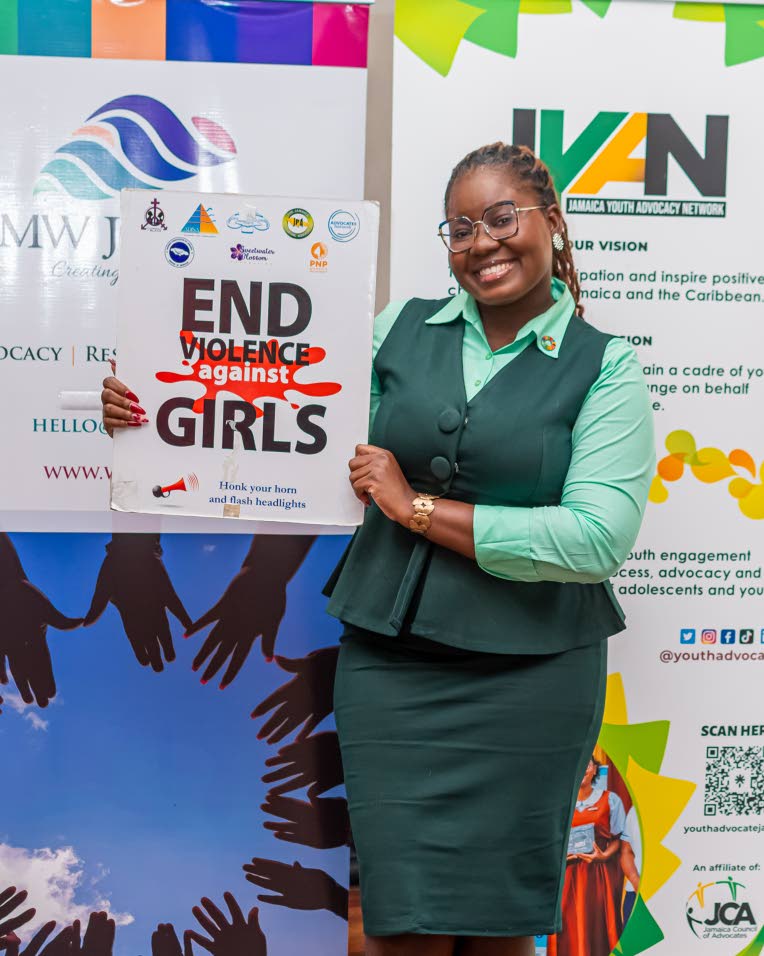
Tamoy Campbell, moderator.
The forum then shifted from dialogue to practical advocacy skills, and participants were introduced to tools and strategies for communicating GBV issues across different platforms and audiences. Tavoy Barrett, digital marketer, led a session on digital advocacy for GBV, highlighting good design principles for effective advocacy. Natalia Burton, JYAN project officer, guided participants through storytelling, while Howard facilitated a session on GBV Messaging 101, helping participants consider how to develop S.A.F.E.R. messages that are survivor-centred, address harmful norms, focus on the appropriate audience, encourage action, and remain respectful.
The ensuing breakout session allowed participants to work collaboratively on advocacy ideas and identify practical ways to contribute to GBV prevention. The working groups culminated in a call-to-action discussion, facilitated by JYAN project officer Dashawn Carter, who identified and validated group concerns that will be presented to key government policymakers and civil society partners in the future.
Reflecting on the forum, Bowden noted, “It is important to continue having conversations with young people about gender-based violence and how it is impacting adolescents and youth. Coming out of the forum, young people will be more empowered to advocate against gender-based violence in their schools, communities and online.”
WMW Jamaica’s WE-Talk for the reduction of Gender-Based Violence project is a five-year effort (2022-2027) to reduce gender-based violence in Jamaica through behaviour-change communications and civil society capacity building, funded by Global Affairs Canada and Oxfam Canada.

