Gov’t announces special measures to protect poor and vulnerable
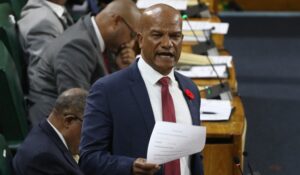
SPECIAL measures to protect and care for the country’s poor, vulnerable, and homeless populations were outlined yesterday by Local Government and Community Development Minister Desmond McKenzie as the Administration prepared itself to combat what it said was the fourth stage of the novel coronavirus disease (COVID-19) spread across the country.
Following on Prime Minister Andrew Holness and Chief Medical Officer Dr Jacquiline Bisasor-McKenzie explaining that the fourth stage means community spread of the virus, the local government minister outlined the special measures which, he said, were designed to secure the vulnerable in infirmaries and people who interact with them; protect the indoor poor — meaning those who are on the poor relief list — as well as the outdoor poor.
“The ban that was placed on the visits to infirmaries has now been moved from 14 days to 30 days, and the ban on new admissions is now 60 days,” Minister McKenzie told journalists at yesterday’s news conference following the Cabinet meeting at Jamaica House.
“We are now moving to establish isolation areas which are fully advanced and to make available at the Vineyard Town Golden Age Home and the Clarendon infirmaries some 30-odd rooms to facilitate social cases from public hospitals,” McKenzie said.
The minister also said a special sanitisation protocol has been established at all facilities, under which employees and service providers are required to go through security checks and have special screening done before they are allowed to enter.
Additionally, beginning on Monday, March 30, a special sanitation programme involving all infirmaries and golden age homes will be implemented over three days. This will be done, McKenzie said, as a collaborative effort between the municipal corporations, Jamaica Fire Brigade, Jamaica Defence Force, National Solid Waste Management Authority, and the Office of Disaster Preparedness and Emergency Management.
He said the Poor Relief Department will be distributing care packages to meet the needs of the outdoor poor — which number approximately 14,000 across the country — for a period of three months, starting on March 30.
Also, the 3,000 students who fall under the portfolio of the Poor Relief Department will receive lunch daily.
In relation to the more than 2,000 people living on the streets — 80 per cent of whom are in the Corporate Area — McKenzie said the local authorities will, with immediate effect, provide them with care packages and at least two meals daily.
Arrangements have also been made for them to be taken to drop-in centres across the country where they will be tested to determine “whether or not they are infected”. This will be done over the next four to six weeks.
McKenzie also announced that the municipal corporations will be providing water to parishes and communities affected by severe drought conditions and will ensure that all facilities for which his ministry has responsibility across the country have adequate supplies of the commodity.
He said, too, that the special opening and closing hours for markets — from 6:00 am to 2:00 pm — which were implemented last week will remain. Additionally, restrictions will be placed on the opening hours of barber shops and hair salons.
Prime Minister Holness later explained that the new crowd restriction of no more then 10 people gathered in any one place will apply to barbershops and hair salons, as well, and that they will be restricted to having no more than two customers waiting.