


Subscribe Login
Jamaica Observer
ePaper
The Edge 105 FM Radio Fyah 105 FM
Jamaica Observer
ePaper
The Edge 105 FM Radio Fyah 105 FM
    • Home
    • News
      • Latest News
      • Cartoon
      • International News
      • Central
      • North & East
      • Western
      • Environment
      • Health
      • #
    • Business
      • Business Bites
      • Social Love
    • Sports
      • Football
      • Basketball
      • Cricket
      • Horse Racing
      • World Champs
      • Commonwealth Games
      • FIFA World Cup 2022
      • Olympics
      • #
    • Entertainment
      • Music
      • Movies
      • Art & Culture
      • Bookends
      • #
    • Lifestyle
      • Page2
      • Food
      • Tuesday Style
      • Food Awards
      • JOL Takes Style Out
      • Design Week JA
      • Black Friday
      • #
    • All Woman
      • Home
      • Relationships
      • Features
      • Fashion
      • Fitness
      • Rights
      • Parenting
      • Advice
      • #
    • Obituaries
    • Classifieds
      • Employment
      • Property
      • Motor Vehicles
      • Place an Ad
      • Obituaries
    • More
      • Games
      • Elections
      • Jobs & Careers
      • Study Centre
      • Jnr Study Centre
      • Letters
      • Columns
      • Advertorial
      • Editorial
      • Supplements
      • Webinars
    • Home
    • News
      • Latest News
      • Cartoon
      • International News
      • Central
      • North & East
      • Western
      • Environment
      • Health
      • #
    • Business
      • Business Bites
      • Social Love
    • Sports
      • Football
      • Basketball
      • Cricket
      • Horse Racing
      • World Champs
      • Commonwealth Games
      • FIFA World Cup 2022
      • Olympics
      • #
    • Entertainment
      • Music
      • Movies
      • Art & Culture
      • Bookends
      • #
    • Lifestyle
      • Page2
      • Food
      • Tuesday Style
      • Food Awards
      • JOL Takes Style Out
      • Design Week JA
      • Black Friday
      • #
    • All Woman
      • Home
      • Relationships
      • Features
      • Fashion
      • Fitness
      • Rights
      • Parenting
      • Advice
      • #
    • Obituaries
    • Classifieds
      • Employment
      • Property
      • Motor Vehicles
      • Place an Ad
      • Obituaries
    • More
      • Games
      • Elections
      • Jobs & Careers
      • Study Centre
      • Jnr Study Centre
      • Letters
      • Columns
      • Advertorial
      • Editorial
      • Supplements
      • Webinars
  • Home
  • News
    • International News
  • Latest
  • Business
    • Business Bites
  • Cartoon
  • Games
  • Food Awards
  • Health
  • Entertainment
    • Bookends
  • Regional
  • Sports
    • Sports
    • World Cup
    • World Champs
    • Olympics
  • All Woman
  • Career & Education
  • Environment
  • Webinars
  • More
    • Football
    • Elections
    • Letters
    • Advertorial
    • Columns
    • Editorial
    • Supplements
  • Epaper
  • Classifieds
  • Design Week
The Food Safety Story of Ackee
For many Jamaicans, breakfast isn’t complete without the classic national dish: Ackee and salt fish, served with fried dumplings, green bananas, or roasted breadfruit.
Food, Lifestyle
Allison Richards thefoodsafetygirlja@gmail.com  
August 7, 2025

The Food Safety Story of Ackee

For many Jamaicans, breakfast isn’t complete without the classic national dish: Ackee and salt fish, served with fried dumplings, green bananas, or roasted breadfruit. Ackee (Blighia sapida), with its buttery texture and mild, nutty taste, is more than just a food — it’s a symbol of national pride. Officially declared Jamaica’s national fruit in 1962, ackee is celebrated in music, literature, and everyday life. Yet, beneath the yellow arils lies a toxic truth. If improperly harvested or prepared, ackee can become dangerous — even deadly.


A Colonial Import with Deep Roots

Though deeply woven into Jamaican identity, ackee is not originally native to the island. The fruit was brought to Jamaica from West Africa, likely aboard slave ships in the 18th century. Its name is derived from the Akan language spoken in parts of Ghana, and it quickly became a staple food in Jamaican households.

Ackee trees flourish in Jamaica’s tropical climate, bearing fruit twice per year — once from January to March and again from June to August. The fruit grows in bright red pods which, when mature, split open naturally to reveal three shiny black seeds nestled in creamy yellow arils. This natural “smile” is not just a sign of ripeness — it’s the first and most critical safety signal for knowing when ackee is safe to eat.


The Science Behind the Poison

When ackee is consumed before it has fully ripened and opened on its own, it can contain dangerously high levels of hypoglycin A, a naturally occurring toxin found in the seeds and unripe arils. This compound is heat-stable, meaning even cooking won’t destroy it if the fruit is picked too early.

Ingestion of hypoglycin A can lead to Jamaican Vomiting Sickness, a serious and potentially fatal illness. The condition causes sudden vomiting, followed by a steep drop in blood sugar (hypoglycaemia), which can lead to convulsions, coma, and death. The illness is particularly dangerous for children and people with weakened immune systems.

The toxin concentration decreases significantly once the fruit naturally ripens and the pod splits open. That’s why food safety authorities stress the importance of waiting until the fruit opens on its own before harvesting and consuming it. The risk is so significant that international food regulators, like the US Food and Drug Administration (FDA), have implemented strict controls for processed ackee.


From Danger to Delicacy: Processing Canned Ackee

To ensure both local and international safety, Jamaica has established rigorous standards for canned ackee, which is widely exported to countries with large Jamaican diasporas, such as the United States, Canada, and the United Kingdom.

The preparation process involves waiting until the fruit has opened naturally, carefully removing the seeds and pinkish membrane (which also contains hypoglycin), thoroughly washing the arils. The ackee is then packed in brine and sterilised under high heat in sealed cans, significantly reducing the risk of toxicity.

These procedures are overseen by the National Compliance and Regulatory Authority (NCRA) (formerly the regulatory division of the Bureau of Standards Jamaica, and only companies that meet international export requirements are permitted to ship ackee abroad. This rigorous approach helped lift a 27-year US ban on ackee imports, first implemented in 1973 due to concerns about hypoglycin content in canned products.

Today, ackee exports contribute an estimated US$15 million annually to the Jamaican economy, making it not only a cultural but also a commercial treasure. Jamaica remains the only country in the world allowed to export canned ackee to the US under strict regulatory oversight.


Ackee Poisoning Still Happens

Despite all the education and safety guidelines, ackee poisoning is still a real and present danger — particularly in rural and informal settings where food safety standards may be poorly followed or unknown.

In January 2025, health officials in Manchester confirmed five cases of suspected ackee poisoning, including the death of an elderly man who had consumed boiled ackee from a street vendor. Investigations revealed that the fruit had been harvested prematurely, and while it was cooked, the presence of hypoglycin likely remained high.

A growing concern is the practice of vendors forcibly opening unripe ackee pods to sell the arils before the fruit has naturally split. This deceptive act bypasses nature’s built-in safety mechanism and exposes consumers to dangerously high levels of hypoglycin A, a toxin that can lead to vomiting, hypoglycemia, seizures, or even death. This is a form of food fraud — intentionally compromising food safety for financial gain while misleading consumers into believing the product is safe.

Between 1989 and 1991, 38 cases of ackee poisoning were recorded in Jamaican hospitals, resulting in eight fatalities, according to public health records. Most victims had consumed home-prepared ackee that had not been properly ripened or cleaned. While numbers have since declined, isolated incidents continue to emerge each year, often linked to informal vendors or poor handling practices.


How to Stay Safe While Enjoying Ackee

For everyday consumers, enjoying ackee safely means following a few essential guidelines. The first and most important rule is to never consume ackee that hasn’t opened on its own. Forcing the pod open before it ‘smiles’ is a sure-fire way to increase your risk of poisoning.

Once opened, only the yellow arils should be kept. The seeds and the pinkish-red membrane must be discarded, as they contain the highest concentrations of hypoglycin. Even when boiling the fruit, never boil other foods in the same water as the ackee. That’s a common mistake. Salt fish, dumplings, yams, and bananas should be boiled in separate pots. Boiling them all together can transfer residual toxins from the ackee to your other food.

Those purchasing canned ackee should check that the product is from a reputable brand, sealed properly, and marked with relevant food safety certifications. Damaged or swollen cans should always be discarded, as this may indicate spoilage or contamination.

When buying ackee from street vendors or markets, it’s important to ask about the source and preparation method. If the fruit appears overly firm, discoloured, or sour-smelling, it’s best to avoid it altogether.


Balancing Heritage with Health

Ackee is much more than Jamaica’s national fruit — it’s a symbol of resilience, adaptation, and culinary creativity. But as beloved as ackee is, its unique food safety risks require continued vigilance. In an era when foodborne illnesses remain a leading cause of hospitalisation globally, proper education around ackee safety is essential.
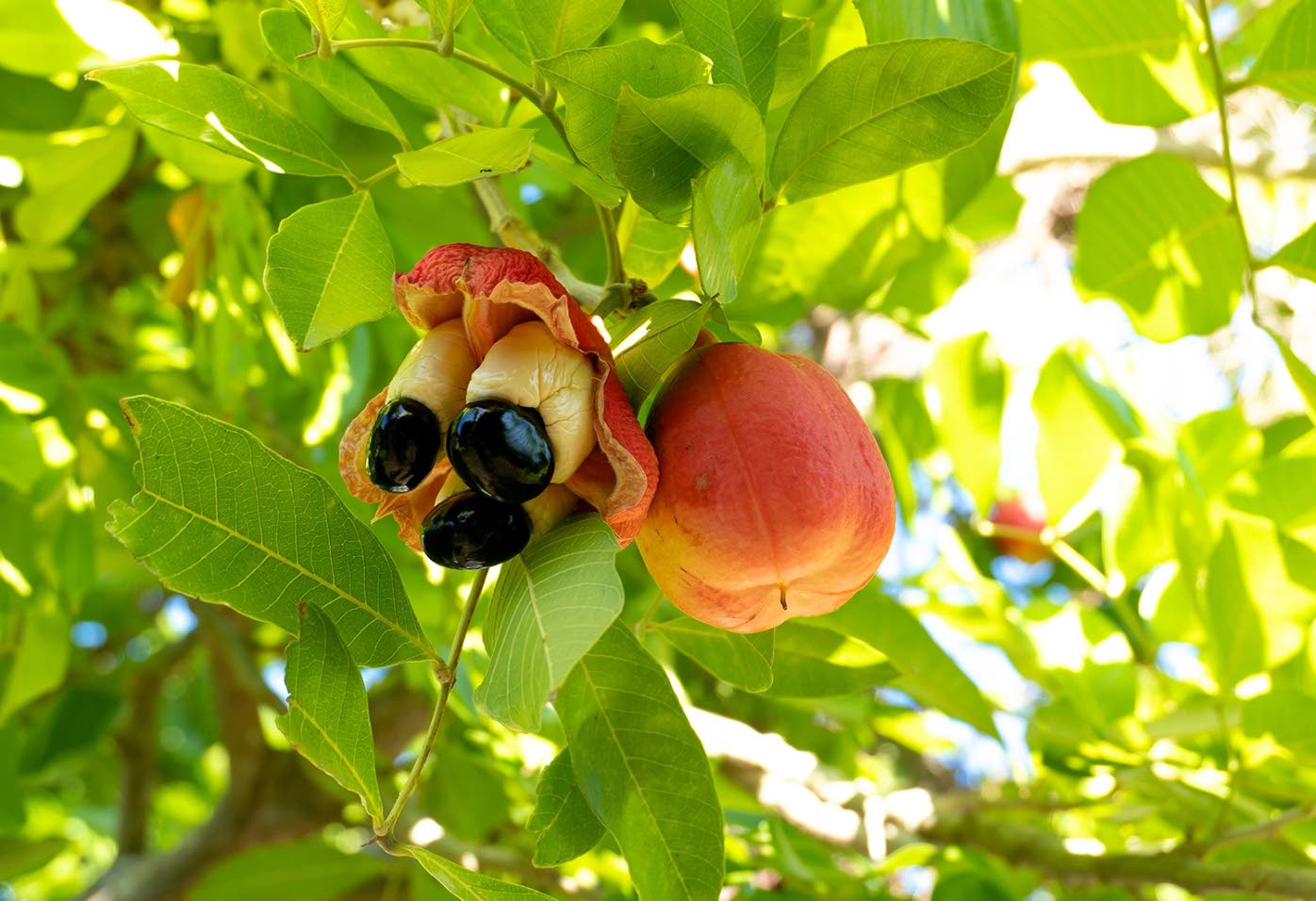
Ackee trees flourish in Jamaica’s tropical climate, bearing fruit twice per year..

Ackee trees flourish in Jamaica’s tropical climate, bearing fruit twice per year.

Allison Richards | thefoodsafetygirlja@gmail.com.

Allison Richards | thefoodsafetygirlja@gmail.com.

{"xml":"xml"}{"jamaica-observer":"Jamaica Observer"}
img img
0 Comments · Make a comment

ALSO ON JAMAICA OBSERVER

NBC’s Today show takes on Jamaica
Latest News, News
NBC’s Today show takes on Jamaica
March 25, 2026
KINGSTON, Jamaica—NBC’s Today show is on the sun-soaked shores of Jamaica for an unforgettable multi-day feature series with co-hosts Jenna Bush Hager...
{"jamaica-observer":"Jamaica Observer"}
#Champs2026: Ryan Achau learns lesson, lands 1500m gold
Latest News, Sports
#Champs2026: Ryan Achau learns lesson, lands 1500m gold
March 25, 2026
KINGSTON, Jamaica—After learning his lesson from his disastrous first 1500m race last year, St Jago High’s Ryan Achau produced a masterpiece of middle...
{"jamaica-observer":"Jamaica Observer"}
#Champs2026: Edwin Allen’s Fowler dedicates win to fallen teammate Tanesha Gayle
Latest News, Sports
#Champs2026: Edwin Allen’s Fowler dedicates win to fallen teammate Tanesha Gayle
March 25, 2026
KINGSTON, Jamaica—Edwin Allen’s Kevongaye Fowler dedicated her win in the Girls Class 2 1500m on Wednesday’s second day of the ISSA/GraceKennedy Boys ...
{"jamaica-observer":"Jamaica Observer"}
Caricom reiterates call for reparatory justice for slave trade
Latest News, Regional
Caricom reiterates call for reparatory justice for slave trade
March 25, 2026
GEORGETOWN, Guyana (CMC) – The Caribbean Community (Caricom) Reparations Commission (CRC), on Wednesday, said the struggle for reparatory justice is a...
{"jamaica-observer":"Jamaica Observer"}
UN General Assembly vote to recognise transatlantic African slave trade as ‘the gravest crime against humanity’
International News, Latest News
UN General Assembly vote to recognise transatlantic African slave trade as ‘the gravest crime against humanity’
March 25, 2026
UNITED NATIONS, United States (AFP)—The United Nation (UN) General Assembly on Wednesday designated the transatlantic African slave trade as "the grav...
{"jamaica-observer":"Jamaica Observer"}
Trump says Iran ‘afraid’ to admit it wants a deal
International News, Latest News
Trump says Iran ‘afraid’ to admit it wants a deal
March 25, 2026
WASHINGTON, United States (AFP)—United States (US) President Donald Trump insisted Wednesday that Iran was taking part in peace talks, suggesting Tehr...
{"jamaica-observer":"Jamaica Observer"}
#Champs2026: Stage set for epic Boys Class 1, 100m final
Latest News, Sports
#Champs2026: Stage set for epic Boys Class 1, 100m final
March 25, 2026
KINGSTON, Jamaica - The stage is set for what could be an epic Boys Class 1 100m final on Wednesday’s second day of the ISSA/GraceKennedy Boys and Gir...
{"jamaica-observer":"Jamaica Observer"}
#Champs2026: Holland’s Douglas leads qualifiers for Class 1 100m final
Latest News, Sports
#Champs2026: Holland’s Douglas leads qualifiers for Class 1 100m final
March 25, 2026
KINGSTON, Jamaica - Holland High’s Shanoya Douglas leads all qualifiers for the final of the Girls Class 1 100m after running an easy looking 11.17 se...
{"jamaica-observer":"Jamaica Observer"}
❮ ❯

Polls

HOUSE RULES

  1. We welcome reader comments on the top stories of the day. Some comments may be republished on the website or in the newspaper; email addresses will not be published.
  2. Please understand that comments are moderated and it is not always possible to publish all that have been submitted. We will, however, try to publish comments that are representative of all received.
  3. We ask that comments are civil and free of libellous or hateful material. Also please stick to the topic under discussion.
  4. Please do not write in block capitals since this makes your comment hard to read.
  5. Please don't use the comments to advertise. However, our advertising department can be more than accommodating if emailed: advertising@jamaicaobserver.com.
  6. If readers wish to report offensive comments, suggest a correction or share a story then please email: community@jamaicaobserver.com.
  7. Lastly, read our Terms and Conditions and Privacy Policy

Recent Posts

Archives

Facebook
Twitter
Instagram
Tweets

Polls

Recent Posts

Archives

Logo Jamaica Observer
Breaking news from the premier Jamaican newspaper, the Jamaica Observer. Follow Jamaican news online for free and stay informed on what's happening in the Caribbean
Featured Tags
  • Editorial
  • Columns
  • Health
  • Auto
  • Business
  • Letters
  • Page2
  • Football
Categories
  • Business
  • Politics
  • Entertainment
  • Page2
  • Business
  • Politics
  • Entertainment
  • Page2
Ads
img
Jamaica Observer, © All Rights Reserved
  • Home
  • Contact Us
  • RSS Feeds
  • Feedback
  • Privacy Policy
  • Editorial Code of Conduct