



‘Three words for it: Apocalypse in paradise’
Diaspora activist says she couldn’t recognise her country after Melissa
NEW YORK, USA — Dr Karren Dunkley has fought many battles for her native Jamaica but the devastation left behind by Hurricane Melissa might yet be the toughest one she has faced, after years as a leading Diaspora advocate.
Jumping on the first flight she could get out of Philadelphia, Pennsylvania, the former head of the Global Jamaica Diaspora Council (GJDC) for the Northeast United States (US) took one look at Jamaica and described her beloved homeland in three words — “Apocalypse in paradise”.
“I didn’t recognise my country when I got there on November 5, eight days after the October 28 hurricane struck,” Dr Dunkley bemoaned in an interview with the Jamaica Observer. “Roads in Ironshore, Montego Bay, were unrecognisable, light poles were scattered like broken matchsticks, and there was no electricity, water nor connectivity — just silence and shock,” she recounted.
“I remember asking my driver to stop as we travelled from Montego Bay to St Elizabeth where I was born and where I still have family members who faced the wrath of the storm. I was asking, ‘Wait, is this the road?’ The disbelief sat in my throat like a stone,” said Dunkley.
Dunkley, for her sterling contribution to Jamaica’s welfare from her adopted US home, was among those vested with the Order of Distinction (OD) in the rank of Offiicer during last year’s national awards presentation.
She told the newspaper that, like so many other Jamaicans, she watched the horrific scenes of disaster on television reports from the safety of her living room, but soon felt the impact personally when she could not connect with her mother or other family members who reside in the deep-rural St Elizabeth enclave of Elderslie.
“I know I couldn’t wait. I had to go, as the silence was unbearable,” she said, noting that, “it took way more time — four and a half hours driving from Montego Bay, St James, to St Elizabeth”.
“By the time we reached Westmoreland I realised that Montego Bay — in all its wreckage — was a palace compared to what lay ahead. It felt as if we had crossed into another world once we hit Westmoreland as we saw people living on river beds — eating, sleeping; bathing and washing in the same water that had consumed their homes,” Dunkley told the Observer.
The enormity of the wreckage by the hurricane would become even clearer, Dunkley noted, as they drove deeper into St Elizabeth, one of the worst-hit parishes.
“We saw homes flattened, cars flipped upside down, animals gone, and whole sections of land swallowed up by landslides. The St Elizabeth I knew — the lush, beating heart of my childhood — was gone and my family’s land was left bare.”
Dunkley said that 95 per cent of the homes in the district of Elderslie lost roofs, including her mother’s house which was almost completely submerged. The doors and windows of her aunt’s house were, “ripped away like paper”.
“All across the landscape we met people who lost everything — living in schools, churches, or surviving with only the clothes on their backs. I have seen people washing out mattresses, sunning them, and sleeping on floors. My mother and I were among them.
“As heartbroken as I was for my family’s situation, I couldn’t help but feel deeply for two young girls I saw walking from house to house asking for somewhere to ‘kotch’. These were young people, vulnerable, displaced, and uncertain of what tomorrow would bring,” said Dr Dunkley, tearing up.
And yet, unbelievably, she said, amid the devastation and ruin, “the magnificence of the Jamaican people shone through as neighbours shared food, water and other immediate needs such as generators to power devices, thus keeping their hope alive”.
However, she was troubled by what she believes was a, “quiet passivity among some of our young men who were sitting idle when they could be leading the clean-up, clearing roads, and helping the elderly”.
Dr Dunkley argued that these young men are in need of mentorship and male leadership to remind them that, “manhood means rebuilding, not waiting, as we must restore not only homes, but collective responsibility”.
She said that a group including entrepreneur Dr Trisha Bailey of the Bailey-Archie Foundation, the Push Start Foundation led by Beverly Nicholas, along with committed Diaspora partners and the Member of Parliament for St Elizabeth North Western Andrew Morris, have mobilised immediate relief and have begun charting a path toward recovery and restoration.
So far the group has delivered food, water, tarpaulins and first aid to remote communities, as well as generators to shelters and schools, and Starlink connectivity. Additionally, Dr Dunkley said, a Community Committee for Hurricane Melissa Response — a local network of residents who know the people and their needs — has been established as part of the restoration process.
In the meantime, Jamaicans across the United States continue to mobilise relief supplies collectively and individually to aid the restoration effort.
Michelle Tulloch-Neil, the woman who succeeded Dunkley as GJDC representative for the Northeast US, described as, “a notable success” the ongoing relief effort supported by the generosity of the Diaspora and friends of Jamaica.
She noted that through the collective effort, and co-ordination with Lasco, care packages had been distributed to affected residents in Northampton, St Elizabeth, and Cave in Westmoreland. A further 15 barrels containing essential supplies were scheduled to be shipped to Jamaica by the end of that week.
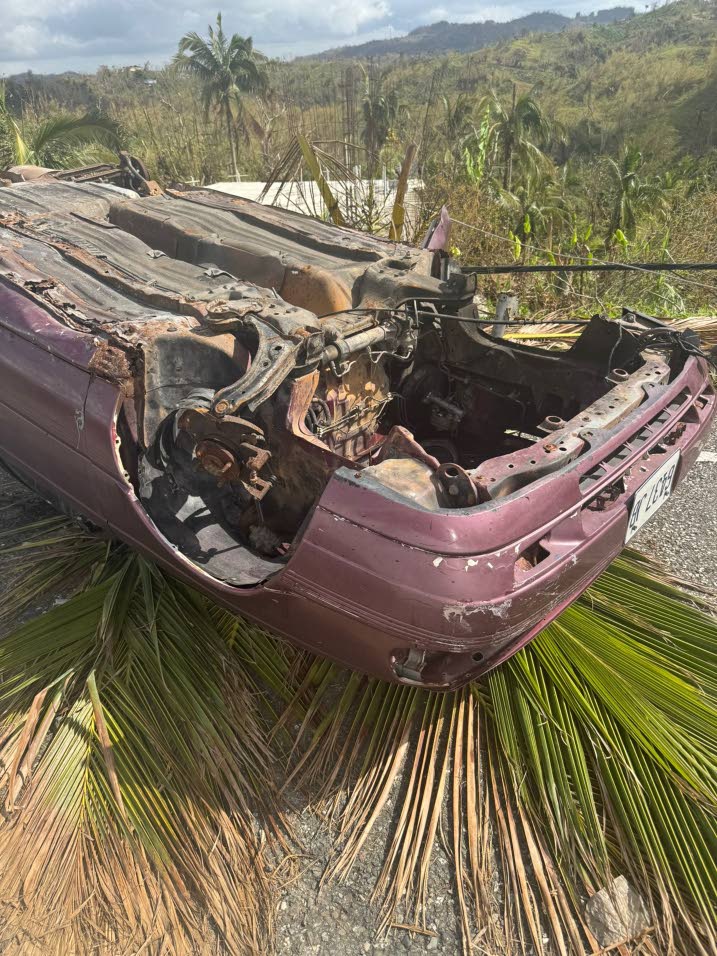
This motor car in St James was flipped on its top by the fury of Hurricane Melissa’s winds.
Residents of Gutters in St James eagerly receive relief supplies..
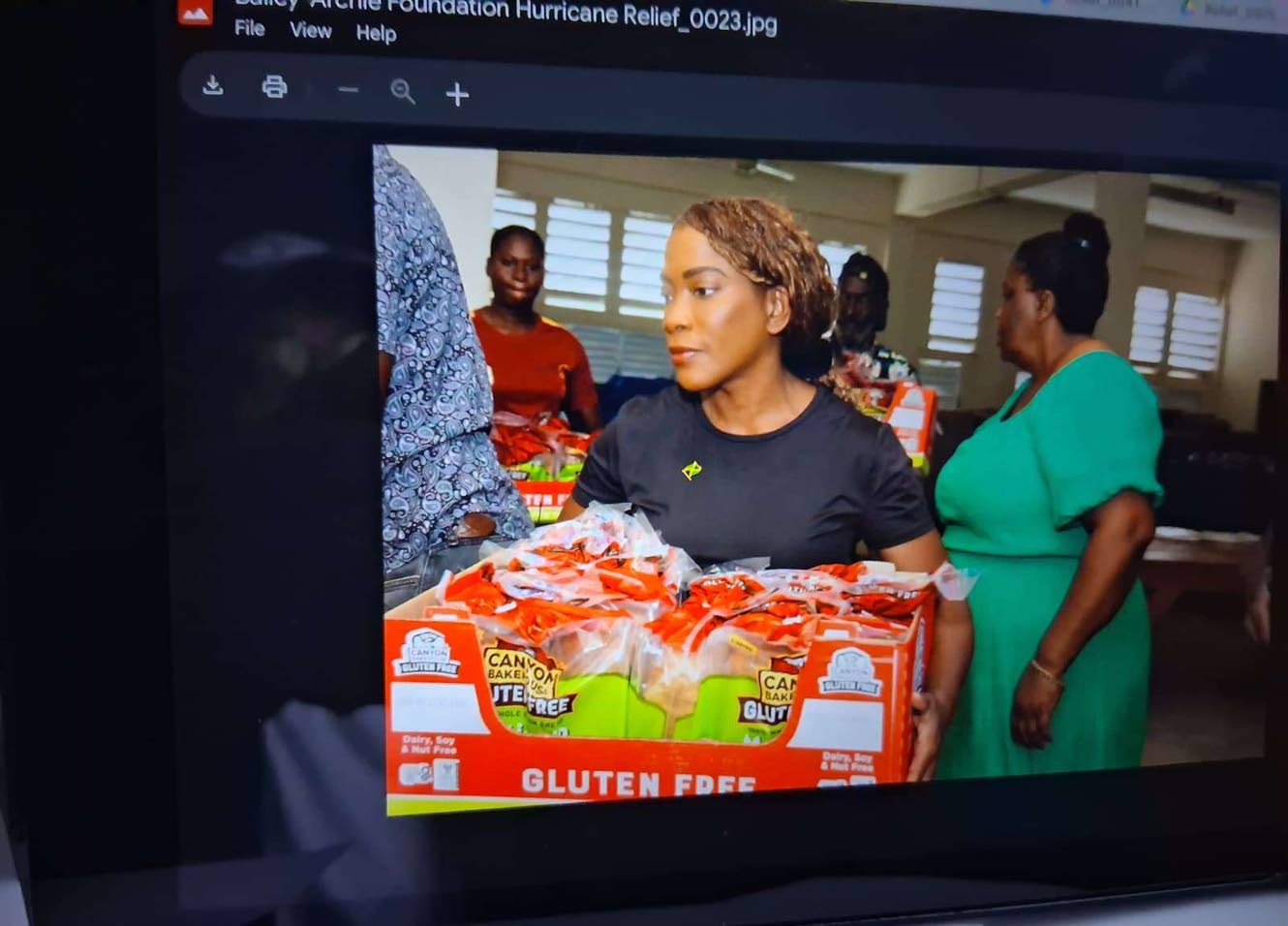
Dr Karren Dunkley delivering relief supplies to residents of Lacovia, St Elizabeth, in company with members of the Bailey-Archie Foundation.
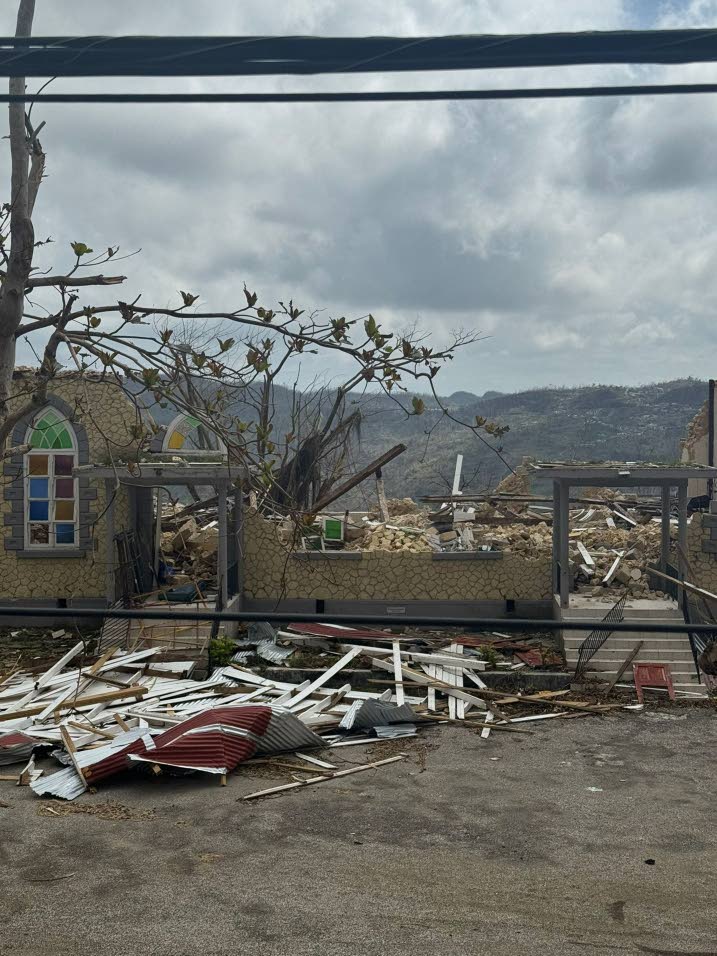
The remains of the Springfield Baptist Church in St James,


